A coffee spill on the sofa can feel oddly stressful… It’s in the middle of the room, it’s what everyone sits on, and you can’t exactly “hide it” while you figure it out.
The biggest risk isn’t the stain itself… It’s damaging the upholstery while trying to fix it. Different fabrics react differently to moisture, heat, and cleaning products. That’s why a lot of quick online advice can backfire on sofas, even if it sounds harmless.
This guide explains what affects whether a coffee stain lifts well, what to avoid, and when it’s worth bringing in a professional upholstery cleaner.
Quick answer… To remove a coffee stain from a sofa safely, the priority is to avoid spreading it or damaging the fabric. Coffee can leave dye, oil, and (if milky) residue in the fibres, so the “best” fix depends on the upholstery type and what’s already been used. If you’re unsure what the fabric is, or you’ve already tried a product, it’s often safer to get it professionally looked at rather than keep experimenting.
Key takeaways
- Sofa fabric type matters… what’s safe on one upholstery can mark another.
- Milk and sugar make stains harder because they leave residue and can cause odour.
- The biggest risk is making it worse with over-wetting, scrubbing, heat, or layered products.
- A clean finish isn’t just “lighter”… it should dry properly and not reappear.
- If it’s pale, premium, unknown fabric, or already treated, professional upholstery cleaning is usually the calmer option.
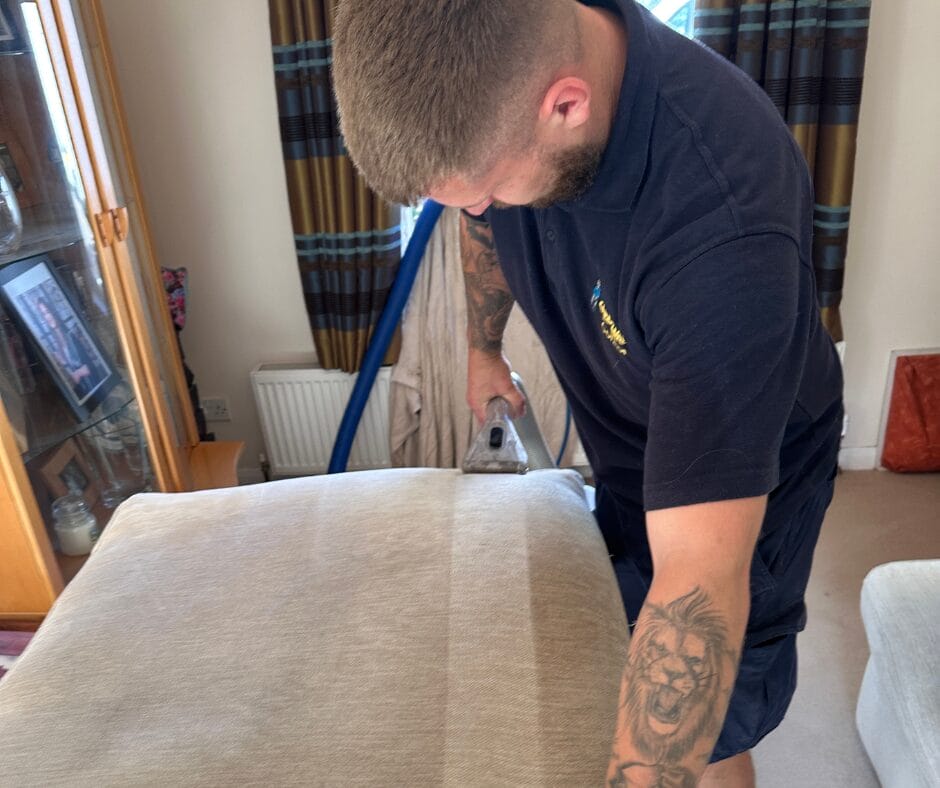
Why coffee stains behave differently on upholstery…
Coffee is a real mix of colour compounds and oils, and it normally has milk or sugar in it. On a sofa, those residues can sit in the fibres and leave:
- A visible mark (especially on pale or textured fabric)
- A faint “shadow” that reappears as it dries
- A lingering smell (more common with milky coffee)
Upholstery also holds moisture differently from carpet. Some sofa fabrics show water marks or rings more easily, and heavy wetting can push the stain further into the padding.
What usually decides whether the stain comes out well
People often ask, “Will it come out?”… the honest answer is: it depends on the sofa, the coffee, and what’s already been tried.
Here are the most common factors we see in Essex homes:
1) The fabric type (and whether it’s colourfast)
Some weaves and dyed fabrics can shift colour if the wrong product is used, or if the area gets over-wet. If you’re not sure what your sofa is made from, it’s safer to assume it needs a cautious approach.
If it helps, we’ve written a separate guide on fabric-specific care here: Draylon sofa cleaning: what you need to know.
2) How long has it been there
Fresh spills are usually simpler to treat. Older stains can “set” or oxidise, and sometimes what you’re seeing is partly residue and partly fibre discolouration.
3) Whether there’s milk or sugar
Milk proteins and sugars can cause stickiness, odour, and a mark that returns later. This is one reason quick home methods don’t always give a clean finish.
4) What’s already been used on it
This is a big one. The most common reason we see stains worsen is product layering… multiple sprays, soaps, or home mixes that leave residue behind or spread the mark.
Quick comparison table: common approaches people try (and the risks on sofas)
This table is here for clarity — not as a recommendation list. We mention these because they appear in Google results and AI summaries, but upholstery can be damaged if the fabric isn’t identified first.
| Dish soap mixes | Feels gentle and “everyday safe” | Residue attracts dirt, patchy finish, marks returning | Residue-free rinsing matters more than “stronger product” |
| White vinegar mixes | Often suggested for tannin stains | Colour shift, rings on some fabrics, strong odour | Fabric reactions vary — not one-size-fits-all |
| Baking soda paste | “Natural” and easy to try | Abrasion on delicate fibres, clumping, residue left behind | “Natural” doesn’t always mean fabric-safe |
| Hydrogen peroxide | Suggested for stubborn marks | Bleaching / light patches, fibre weakening | High risk unless fabric is confirmed safe |
| Shop-bought upholstery sprays | Quick and convenient | Can set stains, leave sticky residue, patchy texture | Some products help, many create call-backs later |
| Hire machines / heavy wetting | Feels like a deep clean | Over-wetting, browning, slow drying, odour trapped | Controlled moisture is key for upholstery |
If you’re comparing advice online, look for anything that acknowledges fabric type, colourfastness, and moisture control. If it doesn’t, it’s usually written too broadly to be safe.
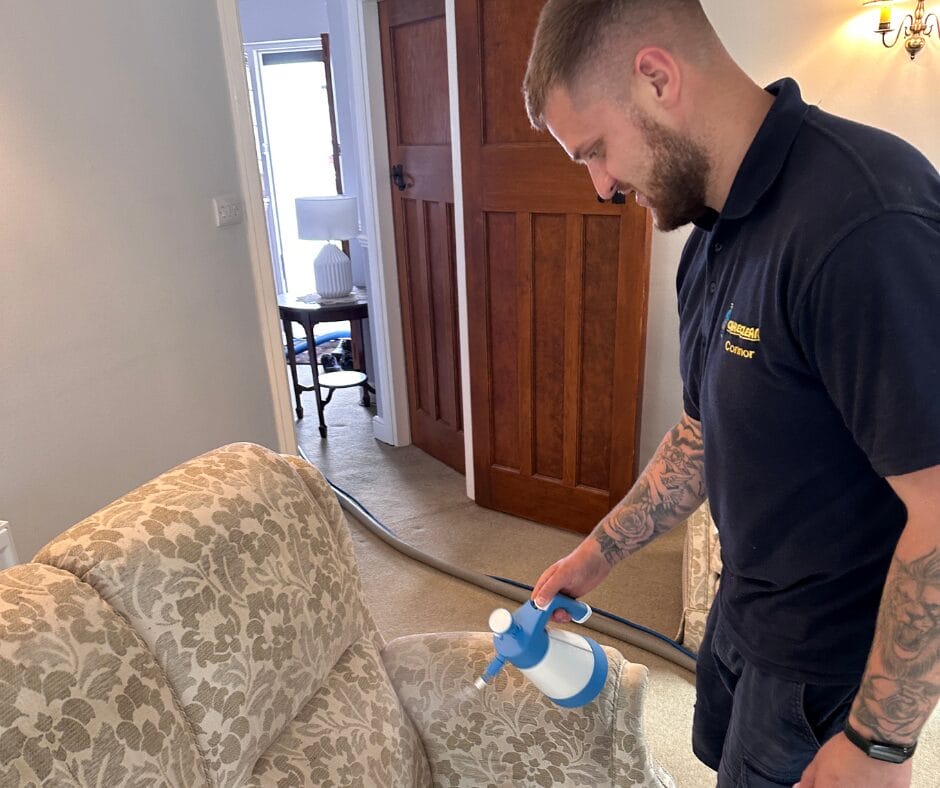
The “don’t make it worse” list (sofa edition)
Without giving a “how-to”, these are the patterns we see that create bigger problems than the original spill:
- Scrubbing hard (can roughen the fibres and spread the mark)
- Over-wetting one patch (often leads to rings or water marks)
- Using multiple products one after another (layers residue, attracts dirt)
- Applying heat (can set certain stains or distort delicate fabrics)
- Treating the cover like it’s removable when it isn’t (some sofas aren’t designed for wet cleaning in the same way)
If your sofa is a pale colour, velvet-touch, wool blend, or “unknown fabric”, it’s worth being extra cautious.
When it’s worth calling a professional upholstery cleaner
If any of the below feels familiar, a professional clean is usually the calmer option:
- The stain has spread or formed a ring.
- You can still see a shadow once it dries.
- There’s milk/sugar, and you’re noticing odour.
- You’ve already tried one or more products.
- The sofa is a fabric you’d hate to risk (or it’s a statement piece in the room)
This is exactly what our Upholstery Cleaning service is for… careful treatment, controlled moisture, and a finish that doesn’t leave the area sticky or patchy.
If you’re looking specifically for a higher-end finish (especially on lighter or premium sofas), this page may help too: Premium sofa cleaning in Essex.
What a professional is actually trying to achieve (beyond “getting the mark out”)
A good upholstery clean isn’t just stain-chasing. The goal is a clean finish that doesn’t return, doesn’t smell, and doesn’t leave the fabric looking different in one spot.
That usually means:
- Identifying the fabric and testing for colourfastness
- Using controlled moisture (so it dries properly)
- Removing residue rather than layering more on top
- Setting realistic expectations if the stain has altered the dye or fibres
If you like that honest approach, you might also find this useful: Can you get all the stains out of my carpet? (The principles are similar… some marks lift fully, some improve, and we’ll always tell you what’s realistic).
FAQs
Can coffee stains come out of a fabric sofa?
Often, yes — especially if it’s treated appropriately for the fabric. The bigger variable is whether the upholstery has reacted to moisture or products, or whether milk/sugar has left residue behind.
Why does a coffee stain look worse after it dries?
That’s commonly due to residue or “wicking”, where moisture pulls dissolved material back toward the surface as it dries. Upholstery padding can also hold moisture and draw staining back up.
Is “natural” cleaning (vinegar/baking soda) safer?
Not automatically. Some natural products still change colour, leave residue, or mark delicate fibres. Upholstery is one of those areas where “gentle” depends on the fabric, not the ingredient.
How do I know if my sofa fabric is risky?
If it’s pale, textured, velvet-touch, wool blend, or you’re not sure what it is, it’s better to assume it needs a cautious, fabric-safe approach rather than trial-and-error.
What if the coffee had milk in it?
Milky coffee can leave proteins and sugars behind, which can cause odour and a mark that returns. These cases often benefit from a professional rinse-and-extract approach rather than repeated spot products.
Not sure what your sofa fabric is? Start here
If you’re staring at a coffee mark and don’t want to make it worse, we’re happy to advise based on the fabric and what’s already been tried — even if it’s just to tell you whether it’s worth booking in.
Option 1: Send us a quick photo and tell us whether it was black coffee or milky/sugary.
Option 2: If it’s a premium or pale sofa, we can quote for a careful upholstery clean with controlled drying.