When someone is unwell, the first concern is looking after them. Then you notice the carpet.
To clean vomit from carpet safely, keep people and pets away, put on disposable gloves, remove the solid material carefully, blot up moisture and clean the affected fibres without scrubbing.
The area then needs to dry fully. If illness may be infectious, or the vomit has soaked into the carpet backing or underlay, ordinary spot cleaning may not be enough.
Vomit can contain stomach acid, food colouring, medicine dyes and potentially infectious material. Acting really quickly will give you the best chance of preventing a permanent mark or smell, but it is worth slowing down enough to clean it safely.
The safest approach at a glance
- Keep children and pets out of the affected area.
- Wear disposable gloves and, where practical, protect your clothing.
- Lift solids carefully rather than rubbing them into the carpet.
- Blot moisture with disposable paper towels.
- Test any carpet-cleaning product in a hidden area first.
- Avoid soaking the carpet or mixing cleaning chemicals.
- Arrange professional help if contamination has reached the underlay.
Start by protecting the rest of the household.
Before reaching for carpet cleaner, make the immediate area safe.
Open a nearby window if you can do so comfortably, then keep children and pets in another room.
Wear disposable gloves.
An apron or old clothing that you can wash afterwards is also sensible, particularly when a stomach bug may have caused the sickness.
Norovirus can spread through contact with vomit and contaminated surfaces. Tiny droplets created during vomiting may also settle on surrounding areas. The UK Health Security Agency advises thorough handwashing with soap and warm water after cleaning vomit or diarrhoea, as alcohol hand gel does not reliably kill norovirus.
Do not rely on hand sanitiser alone after the clean-up. Wash your hands properly with soap and water.
It is also sensible to wipe nearby hard surfaces, such as skirting boards or furniture legs, using a suitable product and following its label directions.
How to remove fresh vomit from carpet
Fresh vomit is unpleasant, but it is usually easier to remove than a patch that has been allowed to dry.
Remove the solid material carefully.
Use a disposable scraper, a piece of stiff card or folded kitchen paper to lift the material from the carpet.
Work from the outside of the affected patch towards the centre. This helps prevent the contamination from spreading across a larger area.
Place everything directly into a strong waste bag. Once the solid material has been removed, tie the bag securely and place it inside a second bag where appropriate.
Avoid rubbing, brushing or pressing down hard. Scrubbing can drive acidic residue and colouring deeper into the carpet pile.
Blot up the remaining moisture.
Place clean, absorbent paper towels over the area and press gently. Lift them away and repeat with fresh towels until you are no longer drawing out much liquid.
Do not wipe from side to side. A blotting motion limits the spread and is kinder to the carpet fibres.
The IICRC notes that vomit may contain stomach acids and dyes that can permanently stain textile fibres. The longer it remains in contact with the carpet, the greater the chance of staining and lingering odour.
Choose the cleaning product carefully.
Carpets vary considerably. A product that is suitable for a hard-wearing synthetic carpet may damage wool, natural fibres or delicate dyes.
Check the carpet manufacturer’s care information where it is available. Read the cleaner’s label and test a small amount in an inconspicuous area before applying it to the visible patch.
A carpet-safe product intended for organic stains may help break down remaining residue. Some enzyme-based cleaners are made for organic spills, but they must still be suitable for the particular carpet fibre and used exactly as directed.
More product does not mean a cleaner carpet. Excess liquid can carry contamination further into the backing and may leave sticky residues behind.
Apply the chosen product sparingly. Allow the stated contact time, then blot according to the instructions. Avoid aggressive brushing.
Can you use bleach on vomit in a carpet?
Some people may recommend household bleach for certain washable hard surfaces during an infectious illness. That does not make it suitable for carpet.
Do not pour chlorine bleach onto carpet. It can remove colour, weaken fibres and create a permanent pale patch. It may also react dangerously if mixed with other cleaning products.
Never mix bleach with vinegar, ammonia, descalers or other household cleaners. Use one suitable product at a time and follow the manufacturer’s safety directions.
Porous floor coverings create a different problem from sealed surfaces.
Public-health guidance for contaminated carpets commonly recommends removing the spillage, cleaning with warm soapy water or an appropriate carpet shampoo, and following with professional steam cleaning where possible.
How to remove the vomit smell from carpet
A lingering sick smell usually means some residue remains in the carpet pile, backing or underlay. Covering it with fragrance will only disguise it temporarily.
After the visible contamination has been cleaned:
- Blot out as much moisture as possible.
- Allow the carpet to dry with good ventilation.
- Check the area again once completely dry.
- If the smell returns, arrange a deeper inspection.
Judge the result when the carpet is dry, not while it is still damp. Moist fibres and cleaning products can temporarily alter the smell.
Avoid repeatedly saturating the area with vinegar, disinfectant, deodoriser or homemade mixtures. Layering different products can create residue, affect colour and make later professional treatment more difficult.
Where vomit has penetrated through the carpet, the odour may be held in the backing, underlay or even the floor beneath. Surface deodorising cannot reliably resolve that.
What if the vomit has already dried?
Dried vomit needs to be softened and lifted carefully. Do not attack it with a stiff brush, as this can break it into particles and push residue further into the pile.
Wear gloves and keep others away from the area. Lightly dampen the deposit using a suitable carpet-cleaning solution, following the label instructions. Give it time to soften, then lift it carefully with a disposable scraper or paper towel.
Blot the remaining patch rather than scrubbing it.
Avoid running an ordinary dry household vacuum over dried vomit. The vacuum is not designed to collect potentially infectious wet or organic contamination, and it may spread particles or contaminate the machine.
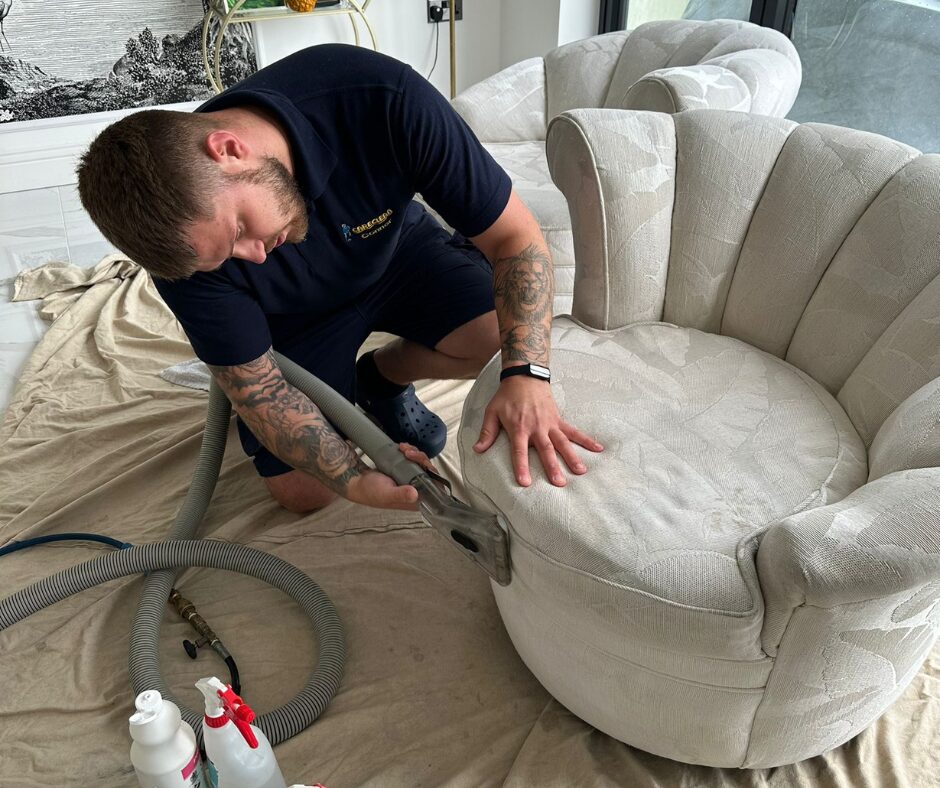
Professional carpet cleaners may use specialist extraction equipment and appropriate protective measures. The IICRC specifically identifies vomit as potentially pathogenic contamination that requires precautions beyond routine carpet cleaning.
Can carpet be disinfected after someone has been sick?
This is where the difference between cleaning and disinfection matters.
Cleaning removes soil and organic residue. Disinfection uses an appropriate product or process to reduce microorganisms. A product can only make a disinfection claim when it is approved for that purpose and used at the correct strength, for the correct contact time, on a compatible surface.
Carpet is absorbent and has several layers. That makes complete disinfection more complicated than wiping a sealed worktop.
A quick spray of household disinfectant does not prove that the carpet has been fully sanitised.
For a small accident unrelated to infectious illness, careful removal, carpet-safe cleaning and thorough drying may be sufficient.
Where norovirus or another infectious cause is suspected, seek current public-health advice and consider professional treatment, especially if the affected person is vulnerable or the incident happened in a school, nursery, care setting or shared building.
When professional carpet cleaning is the safer option
There is no judgement in asking for help with this type of accident. It is one of those jobs where the visible mark may be only part of the problem.
Professional help is worth considering when:
- the vomit has soaked through the carpet
- the affected area is large
- the smell returns after drying
- staining remains after careful blotting
- the carpet is wool, natural fibre or otherwise delicate
- the incident may involve norovirus or another infection
- blood is present
- repeated sickness has affected the same room
- the contamination is in a nursery, care environment or communal building
Subsurface treatment may be needed if liquid has entered the backing or underlay. In more serious cases, a section of contaminated underlay may need replacing.
The IICRC warns that vomit’s liquid nature can allow it to reach carpet padding, which may require treatment or disposal.
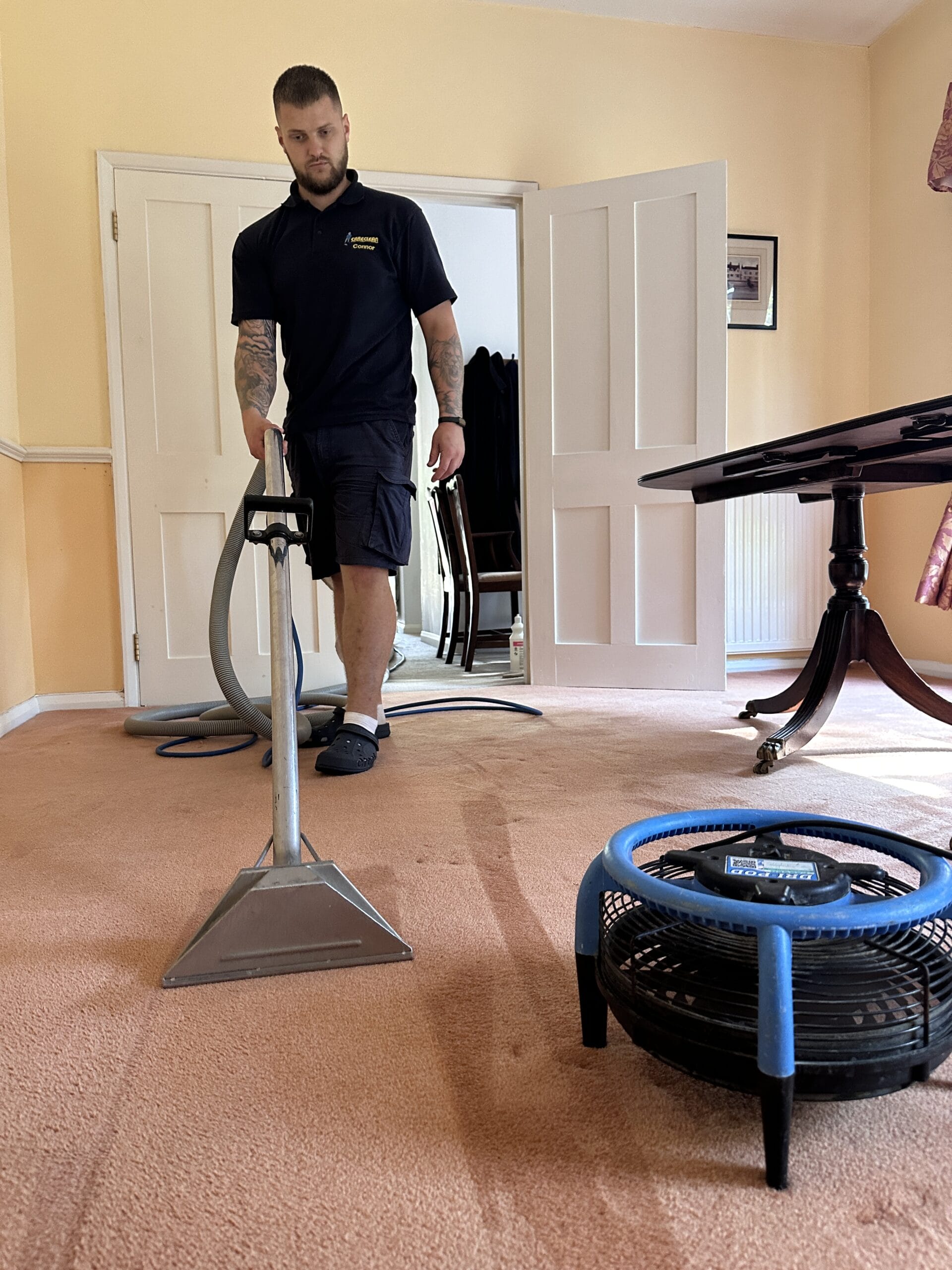
For homes across Chelmsford and the wider Essex area, Careclean provides professional carpet cleaning and stain treatment. We can inspect the affected fibres, explain what is realistic and advise whether the issue appears to be confined to the surface.
Mistakes that can make the problem worse
- Scrubbing the carpet – Scrubbing spreads the contamination and can distort the pile. Lift and blot instead.
- Using very hot water without checking – Heat may affect certain stains, dyes or fibres. Always follow the care instructions for the carpet and cleaning product.
- Pouring on too much liquid – Overwetting may push residue into the backing and underlay, extending drying time and increasing the chance of odour returning.
- Mixing cleaning products – Household chemical mixtures can produce harmful fumes or damage the carpet. Use one compatible product according to its label.
- Assuming the smell will disappear by itself – A smell that returns after the carpet dries often points to residue below the visible surface.
- Allowing children or pets back too soon – Keep the area undisturbed until the carpet is clean and fully dry. Follow any safety advice on the product label.
What to do after cleaning the carpet
Dispose of used paper towels, gloves and disposable tools securely.
Clean reusable equipment according to the manufacturer’s directions. Wash any affected clothing separately at the warmest suitable temperature shown on the care label.
Wash your hands REALLY well with soap and warm water. Clean nearby touchpoints, including door handles, taps and the outside of any cleaning-product bottles you handled while wearing contaminated gloves.
Continue ventilating the room until the carpet is dry. Avoid placing furniture back over a damp patch, as this restricts airflow and can transfer marks.
You can find more guidance on keeping carpets in good condition in our article, How often should you really clean your carpets?.
A calm word for Essex families
Sickness usually happens at the least convenient moment, often overnight, when someone is already tired and worried.
Deal with the person first. Keep everyone else away from the affected area, protect yourself, and remove the contamination carefully. Quick action helps, but safe action matters more than rushing.
If the stain or smell has reached deeper than the carpet surface, continuing to add household products can make the eventual treatment harder. At that point, it is sensible to stop and ask a carpet-cleaning specialist to assess it.
Careclean has supported Essex households with carpet and upholstery cleaning for many years. You can read feedback from local clients on our Careclean reviews page.
Frequently asked questions
What gets the smell of vomit out of your carpet?
Careful removal of the organic residue is more important than covering the smell. Blot the area, use a compatible carpet cleaner as directed and let it dry fully. If the odour returns, contamination may have reached the backing or underlay.
Will vomit permanently stain a carpet?
It can. Stomach acid, bile, food colouring and medicine dyes may alter the carpet colour. Prompt removal improves the chances of recovery, but some stains may be permanent, particularly on delicate or pale fibres.
Can I use bicarbonate of soda on vomit?
Bicarbonate of soda may absorb some moisture or odour, but it does not guarantee hygienic decontamination. Check whether it is suitable for your carpet, avoid grinding it into wet residue and do not use it as a substitute for proper cleaning.
Should I use vinegar to clean sick from carpet?
Vinegar is acidic and is not suitable for every fibre or dye. It should never be mixed with bleach. A manufacturer-approved carpet product is usually easier to use safely and consistently. Always patch-test first.
Is an enzyme cleaner suitable for vomit?
Some enzyme products are designed to break down organic residues. Check that the product specifically states it is suitable for carpets and for the fibre you are treating. Follow the stated dilution, dwell time and removal directions.
Why does the carpet still smell after cleaning?
The most likely causes are residual contamination, slow drying or liquid that has reached the backing or underlay. If the smell returns once dry, a deeper professional treatment may be required.
Can I steam-clean a carpet after norovirus?
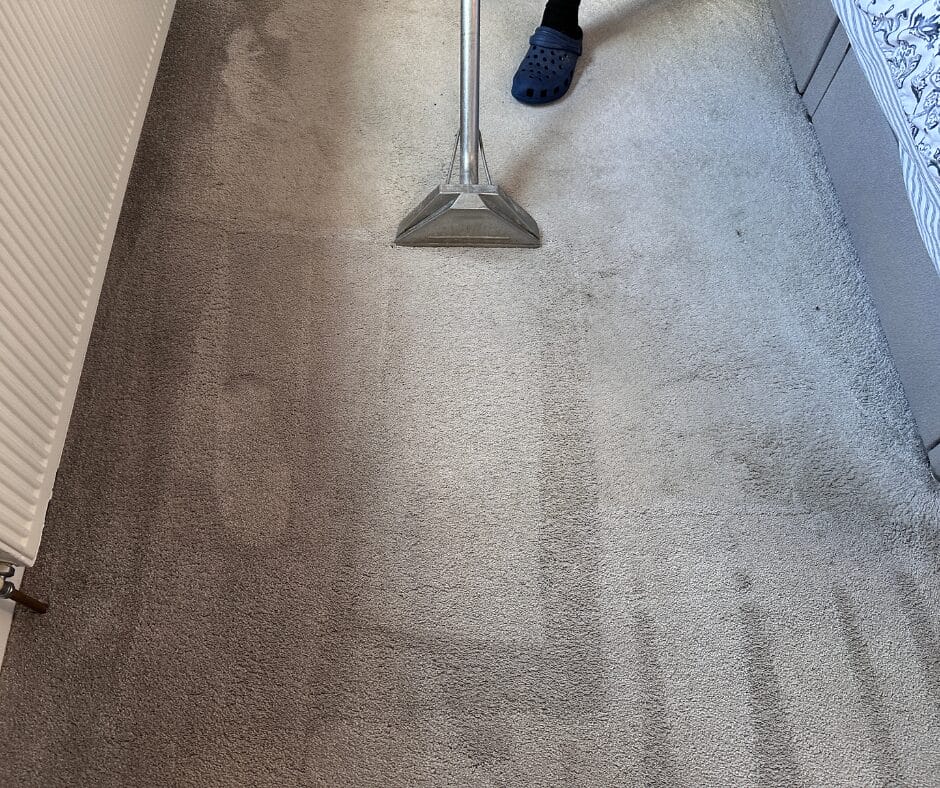
Public-health guidance may recommend steam cleaning contaminated carpets where possible, following initial removal and cleaning. The correct method depends on the carpet and setting, so consider professional help rather than using an unsuitable domestic steam appliance.
When should carpet underlay be replaced?
Replacement may be needed when a significant amount of vomit has soaked through, contamination cannot be extracted safely or a persistent smell remains below the carpet. The carpet should be lifted and assessed by someone with the right experience.
Need help with a vomit stain in Essex?
If the mark remains, the smell has returned or you are worried that the contamination has reached the underlay, we are here to help.
Send Careclean a photo and tell us what happened, what type of carpet you have if known, and how long the area has been affected. We will explain the most sensible next step without pressure.
References