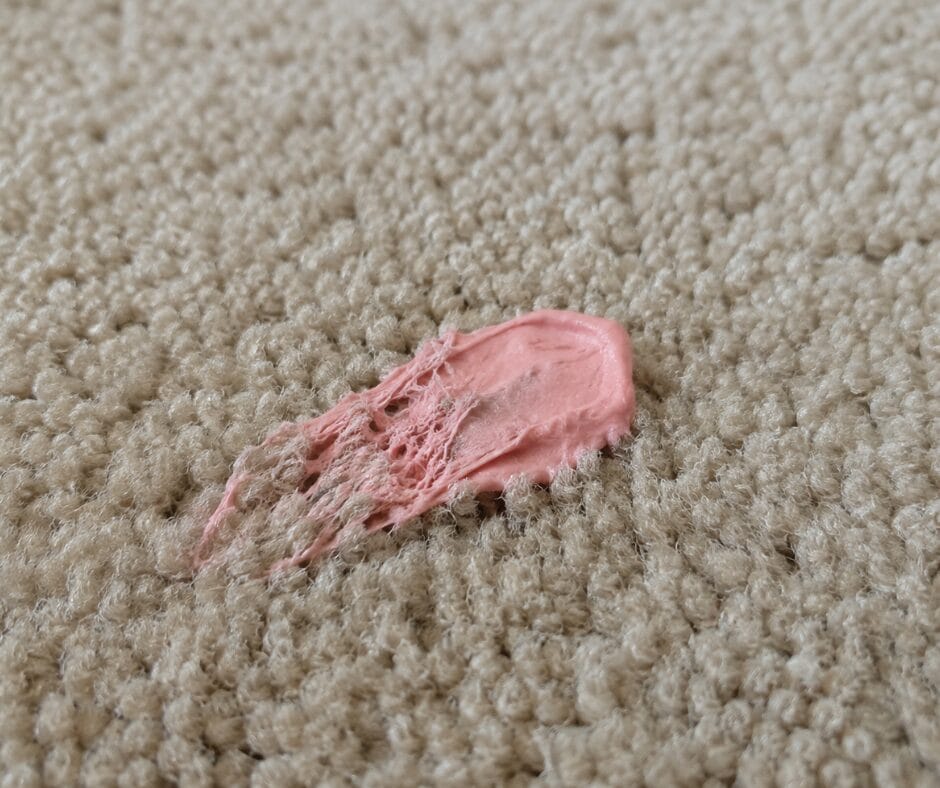
Finding chewing gum pressed into your carpet can feel like a small disaster, especially when it has softened, spread between the fibres or been walked further into the pile.
The safest first approach is usually to harden the gum with ice before attempting to lift it carefully. Avoid pulling at soft gum, rubbing the area or reaching straight for a strong household chemical. The carpet’s fibre, construction and colour all affect what can be used safely.
This guide explains what you can cautiously try, what may make the problem worse and when it is sensible to stop and ask a professional carpet cleaner for advice.
The main points before you begin
- Do not rub or scrub soft chewing gum.
- Keep ice and moisture contained inside a sealed bag.
- Work slowly from the outside of the gum towards the centre.
- Avoid heat, oils, solvents and products that are not intended for carpets.
- Stop if carpet fibres begin lifting, stretching or changing colour.
Why is chewing gum difficult to remove from carpet?
Chewing gum is designed to stay soft and flexible. Once it becomes warm, it can cling firmly to individual carpet fibres and work its way deeper into the pile.
Trying to pull it away while it is still soft can stretch the gum across a larger area. Vigorous scraping can also disturb the carpet pile, create a fuzzy patch or pull fibres from the backing.
The type of carpet matters too. A short synthetic carpet may react differently from wool, a deep pile carpet or a looped construction. Dark dyes, delicate fibres and previously treated areas may also respond unpredictably to cleaning products.
Before putting anything onto the carpet, check the care label or any information supplied by the manufacturer.
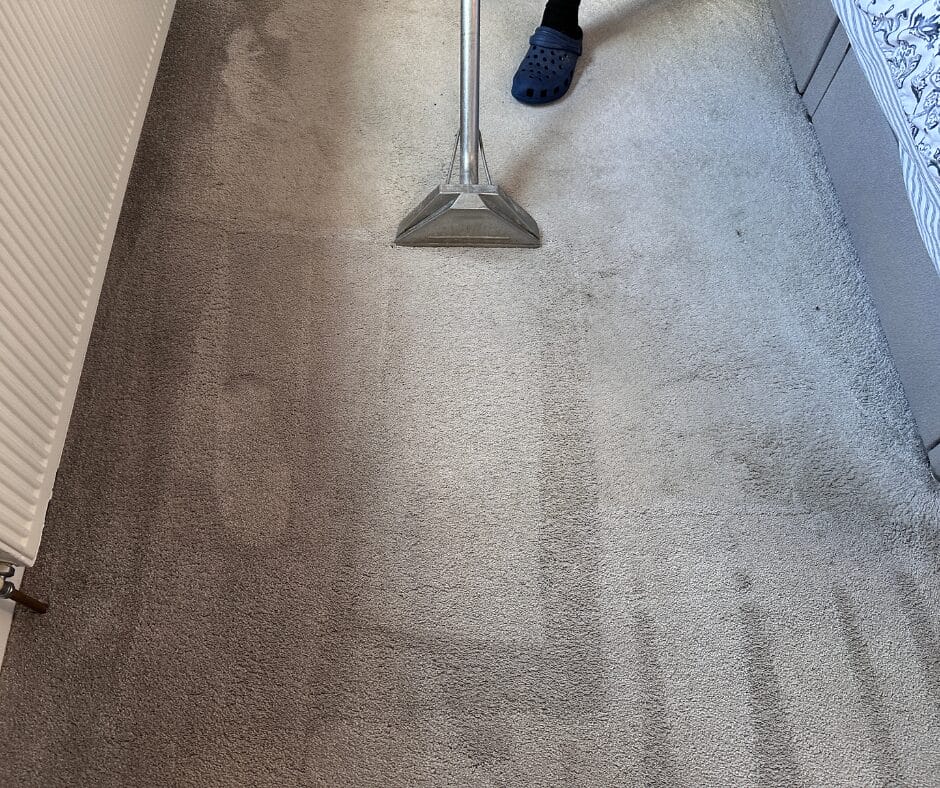
How do you remove chewing gum from your carpet with ice
A recognised carpet-care approach is to make the gum cold and brittle before gently lifting it. Guidance produced by wool-care specialists recommends using ice cubes inside a plastic bag, followed by a task-specific chewing gum remover where appropriate. It also stresses pre-testing products and avoiding excessive moisture. Read the wool carpet care guide.
- Prevent the gum from spreading
Keep people and pets away from the area. Do not walk over it or press it further into the pile.
If the gum is still warm or soft, leave it alone until you have prepared the area. Pulling at this stage is more likely to spread it.
- Put ice cubes in a sealed plastic bag
Place several ice cubes inside a strong, leak-free plastic bag. Seal it properly so melting water cannot escape onto the carpet.
Lay the bag over the chewing gum rather than placing loose ice directly onto it.
Keeping the water contained helps reduce the risk of over-wetting the carpet or its backing.
- Allow the gum to become firm
Leave the ice bag in position long enough for the chewing gum to become noticeably harder.
There is no exact time that suits every carpet or piece of gum. Check it regularly rather than leaving melting ice unattended.
You are looking for gum that feels firm and less flexible, not a wet carpet.
- Gently lift from the outside
Once hardened, try to lift a small edge using a blunt, smooth-edged tool, such as a spoon.
Work slowly from the outside towards the centre. Do not dig down into the carpet or pull upwards with force.
Remove small pieces as they loosen. You may need to reapply the ice bag if the remaining gum begins to soften.
Stop immediately if carpet fibres are coming away with the gum.
- Do not chase the final residue
The main piece of gum may lift while leaving a thin, sticky deposit behind. This is often the point where a simple-looking job becomes more complicated.
Repeated scraping may damage the pile. Adding an unsuitable solvent may dissolve the gum but leave an oily mark, faded colour or chemical residue.
If the remaining area is clearly bonded to the fibres, professional assessment is usually the more cautious next step.
What should you avoid using on carpet?
Online advice often recommends WD-40, oils, peanut butter, vinegar, nail varnish remover, rubbing alcohol, washing-up liquid or a hot iron.
Some substances may soften or dissolve chewing gum, but that does not mean they are suitable for your carpet.
A product can remove the gum and still leave a more difficult stain behind.
Oils and lubricants can leave greasy residues that attract soil. Solvents may affect carpet dyes, backing materials or adhesives. Strong detergents can leave a sticky deposit if they are not rinsed and extracted properly.
You should be particularly cautious with the following.
- WD-40 and lubricating sprays
WD-40 is not manufactured as a general carpet spot cleaner. It may leave an oily residue and create a separate mark that requires further treatment.
For that reason, we would not advise applying it to an unidentified carpet fibre.
- Peanut butter and cooking oils
These are sometimes suggested because oil can reduce the gum’s stickiness. However, they also introduce grease into an absorbent textile surface.
Removing that new greasy deposit may prove harder than removing the original gum.
- Hairdryers, irons and hot water
Heat softens chewing gum. On a carpet, this can allow it to spread further between the fibres.
Heat may also affect some synthetic fibres and carpet backings. We recommend avoiding it unless a carpet-care specialist has identified the material and selected a controlled treatment.
- Bleach and strong household cleaners
Bleach can permanently change the carpet’s colour and may damage fibres. General kitchen, bathroom and multipurpose cleaners can also contain ingredients that are unsuitable for textiles.
Never mix cleaning chemicals.
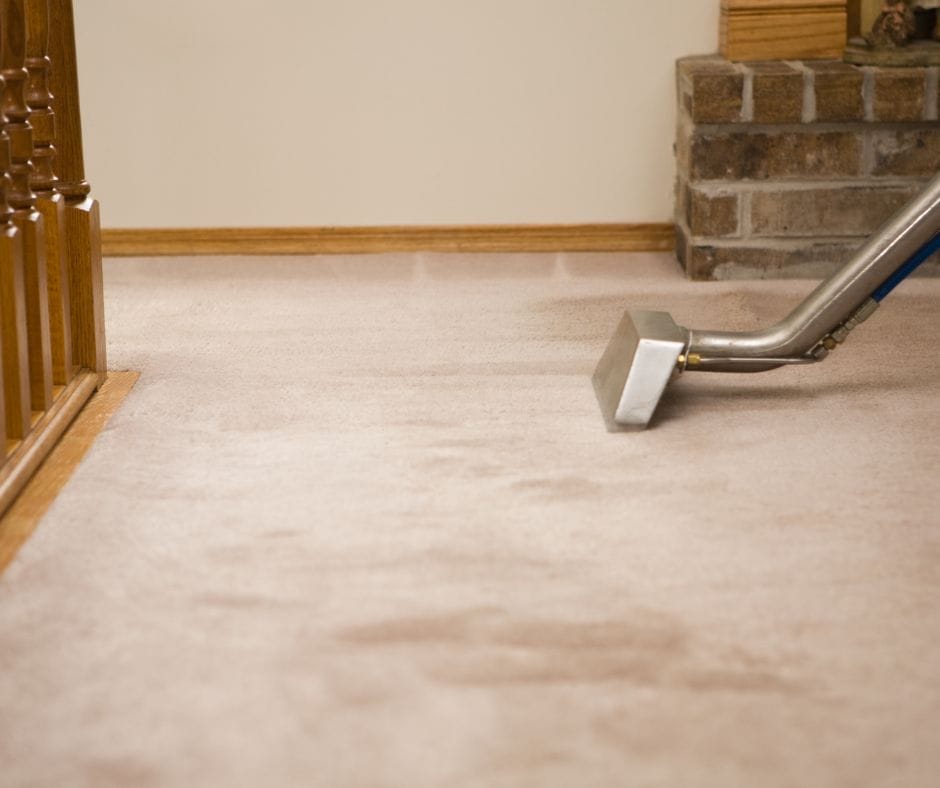
Can you use a commercial chewing gum remover?
Specialist chewing gum removers are available, including products intended for use on certain textile surfaces. However, no product should automatically be treated as safe for every carpet.
Before considering one, check:
- whether it is specifically labelled for carpet use
- which fibres it is suitable for
- whether the carpet manufacturer approves its use
- what ventilation and protective equipment are required
- whether the treated area must be rinsed or professionally extracted
Any treatment should be tested first in an inconspicuous area, following the product instructions exactly.
The wool carpet care guide recommends applying treatments to a cloth rather than pouring them directly onto a stain. It also advises using small quantities, avoiding over-wetting and blotting rather than rubbing.
A patch test reduces risk, but it cannot guarantee that a product will be harmless across the visible area.
Does the type of carpet change the advice?
Yes. Fibre type and carpet construction can make a considerable difference.
- Wool carpets
Wool responds differently from many synthetic fibres and can be sensitive to unsuitable alkalinity, aggressive rubbing and excessive moisture.
Use particular caution with wool, wool-rich blends and carpets with natural dyes. Guidance produced in consultation with WoolSafe recommends seeking professional help for extensive, old or set-in staining.
- Synthetic carpets
Nylon, polypropylene and polyester carpets may tolerate some treatments differently, but “synthetic” does not mean indestructible.
Strong solvents, heat and hard scraping can still affect the fibres, colour or backing.
- Loop pile carpets
A loop can catch on a scraping tool and pull, creating a visible line or raised section.
Do not cut an affected loop without professional advice. A single cut can weaken the construction and make the damage more noticeable.
- Deep pile and soft-touch carpets
Chewing gum can settle below the visible surface of a deep carpet. Pulling from the top may stretch or remove fibres while leaving gum underneath.
These carpets often benefit from a closer inspection before further treatment.
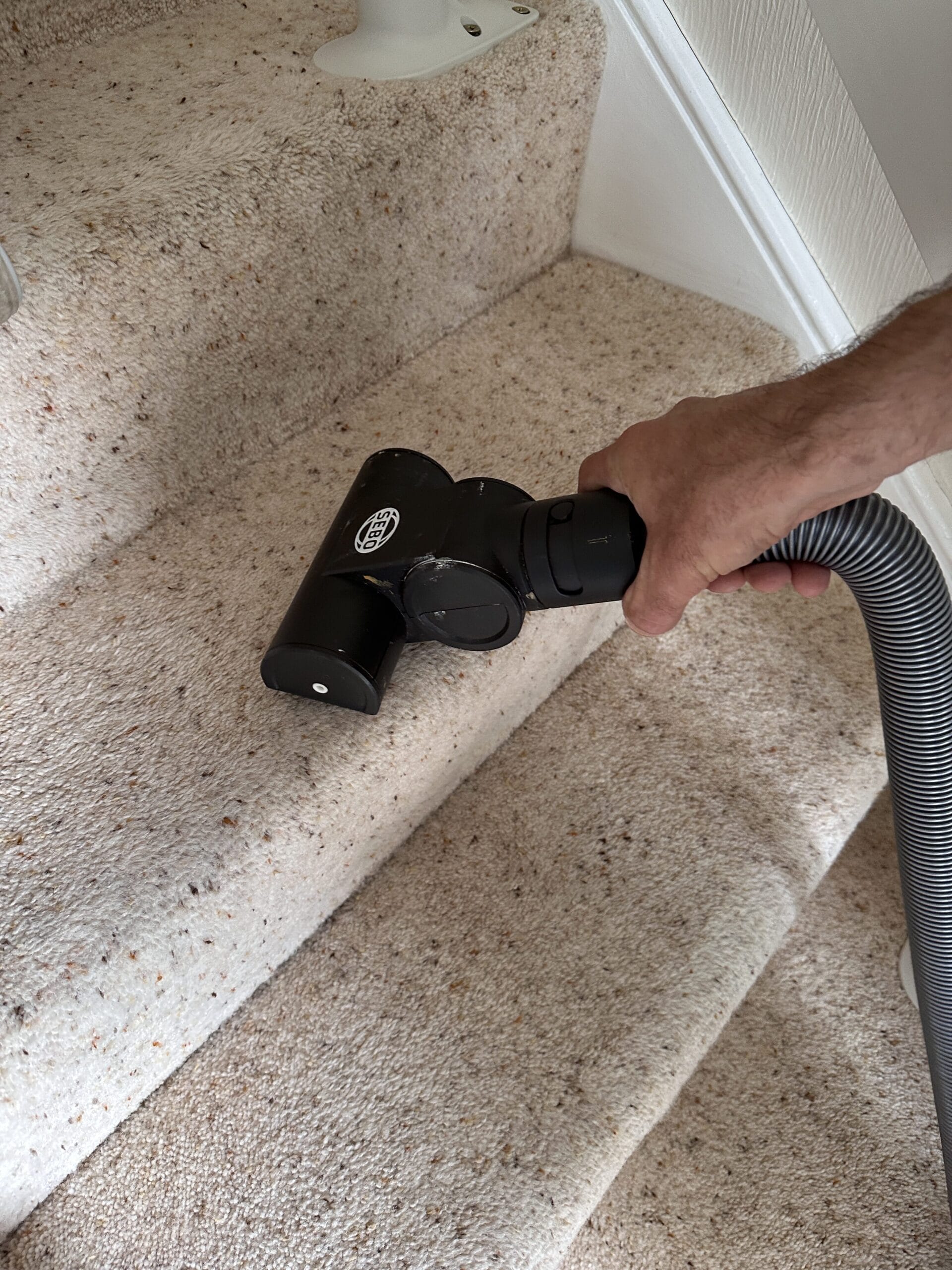
What if the gum has already been walked into the carpet?
Gum that has been pressed into the pile may contain grit, dust and colour transfer from shoes. It can also cover a wider area than first appears.
Try not to separate the fibres aggressively to investigate. You may spread the contamination or distort the pile.
Take a clear photograph and note:
- how long the gum may have been there
- whether any products have already been applied
- the carpet fibre, if known
- whether the area has changed colour
- whether fibres have started to pull out
This information can help a professional judge whether spot treatment is realistic and what risks need to be discussed first.
When should you call a professional carpet cleaner?
You may wish to stop and seek advice when:
- the carpet is wool, handmade or particularly valuable
- the gum is deeply embedded
- the affected area is larger than a small spot
- fibres are lifting with the gum
- the carpet colour is transferring onto your cloth
- another chemical or oily product has already been used
- a sticky or greasy shadow remains
- you are unsure what the carpet is made from
A professional cleaner can inspect the fibre and construction before selecting a treatment. This does not mean that every trace can always be removed. Age, heat, previous treatments and physical fibre damage can all affect the likely result.
A trustworthy cleaner should explain what is realistic before beginning, including any risk of a remaining mark or pile distortion.
Careclean’s professional carpet cleaning service in Essex includes an assessment of carpet type and cleaning needs before treatment. The company also uses pre-spotting, controlled rinsing and extraction as part of its wider carpet-cleaning process.
Will professional carpet cleaning remove all the gum?
It may be possible to remove the gum itself and improve remaining residue, but no responsible cleaner should promise a perfect result without examining the carpet.
A mark can remain if:
- the gum contains added colouring
- soil has bonded to the sticky residue
- the pile has been physically distorted
- heat or chemicals have already affected the fibres
- the original carpet colour has changed
The aim is to choose the safest realistic treatment, rather than keep treating the area until the carpet is damaged.
For rugs, the safest approach may also depend on whether the item is synthetic, wool, handmade or prone to dye movement. Careclean offers both on-site and off-site rug cleaning in Essex, with the method chosen according to the rug’s needs.
Local help with chewing gum on carpets in Essex
Chewing gum is a common household mishap. It can happen after a children’s party, when gum falls from a pocket or when it is carried indoors on a shoe.
The important thing is not to panic or throw a cupboard full of products at it.
Start by keeping the area still. If the carpet is suitable and the gum is sitting near the surface, the contained ice method may help it become easier to lift. Stop if you encounter resistance, colour change or fibre movement.
Careclean works with homeowners across Chelmsford, Brentwood, Braintree, Colchester, Basildon, Southend and surrounding parts of Essex. You can also read what local Careclean clients say about the company’s carpet and stain-cleaning work.
Frequently asked questions
Does ice damage carpet?
A sealed bag of ice is generally used to harden gum without placing loose water directly onto the carpet. Keep checking the bag for leaks and avoid leaving the area wet. Fibre type, backing and existing damage still matter.
How long should I leave ice on chewing gum?
There is no single time that suits every situation. Check the gum regularly and remove the bag once the gum feels hard enough to lift gently. Do not leave melting ice unattended.
Can I scrape gum from carpet with a knife?
A sharp knife can cut fibres or damage a looped carpet. A blunt, smooth-edged tool is less aggressive, but it must still be used gently. Stop if fibres begin to lift.
Can WD-40 remove chewing gum from carpet?
It may affect the gum, but it can also introduce oily residue into the carpet. Because carpet fibres, dyes and backing materials vary, we would not recommend using it as a general carpet treatment.
What removes the sticky residue left by gum?
The correct treatment depends on the fibre, dye and products previously used. Avoid experimenting with several solvents. A carpet-specific product may be appropriate after testing, but professional advice is safer when the residue is embedded or the carpet is delicate.
Should I cut out carpet fibres containing gum?
No. Cutting fibres can leave a permanent thin or bald patch and may cause loop-pile carpet to unravel. Ask a carpet professional to assess the area before cutting anything.
Just one final word…
Harden first, lift gently and know when to stop.
A small piece of chewing gum does not always require a full professional clean. Equally, trying too many online remedies can turn a manageable spot into an oily stain, faded patch or damaged pile.
If you are unsure what your carpet is made from, or the gum is refusing to move, Careclean Essex is happy to look at a photograph and explain the sensible options. There is no need to keep treating the area while you decide.