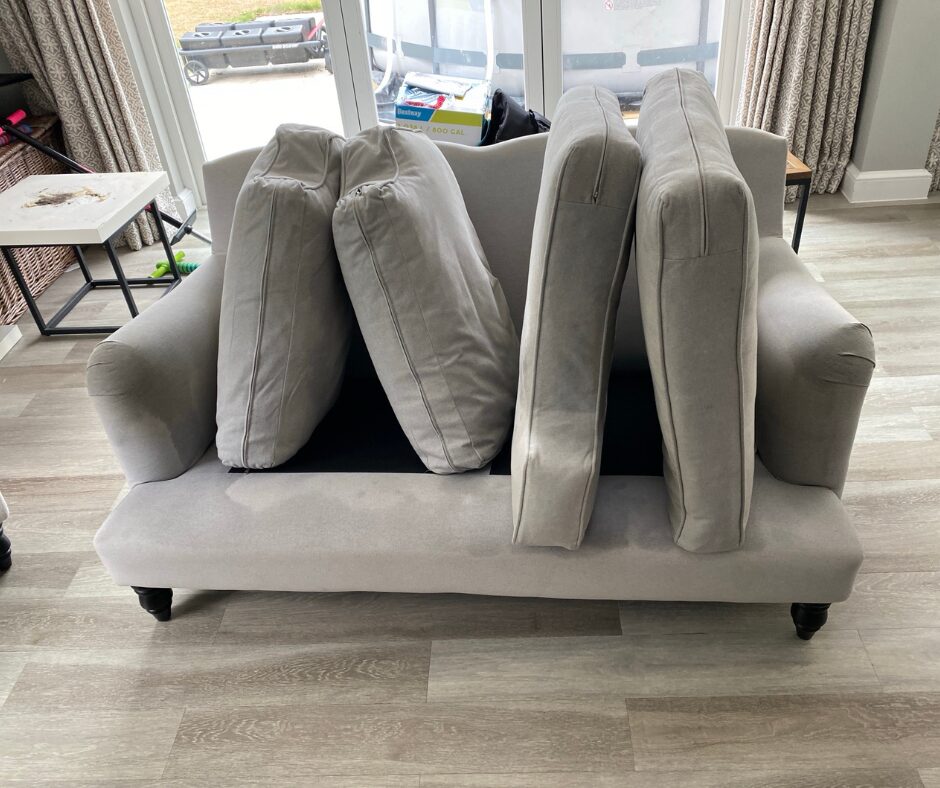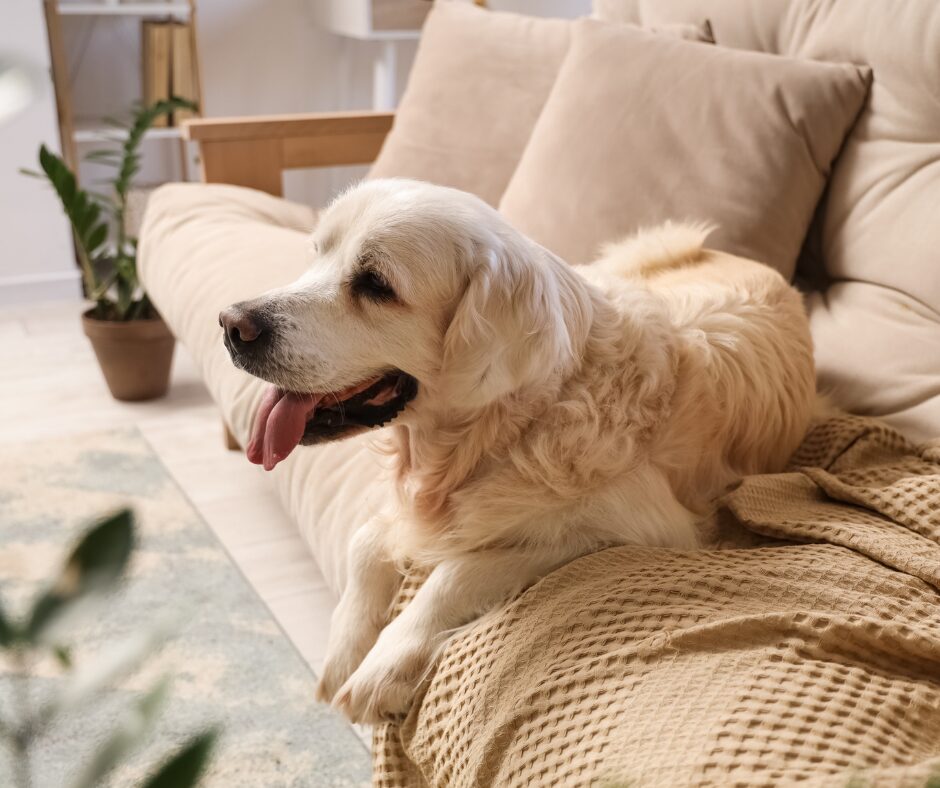
You’ve finally decided your sofa could do with a proper clean. There’s a suspicious mark on one cushion, the dog has claimed the best seat, and you’re fairly sure there’s a biscuit crumb collection developing somewhere down the sides.
But before booking, there’s one question that matters more than anything else.
“Is professional sofa cleaning actually safe for my baby and pets?”
It’s a perfectly sensible question.
After all, babies have a wonderful habit of putting absolutely everything in their mouths, toddlers treat sofas like adventure playgrounds, and dogs seem convinced that every freshly cleaned surface needs inspecting immediately.
Usually with their nose!
Professional sofa cleaning can be suitable for homes with babies, young children and pets. The important things are using appropriate products, following the manufacturer’s instructions, considering individual sensitivities and keeping everyone away from the upholstery until it is fully dry and ready for use.
Let’s look at what you need to know, what questions to ask and how to make the whole experience easier.
What cleaning products are used on sofas?
This is usually where the questions begin.
You might be wondering whether professional cleaners use strong chemicals, whether anything gets left in the fabric or whether the cleaning products could irritate sensitive skin.
The answer depends on the sofa, the products and the cleaning method.
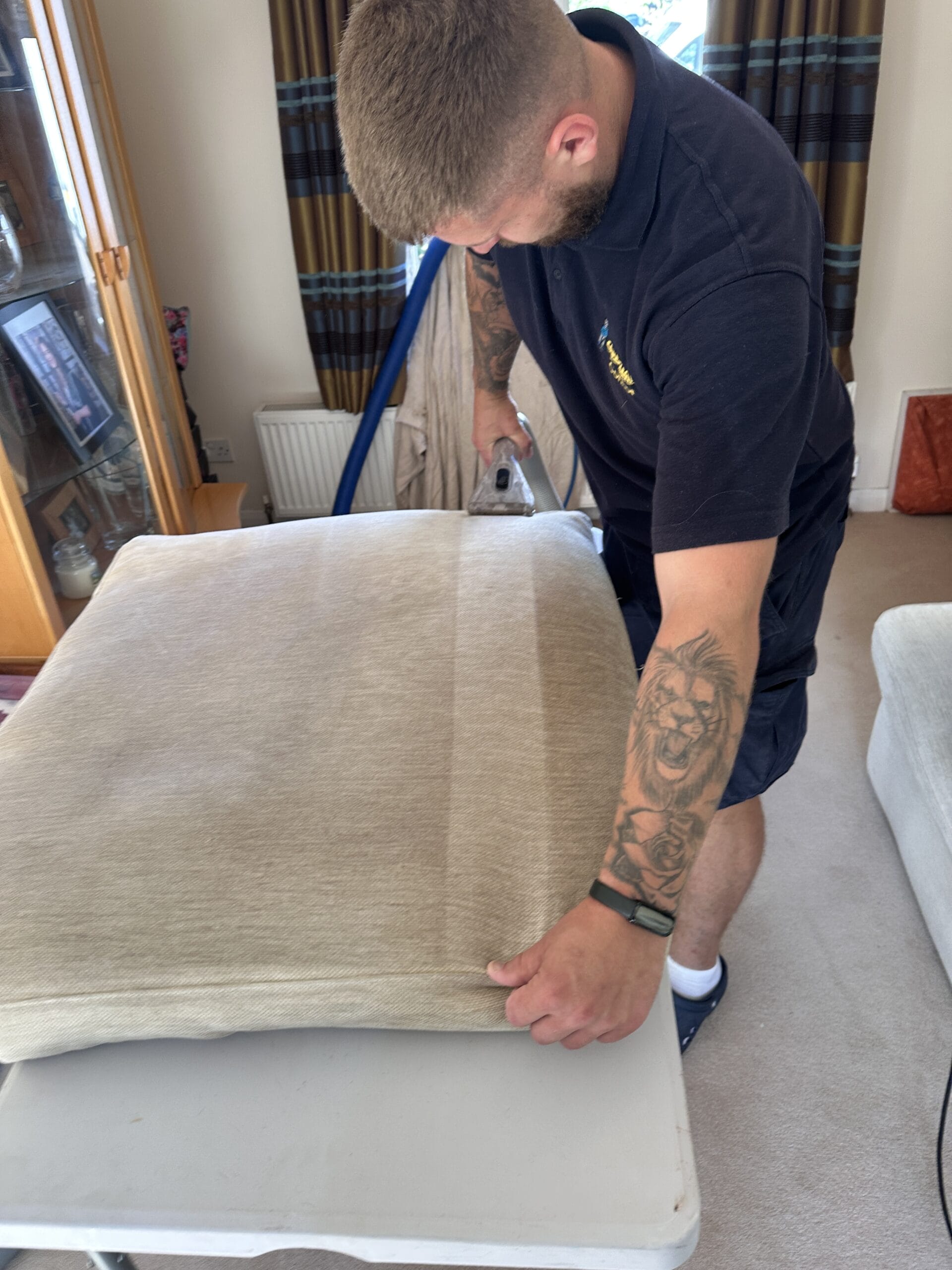
Professional upholstery cleaning can involve products that help loosen dirt and oils, specialist stain treatments and rinsing solutions.
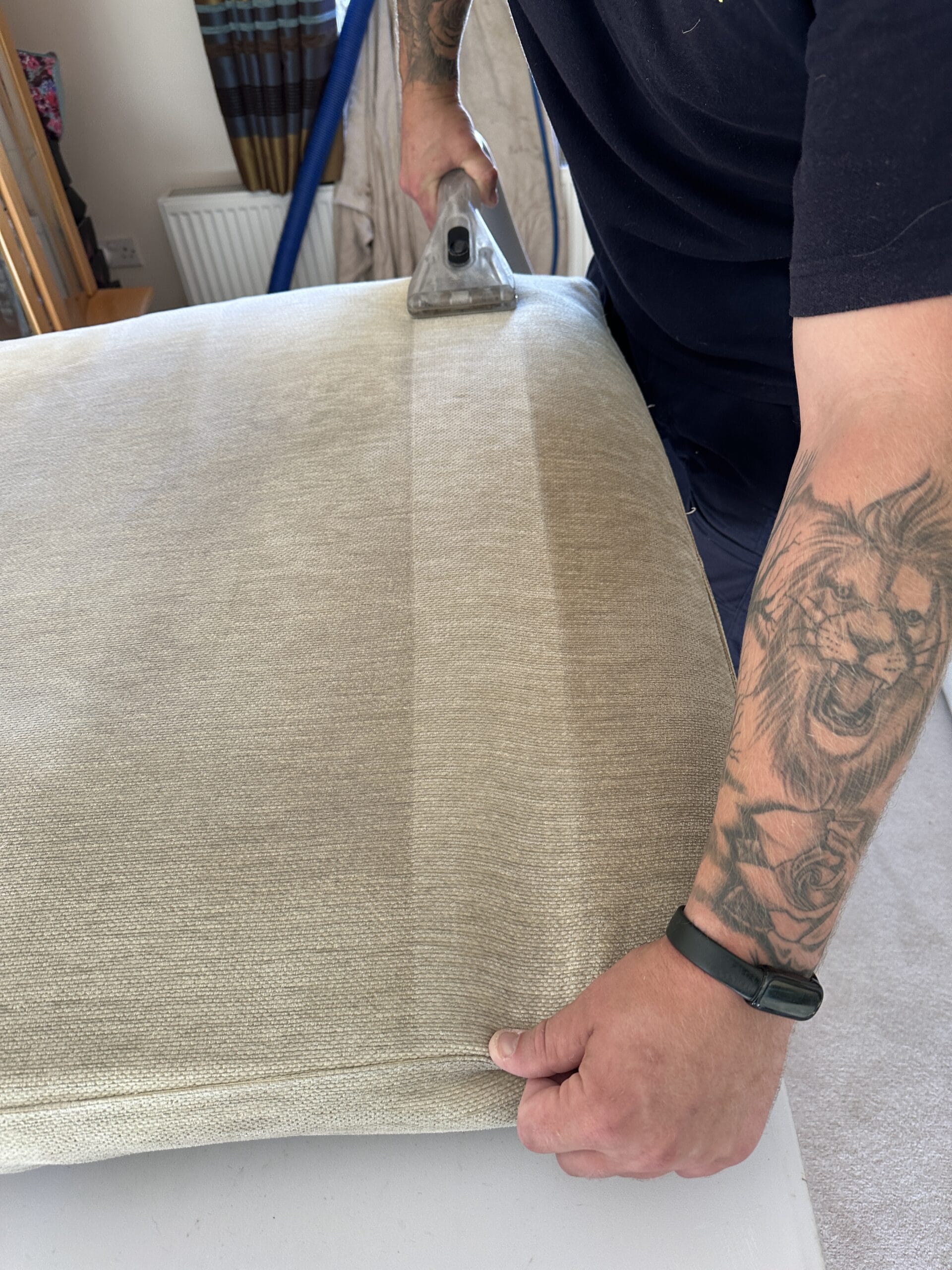
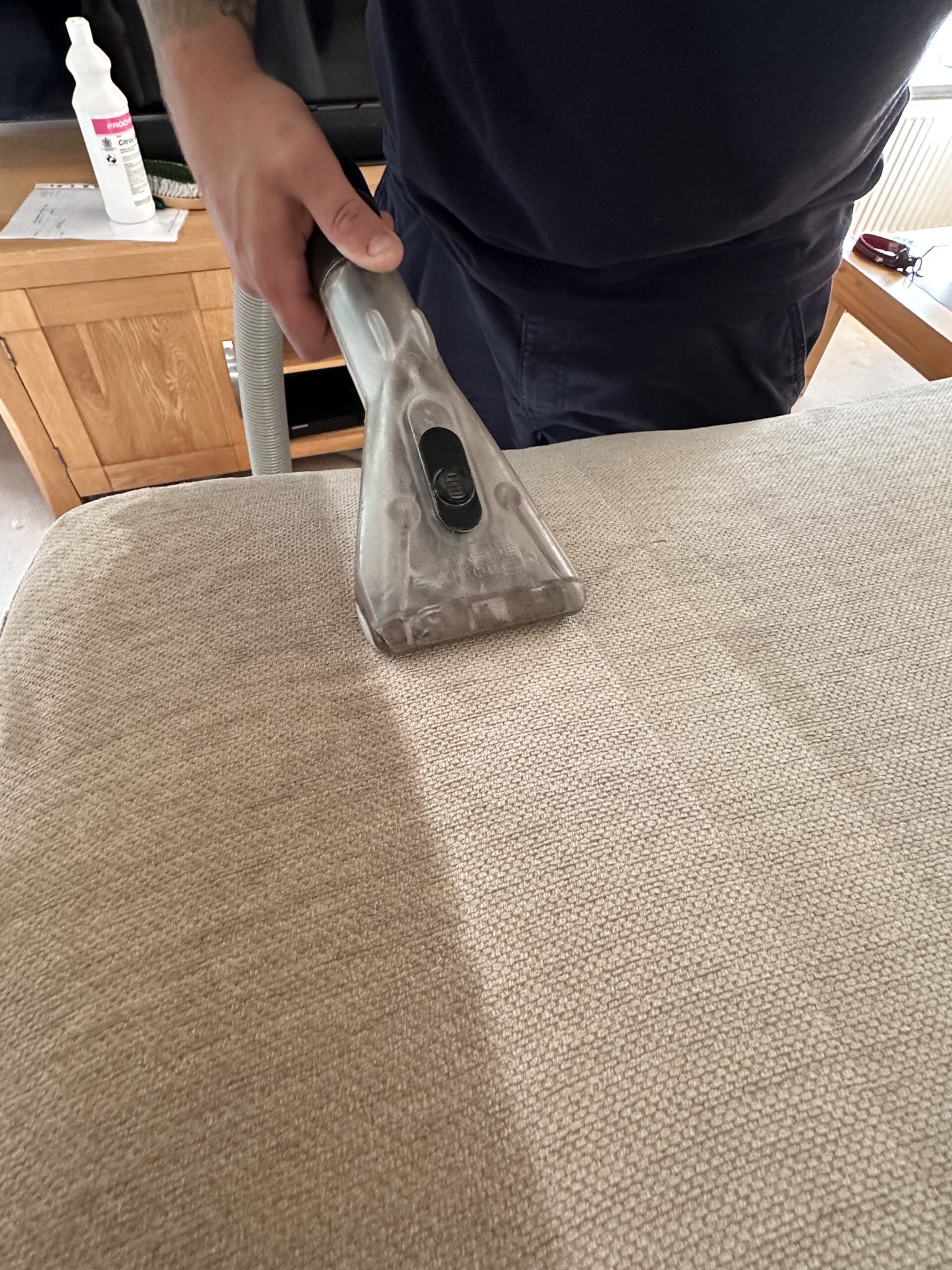
Some cleaners use hot water extraction, which involves applying a cleaning solution and using extraction equipment to remove much of the moisture and loosened dirt.
Other fabrics require different methods.
There isn’t one cleaning product that’s automatically suitable for every sofa or every household.
A good cleaner should understand the products they’re using, follow the product instructions and assess the upholstery before starting.
At Careclean Essex, our professional upholstery cleaning service includes fabric assessment, cleaning and rinsing where appropriate.
If you have questions about the products planned for your furniture, you’re absolutely entitled to ask.
And please do!
It’s your home, after all.
Does ‘eco-friendly’ mean completely safe?
This is worth talking about because it’s easy to misunderstand.
You’ll often see cleaning products described as eco-friendly, natural, gentle or child-friendly.
Those words may tell you something useful about a product, but they aren’t a guarantee that it’s harmless in every situation.
Even products made from natural ingredients can cause problems if used incorrectly.
The important questions are whether the product is appropriate for the fabric, how it’s used, whether rinsing is required, and what precautions apply afterwards.
For example, some products may need to be kept away from children and animals while being applied.
Others may contain fragrances that a particularly sensitive household would prefer to avoid.
You don’t need to become a cleaning-product expert. You just need to feel comfortable asking what will be used in your home.
A professional should be able to explain this in everyday language.
No chemistry lesson required!
What if your baby has sensitive skin?
Babies spend a lot of time touching the things around them.
Once they’re crawling or pulling themselves up, your lovely sofa becomes another fascinating thing to explore.
And if you’ve ever tried stopping a determined baby from putting something in their mouth, you’ll know how successful that conversation usually is!
If your baby has eczema, sensitive skin or a known allergy, it’s particularly important to mention this before arranging cleaning.
The cleaner can explain which products and methods they propose to use, so you can consider whether they’re suitable for your household.
You may also wish to discuss particular concerns with your child’s healthcare professional.
Professional cleaning cannot guarantee that a fabric will be completely free of allergens or that no irritation will occur.
There are many possible causes of skin reactions, including existing residues, the fabric itself and individual sensitivities.
For households concerned about indoor air quality, the NHS recommends ventilation during cleaning and considering gentler products where appropriate.
You can read more in this NHS guidance on indoor air pollution and children.
Is professional sofa cleaning safe for dogs and cats?
Now, let’s talk about the furry members of the household.
The ones who somehow manage to hear a packet of biscuits opening from three rooms away.
Dogs and cats explore their surroundings differently from us.
They may sniff a freshly cleaned surface, rub against it, lick their paws or settle down in exactly the spot you’ve asked them to avoid.
This is why precautions matter.
Pets should be kept away from the cleaning area while products are being applied and until the upholstery is fully dry and safe to use according to the product instructions.
You should also tell your cleaner what pets live in your home.
Cats, dogs and other animals can have different sensitivities, so it’s worth checking whether any particular product precautions apply.
The veterinary charity PDSA has a useful article explaining how to keep pets safe from cleaning products.
One of their key recommendations is to keep pets away from freshly cleaned areas until everything has dried.
And yes, this may mean temporarily persuading your dog that their favourite sofa is unavailable.
Good luck with that one!
When can babies and pets use the sofa again?
This is the big practical question.
And there’s one rule I’d keep firmly in mind.
Wait until the sofa is completely dry and the cleaner confirms it’s ready for normal use.
Drying time depends on several things, including the upholstery fabric, cushion filling, cleaning method and ventilation.
Some sofas dry within a few hours, while others need considerably longer.
The surface may also feel dry before moisture deeper inside the cushions has finished evaporating.
So even if the sofa looks ready, don’t rush everyone back onto it.
Make sure any additional product instructions have been followed too.
We’ve written a separate guide explaining how long sofa cleaning takes to dry, including what affects the drying time and how to help your furniture dry properly.
It’s worth reading if you’re trying to work around naps, school runs or the dog’s afternoon snooze.
A quick safety checklist before and after sofa cleaning
Here’s a simple table you can use when arranging your appointment.
| When | What to do | Why it helps |
| Before booking | Mention babies, young children, pets and known sensitivities | Allows the cleaner to explain suitable methods and precautions |
| Before cleaning | Ask which products will be used | Helps you understand what’s going into your upholstery |
| On cleaning day | Keep children and pets away from the working area | Prevents accidental contact with products and equipment |
| During drying | Keep the sofa out of use and ventilate as advised | Supports drying and reduces unnecessary exposure |
| Before using the sofa | Check that it’s fully dry and all aftercare instructions have been followed | Helps you know when the furniture is ready |
| Afterwards | Store household cleaning products securely | Reduces the risk of children or pets finding them |
My favourite tip is to make a little plan for where everyone will sit while the sofa dries.
It sounds obvious, but it saves that awkward moment when someone asks, “Where am I supposed to sit then?”
The dining chairs may get a rare moment of popularity.
Can sofa cleaning help with dust and pet hair?
Sofas collect more than the occasional biscuit crumb.
Dust, pet hair and everyday dirt can build up in the cushions and seams, particularly when the furniture gets a lot of use.
Regular vacuuming with a suitable upholstery attachment helps remove loose debris.
Appropriate professional cleaning may remove further accumulated material from accessible areas of the fabric.
This can be useful for maintaining the cleanliness of your furniture.
However, it’s important to understand the limits.
Sofa cleaning isn’t an allergy treatment, and it cannot guarantee the removal of every allergen.
If anyone in your house has asthma, allergies or another medical sensitivity, it’s sensible to discuss product and exposure concerns with an appropriate healthcare professional.
The aim is to make informed decisions about your home without expecting cleaning to solve a medical condition.
What about pet accidents and unpleasant smells?
If you’ve got a puppy, an older dog or a cat who occasionally has an accident, you may be dealing with more than ordinary dirt.
Pet urine can soak through the upholstery fabric and reach the filling underneath.
This can make odours difficult to remove completely.
Professional cleaning may help in some situations, but it depends on how far the contamination has travelled.
If the smell is coming from deep inside the cushion, surface cleaning alone may not solve it.
It’s always worth explaining what’s happened rather than hoping the cleaner won’t notice.
Honestly, people with pets have seen it all. There’s no reason to feel embarrassed!
If your problem is mainly that familiar doggy pong, you might find our guide Why Does My Sofa Still Smell of Dog? helpful.
It covers the common causes and simple ways to keep the sofa fresher.
What if the fabric itself is delicate?
This is another important safety consideration.
Some upholstery materials are sensitive to moisture, certain cleaning products or changes in temperature.
For example, some natural-fibre blends, velvets and specialist fabrics can require particularly careful handling.
Before cleaning, the material should be assessed, and appropriate tests carried out where necessary.
A method that’s suitable for one sofa may not be suitable for another.
The same applies to older upholstery or furniture that has already been treated with household cleaning products.
A careful cleaner should explain any risks and whether the sofa is suitable for treatment.
If you’d like to understand more, our article Can a Sofa Be Deep Cleaned Without Damage? explains the importance of choosing the method that’s right for you.
Sometimes protecting the furniture means recommending a different approach or advising against cleaning.
What should you ask before booking a sofa clean?
You shouldn’t feel awkward asking questions about something being done in your home.
In fact, I’d be more concerned if a cleaner couldn’t answer them!
Here are a few useful questions:
- What products will you use on my particular sofa?
- Are there any precautions for babies or pets?
- Will you rinse or extract cleaning residues where appropriate?
- How long should the sofa take to dry?
- What should I do if someone in my home has allergies or sensitive skin?
- Are there any additional precautions if I choose a fabric protection treatment?
You don’t need to ask all six if they aren’t relevant.
Just focus on what matters to your household.
A good explanation should leave you feeling comfortable about the process, including what happens if the sofa turns out to be unsuitable for cleaning.
What if you’re expecting a baby soon?
If you’re getting the house ready for a new arrival, you may be thinking about cleaning the furniture before the baby comes home.
That’s understandable.
There’s something lovely about getting everything organised before the new member of the family arrives.
Although, as every parent knows, babies have their own opinions about how organised your life should be!
If you’re considering sofa cleaning during pregnancy or before a baby’s arrival, let the cleaner know.
Ask about the proposed products, ventilation, drying time and whether there are any precautions relevant to your circumstances.
You may prefer to arrange cleaning well before your due date so there’s plenty of time for the upholstery to dry and the room to return to normal.
There’s no need to leave everything until the last minute.
A little advance planning makes the process much easier.
Frequently asked questions
Is sofa steam cleaning safe for babies?
It can be suitable when the upholstery and products are appropriate, the process is carried out correctly, and all aftercare instructions are followed. Keep babies away during treatment and until the furniture is fully dry and ready for use.
Are professional upholstery cleaning chemicals harmful to pets?
Some cleaning products can be harmful if animals come into contact with them or swallow them. The risks depend on the ingredients and how they’re used. Ask your cleaner about the specific products and keep pets away until the upholstery is safe to use.
Can my baby crawl on the sofa after it’s cleaned?
Wait until the sofa has fully dried, the product instructions have been followed, and the cleaner confirms it is ready. Continue to supervise babies around furniture, as sofas are not safe places to leave them unattended.
Can I stay at home during sofa cleaning?
Often, yes. However, it’s sensible to keep babies, children and pets away from the working area. Ask your cleaner whether ventilation, product use or anyone’s sensitivities mean additional arrangements would be sensible.
Will my sofa smell strongly of chemicals afterwards?
That depends on the products used. Some have a noticeable fragrance, while others are low-odour. If you’re concerned about smells or sensitivities, ask about product options beforehand.
Can professional cleaning remove dust mites and allergens?
Cleaning may reduce some accumulated dust and allergen-containing material, but it can’t guarantee complete removal. It’s best considered part of ordinary home maintenance rather than a medical treatment.
Should I use a fabric protection treatment with a baby or pets?
Ask which product would be used, whether it’s suitable for the fabric and what precautions apply. Protection treatments can have their own instructions and drying requirements, so they should be considered separately from the cleaning itself.
A clean sofa and a home that’s comfortable for everyone
Having your sofa cleaned should feel like a sensible way to look after your furniture, without leaving you worried about the people and pets who use it.
And you don’t need to know all the technical details to make a good decision.
Ask what products will be used, explain any sensitivities and make sure the sofa is completely ready before everyone piles back onto it.
That’s a good starting point.
If you’re thinking about professional sofa cleaning in Essex and have questions about your baby, children or pets, Careclean is happy to talk things through.
Tell us about your sofa, your household and anything you’re concerned about. We can explain the proposed cleaning approach and help you understand what may be suitable before you decide.
No pressure, no awkward questions and absolutely no judgement if your dog has claimed the best seat.
We know how these things work!