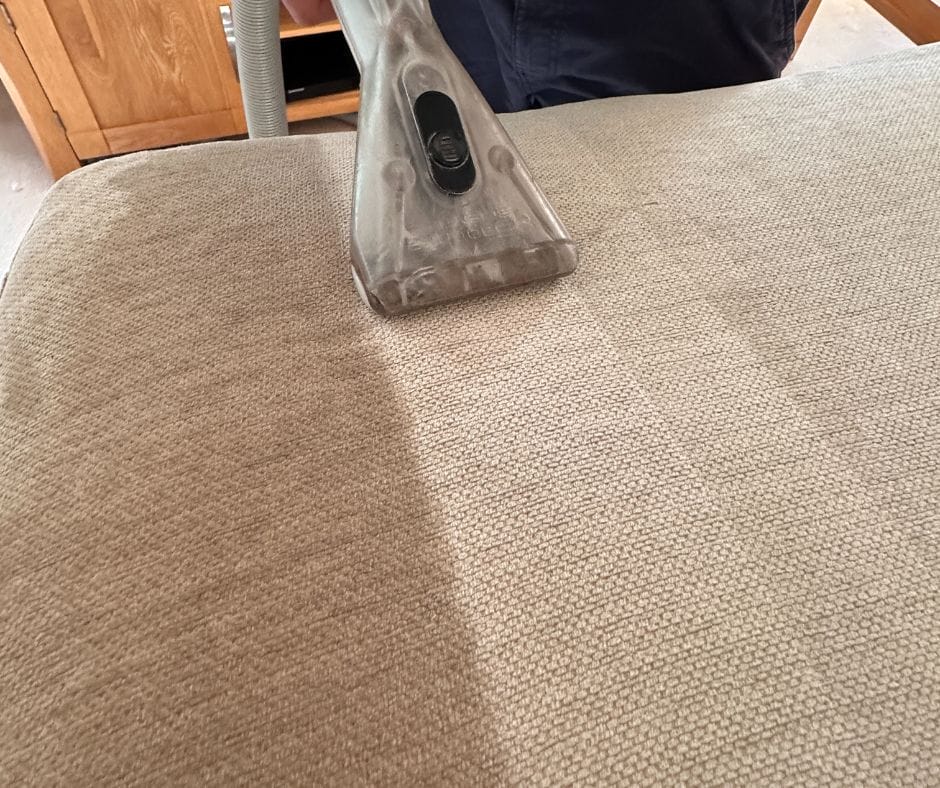
If you’re booking professional upholstery cleaning (or you’ve just had it done), drying time is usually the first thing you want to know… because life carries on and you need your lounge back.
In most homes, a sofa is touch-dry within a few hours, and properly dry within the same day. But drying time isn’t one fixed number. It changes with the fabric, the depth of the cushions, how much cleaning is needed, and how easily air can move through the room. Therefore, the most helpful way to think about it is what’s normal for your sofa, what shifts the timeline, and what you can do to help it dry evenly.
Key takeaways
- Most sofas are touch-dry in 2–6 hours and fully dry in 6–12 hours after professional cleaning.
- Drying time depends mainly on fabric type, cushion depth/filling, how much rinsing was needed, and airflow in the room.
- A sofa can feel dry on the surface while still holding moisture deeper in the seat cushions… that’s normal.
- You’ll usually get the best drying result with steady warmth + gentle ventilation (and a fan helps if you have one).
- If it’s still damp the next day, develops a musty smell, or shows patchy marks as it dries, it’s time to get advice rather than re-wetting areas.
Typical drying times after cleaning your sofa: what’s normal?
Sofas tend to dry in two stages. First, the surface starts to feel dry and usable. Then the deeper layers… the parts you can’t see inside the cushion and the backing… finish releasing moisture.
That’s why a sofa can feel “fine” and still be a bit cool when you press into the seat. In many homes, you’ll find it’s touch-dry in around 2–6 hours, and fully dry in around 6–12 hours. Some will be quicker, and some will edge into overnight, especially in colder months or in rooms that stay closed up.
If you’re trying to plan your day around it, a good rule is this: once it’s touch-dry, you can usually sit on it briefly, but for proper lounging… blankets, kids flopping down, pets nesting into corners… it’s best to wait until it’s fully dry.
What affects drying time the most?
The biggest influence is the fabric. Some upholstery fabrics let moisture go quite easily, while others hold onto it differently, so they need a steadier drying environment.
Cushion build is the next factor. Deep seats and thick cushions naturally take longer than arms and backs, and feather or fibre fills can hold onto moisture in the casing for longer. Foam can dry well too, but it still needs airflow… and it’s common for the cover to feel dry while the inside remains slightly cool.
Then there’s how much cleaning the sofa needed. Areas-like arms and headrests often carry more body oils and everyday build-up, and that usually calls for a more thorough process. A careful clean can involve a bit more rinsing and extraction… the difference is that it’s controlled, and the moisture is properly removed afterwards.
Finally, room conditions matter more than people expect. A gently warm room with airflow will dry a sofa far faster than a cool room with the doors shut, even if the cleaning itself was identical.
How a professional clean keeps drying time sensible
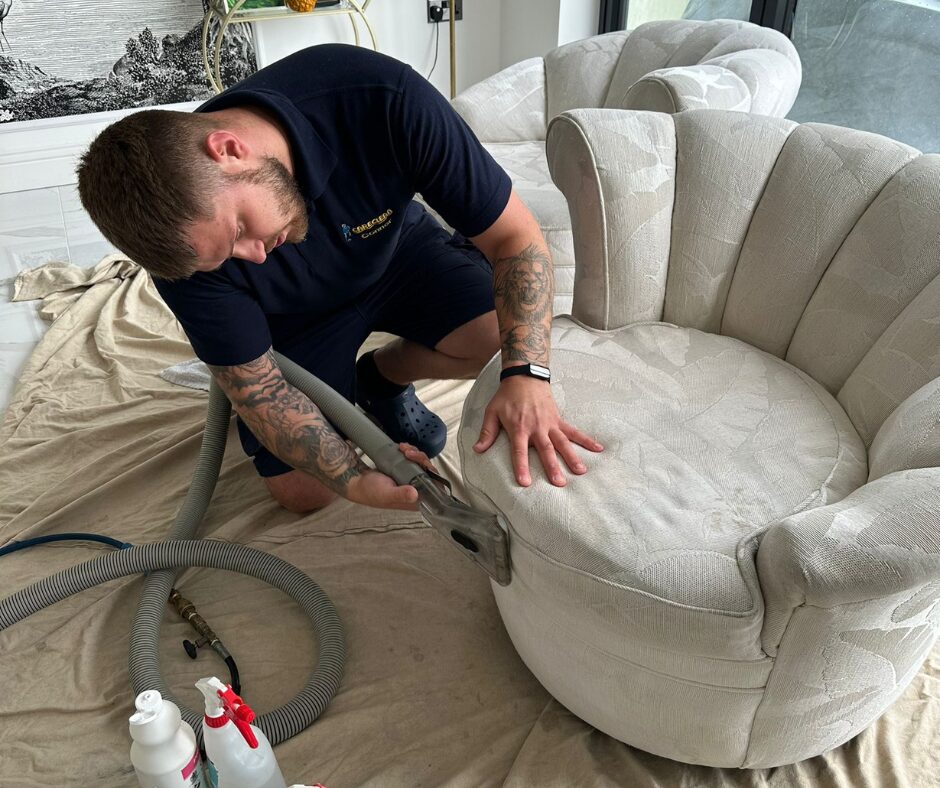
A good cleaner isn’t trying to “soak and hope”. The aim is to clean thoroughly while keeping moisture under control, and then extract as much as possible so the sofa isn’t left carrying unnecessary dampness.
Even cleaning and even extraction are especially important on lighter fabrics, velvets and textured weaves… not because they can’t be cleaned, but because they show uneven drying more clearly. If drying is patchy, you’re more likely to notice shading, watermarking, or areas that look different as they dry.
Simple ways to help it dry faster at home
Once the cleaning is done, your job is mostly to help moisture leave the fabric evenly.
If the weather allows, a little ventilation goes a long way… a cracked window, doors open within the house, and air moving through the room. In winter, you don’t need the house to freeze to get airflow; you’re aiming for a balance of gentle warmth and some movement of air.
A steady room temperature helps more than blasting the heating for an hour and turning it off. If you have a fan, pointing it across the sofa (not right up against it) can speed things up nicely.
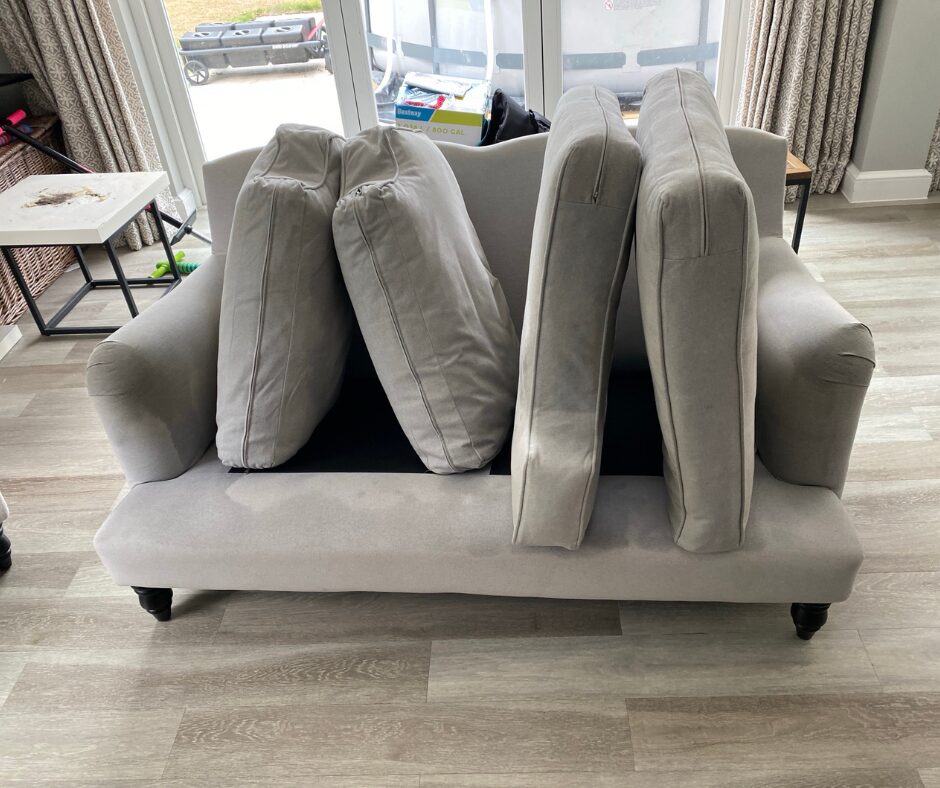
If you’ve got removable cushions, it can help to give them a chance to breathe. Standing them on edge for a while or rotating them once means one side isn’t always pressed down, which keeps drying more even.
What tends to slow drying is covering the sofa too soon. Throws and blankets trap moisture, so it’s best to wait until it’s properly dry before you put everything back to normal.
When drying time isn’t normal
A sofa taking a little longer than expected doesn’t automatically mean something’s wrong… especially with deep seating or in colder months. What matters is the pattern.
If it’s still clearly damped the next day, if there’s a musty smell developing, or if patchy marks start to appear as it dries, that’s the point to stop fiddling and get advice. Re-wetting areas in patches can make certain fabrics harder to stabilise, and you’re usually better off letting it dry properly and speaking to your cleaner about the best next step.
A good question to ask when you’re comparing cleaners
If you’re choosing between providers, one simple question tells you a lot: “What drying time should I expect for my type of sofa… and how do you avoid over-wetting?”
A confident professional won’t promise an exact number, but they should be able to give a realistic range and explain how they control moisture and extraction. They should also be clear about what they recommend at home to help the sofa dry evenly.
FAQs
Can a sofa take two days to dry?
It can, especially in winter, in closed rooms, or with deeper cushions and certain fillings. If it’s still damp into the second day, focus on airflow and gentle warmth and get advice rather than trying to “fix” it with home sprays or spot-wetting.
Why does my sofa smell after cleaning?
A damp or musty smell after cleaning usually means moisture is still trapped deeper in the cushions or the room needs more airflow. If the sofa is fully dry and the smell remains, other upholstery odours such as pet smells or old spills may also be contributing.
Can cleaning leave water marks?
Some fabrics show marks if the moisture or drying is uneven. This is why controlled cleaning, good extraction, and even drying matter. If marks appear during drying, avoid re-wetting and get guidance.
If you’re unsure what fabric you have, or you want the safest approach for a lighter or more delicate sofa, we’re happy to guide you. You can find us here: Careclean Essex .
If you’re not in our catchment but would like your sofa cleaned, check out the NCCA, which has a database of all accredited carpet, rug and upholstery cleaners!