If a carpet stain disappears after cleaning and then returns, it is usually down to one of two things: wicking or residue. Wicking happens when moisture draws old soil or spillage back up from deeper in the carpet as it dries. Residue happens when a cleaning product is left behind and starts attracting fresh dirt to the same patch.
It can feel frustrating, especially when you thought the mark had gone. The good news is that a returning stain does not always mean the carpet is ruined. It usually means the cause has not been dealt with at the right depth, or the area has not been rinsed and dried properly.
Key takeaways
- Wicking comes from below the surface, often from the backing, base of the fibres, or underlay.
- Residue sits nearer the surface, usually from too much product or poor rinsing.
- Both can make a stain look as if it has “come back”.
- Over-wetting can make wicking worse, especially if a spill has soaked deeper into the carpet.
- The right professional approach depends on the cause, the fibre type, and what was spilt.
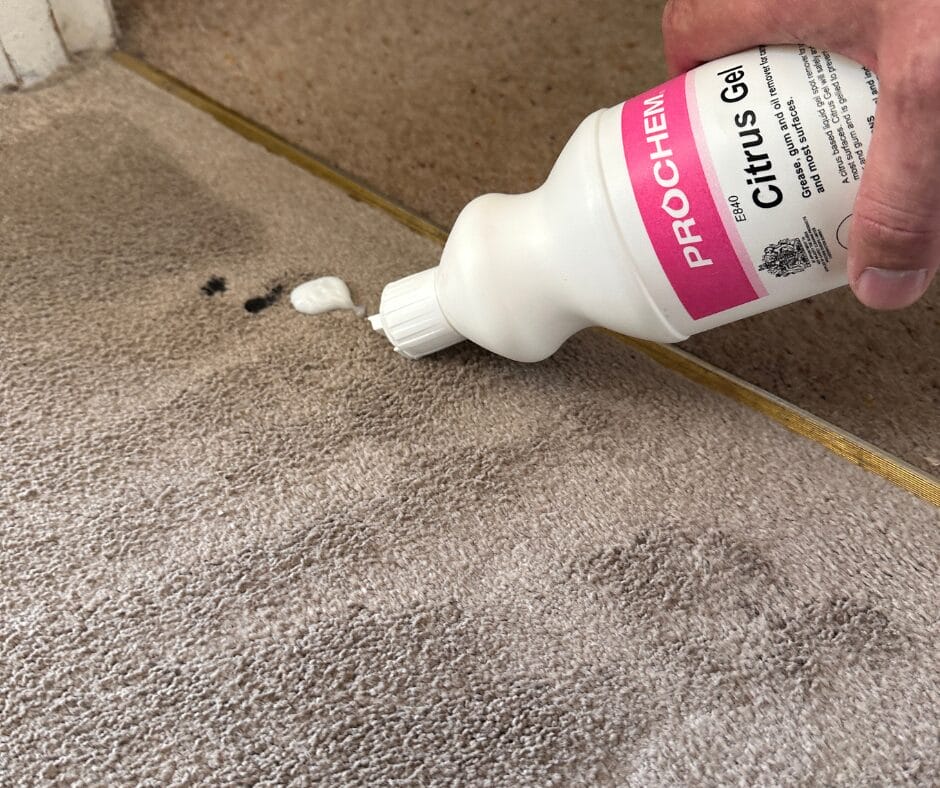
Why can the same carpet stain reappear
A returning stain usually means the visible mark was cleaned, but the cause was still present.
Carpet has more depth than people often realise. What you see on the surface is only the top of the fibre. A drink, pet accident, coffee spill, oily food mark, or cleaning product can travel lower into the pile, backing, or sometimes the underlay.
When the top looks clean, it is easy to assume the job is done. As the carpet dries, hidden moisture and dissolved soil can move upwards. Once it reaches the surface, the stain looks like it has returned.
This is why some marks seem to vanish when damp, then reappear later that day or the next morning. IICRC explains this as wicking, where water-soluble material migrates upwards or outwards on the carpet fibre during drying.
What is carpet wicking?
Carpet wicking is when moisture pulls soil or stain material up through the carpet as it dries.
Think of a candle wick drawing wax upwards, or a paper towel drawing liquid into itself. Carpet fibres can behave in a similar way. If a spill has gone deep, cleaning the surface may only remove the top part of the problem.
Wicking is more likely when:
- A spill was large or left for a while
- The carpet was over-wet during cleaning.
- The backing or underlay was affected.
- The carpet dried slowly.
- Soil was left at the base of the yarns.
- The stain was cleaned only from the surface.
How wicking usually looks:
The mark often reappears in the same place after drying. It may look like a pale brown patch, a ring, a tide mark, or a dull area that seems to have risen from underneath.
In family homes, this often happens after drinks, pet accidents, muddy water, or anything that soaked in before anyone had time to blot it properly.
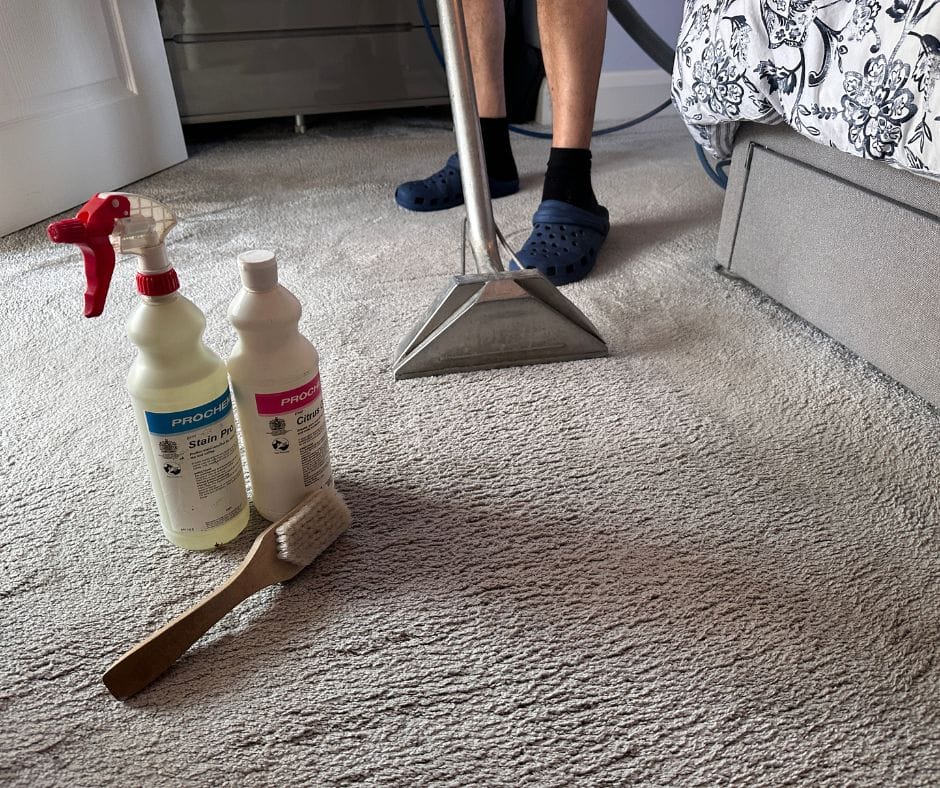
What is carpet cleaning residue?
Residue is a leftover cleaning product that stays in the carpet and attracts new dirt.
This is different from wicking. With residue, the original stain may have been partly removed, but the area has been left slightly sticky or dull. Dust, foot traffic and everyday soil then cling to that patch more quickly than the surrounding carpet.
Residue can come from:
- Using too much spot cleaner
- Using kitchen cleaning products on carpet, including washing-up liquid or household detergent
- not rinsing the area properly
- using a hire machine with too much solution
- repeated cleaning attempts on the same patch
- scrubbing product deeper into the fibres
The NCCA lists poor rinsing, over-wetting, vigorous scrubbing and incorrect chemicals among common DIY carpet and upholstery cleaning mistakes. That matters because a returning stain is not always the original spill coming back. Sometimes the carpet is simply getting dirty again because the fibres have been left tacky.
Wicking vs residue: how to tell the difference
Wicking usually comes back as the carpet dries. Residue usually gets dirty again over time.
Here is the simple way to think about it.
| The mark returns within hours or the next day | Wicking | Moisture draws old stain or soil back up from deeper in the carpet |
| The patch looks clean at first, then darkens over days or weeks | Residue | Sticky product attracts new soil |
| The stain has a ring or tide mark | Wicking | Moisture has moved outwards as it dried |
| The patch feels slightly sticky or stiff | Residue | Cleaning product has not been fully rinsed |
| The mark follows a spill location exactly | Wicking | The original spill may have gone deeper than the surface |
| The same area soils quickly after people walk over it | Residue | Dirt is clinging to leftover detergent |
This is not a perfect diagnosis, because some stains involve both. A large drink spill cleaned with too much household detergent can wick from below and leave residue near the top.
Why over-wetting makes stains worse
Too much moisture can push the problem deeper before it comes back up.
When a carpet is soaked during cleaning, moisture can reach the backing or underlay. If there is old soil, drink residue, pet contamination, or detergent already sitting deeper down, that moisture can reawaken it.
As the area dries, the moisture travels upwards. It can carry dissolved material with it, leaving a visible mark at the tips of the fibres.
This is one reason professional cleaning is not just about using stronger equipment. It is about using the right level of moisture, the right cleaning chemistry, proper extraction, and sensible drying advice.
The IICRC S100 standard covers professional textile floor covering cleaning, including cleaning principles, chemistry, fibre types, equipment, spot and stain removal, and pre-cleaning and post-cleaning inspections.
Why scrubbing can make a stain spread
Scrubbing often feels helpful, but it can drive the stain further into the carpet.
A quick rub with a cloth can turn a small spill into a wider patch. It can also distort the pile, roughen fibres, or push cleaning product deeper into the carpet.
Blotting is usually safer than scrubbing. A clean white towel, gentle pressure, and patience are better than rubbing hard at the surface.
For delicate fibres, wool carpets, or rugs, the product choice matters too. WoolSafe focuses on best practice in carpet and rug care, including product testing and certification for carpet care chemicals.
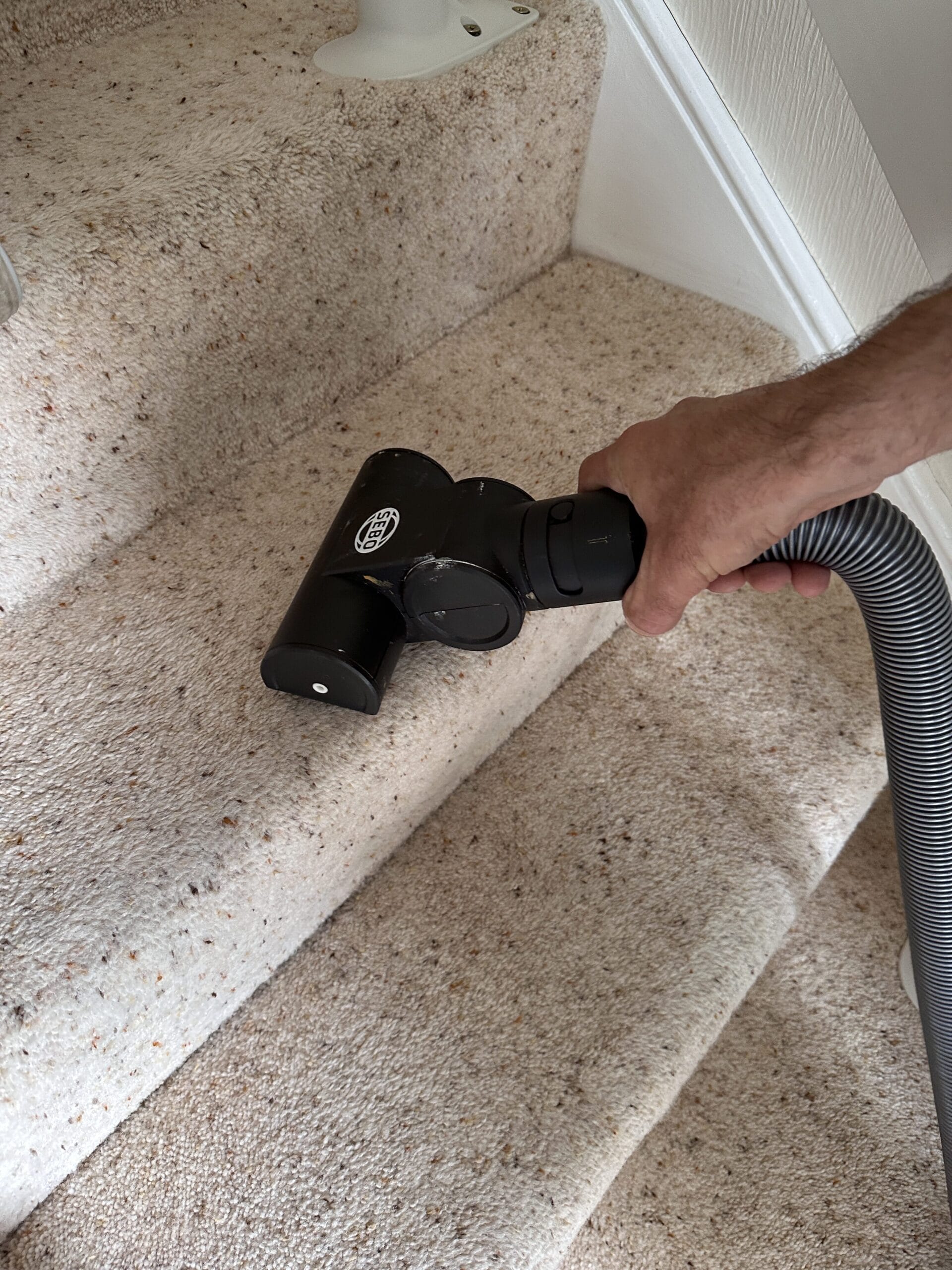
Can professional cleaning stop stains from coming back?
Often, yes, but it depends on what caused the stain and how deep it has gone.
A professional cleaner will usually look at the stain type, fibre type, carpet construction, previous cleaning attempts, and whether the backing or underlay may be involved.
For wicking, the focus is usually on controlled moisture, proper extraction, and drying. Sometimes the area needs targeted treatment rather than repeated surface cleaning.
For residue, the focus is on breaking down and rinsing out the leftover product, then extracting the area properly so it does not keep attracting fresh soil.
When a cleaning product is left behind, it can attract fresh soil, making it seem as though carpet cleaning makes carpets get dirty quicker.
Some stains can be improved greatly. Some can be fully removed. A few may be permanent, especially if they involve dyes, bleach, colour loss, urine damage, heat, or previous chemical reactions. The important thing is having an honest look before promising a result.
What you can do before calling someone out
The safest first step is to avoid adding more product.
If the stain has already come back once, repeated spot-cleaning can make the area harder to correct. More detergent often means more residue. More water can increase the risk of wicking.
A sensible approach is:
- Blot gently if the area is still damp.
- Avoid scrubbing
- Avoid adding washing-up liquid.
- Let the area dry fully.
- Vacuum once dry
- Note when the mark returned.
- Tell your cleaner what has already been used.
That last point is useful. If we know a stain came back overnight, that points more towards wicking. If it looked fine for a week and slowly darkened, residue may be more likely.
What we look for during a stain inspection
The aim is to work out whether the mark is sitting on the surface, rising from below, or being made worse by residue.
A careful inspection may look at:
- The type of stain
- How long has it been there?
- Whether the carpet feels sticky or stiff
- Whether there is a ring around the mark
- Whether the underlay may be affected
- What products have already been used
- Whether the carpet is wool, synthetic, or a blend
- How much moisture can the carpet safely take
This helps avoid guesswork. A coffee spill, a pet accident, an oily food mark, and a detergent patch all behave differently.
Why the right drying advice matters
A clean carpet still needs to dry properly to stay looking clean.
Drying is part of the result. Good airflow, sensible room temperature, and avoiding heavy use too soon can all help.
If a carpet is walked on while still damp, it can pick up soil more easily. If furniture is put back too soon without protection, marks can transfer. If a deep spill is still active underneath, slow drying can give wicking more time to happen.
That does not mean your carpet needs to be out of action for days. It means drying should be planned, especially in busy homes with children, pets, or rooms that need to be used quickly.
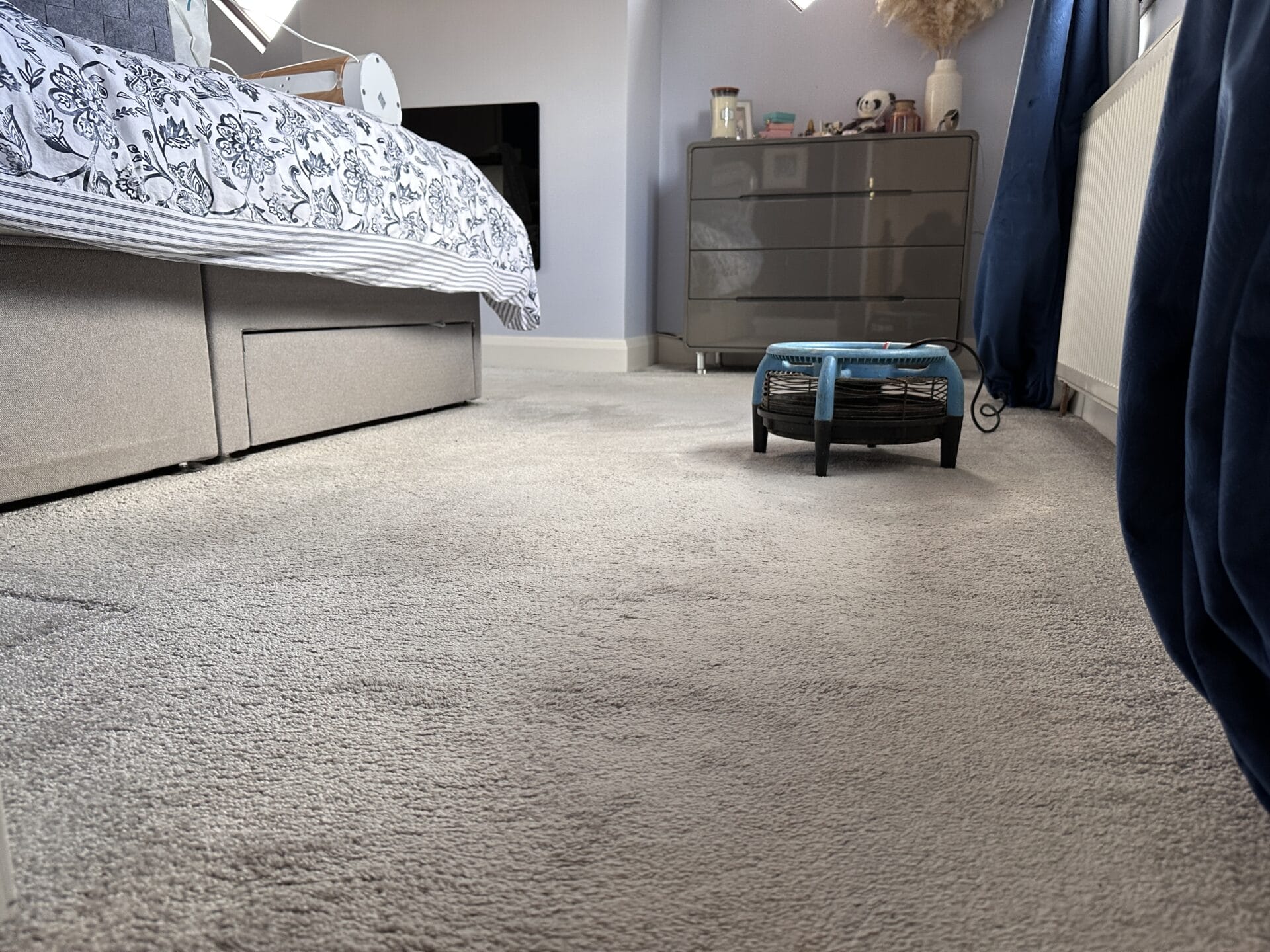
When a returning stain needs professional help
Call a professional if the stain keeps returning, feels sticky, smells, or has been treated several times already.
It is especially worth getting advice for:
- pet urine or odour
- tea, coffee, wine or fizzy drinks
- oily or greasy marks
- old stains that have been scrubbed
- wool carpets or rugs
- stains that keep returning after hire-machine cleaning
- patches that feel sticky after DIY treatment
- any mark that has spread or formed a ring
A good clean should not feel like a rushed guess. It should give you a clear explanation of what is realistic, what may improve, and what might not fully lift.
FAQs
Why do carpet stains come back after cleaning?
Most returning stains are caused by wicking or residue. Wicking pulls old stain material back up from deeper in the carpet as it dries. Residue happens when a cleaning product is left behind and attracts new dirt.
Is carpet wicking permanent?
Not always. Wicking can often be improved with the right treatment, controlled moisture, proper extraction and drying. If the stain has affected the backing, underlay, or carpet dye, the result may be more limited.
Why does the same patch get dirty again?
A patch that gets dirty again quickly may have sticky residue left in the fibres. Dirt then clings to that area faster than the surrounding carpet, so it looks like the old stain has returned.
Can too much carpet cleaner cause stains?
Yes. Too much product can leave residue behind, especially if it is not rinsed properly. This can make the carpet feel sticky and will attract fresh soil.
Should I scrub a carpet stain?
Gentle blotting is safer than scrubbing. Scrubbing can spread the stain, damage the pile, and push soil or cleaning product deeper into the carpet.

Can Careclean help with recurring stains?
Yes, we can inspect the mark and talk you through what is likely causing it. We will be honest about what should improve, what may need specialist treatment, and what might not fully disappear.
If a carpet stain keeps coming back and you are not sure whether it is wicking or residue, we can take a careful look and explain the options before any work begins. No pressure, just clear advice.