Rugs have a way of showing real life. The path from the sofa to the doorway starts to look a little flatter. One side catches the sun and shifts slightly over time. Under the coffee table, the pile sits differently no matter how often you vacuum.
That doesn’t mean the rug is “ruined”. It usually means it’s wearing exactly where the room is being used the most.
Rotating your rug is one of the simplest ways to keep that wear from building up in the same places year after year. It won’t turn back the clock, but it can help the rug stay looking more even and, in many homes, extend how long it looks good day to day.
Key takeaways
- Yes, rotating your rug can help it last longer by spreading wear more evenly across the pile.
- It won’t reverse damage or fading, but it can help the rug look more balanced over time.
- Most living rooms: rotate about every 6 months. Busy areas: every 3–4 months. Low-traffic rooms: once a year.
- Rotation matters most with strong sunlight, clear walkways, or regular family/pet use.
- Lift, don’t drag… pulling can stress edges, backing and fringes.
- Be cautious with fringes, older/valuable rugs, or rugs that slip (a proper rug pad often helps).
- If you’re seeing rippling, thinning, musty smells, or powdery debris underneath, rotation usually isn’t enough… the rug should be checked.
What rug rotation actually does (and what it can’t do)
Rotating a rug is simply changing its position so the “busy” part isn’t always the same section. In most rooms, that means a 180-degree rotation… swapping the ends. In some layouts, a 90-degree turn also works, as long as it still sits properly and doesn’t create a trip edge.
Where rotation helps is with the pattern of wear. Foot traffic, chair legs and sunlight tend to focus on the same zones. When you rotate, you spread that load, so the rug ages more evenly across its surface.
It’s also worth keeping expectations realistic. Rotation won’t restore colour that’s already faded, and it won’t rebuild fibres that have worn down. What it does do is prevent the same strip or corner from taking the full hit for years.
Why do rugs start to look uneven in the first place?
Foot traffic and grit
Even in a tidy home, a rug catches fine grit that comes in on shoes and socks. In the areas you walk on most, those particles sit down in the pile and gradually scuff the fibres. That’s why you often see a slightly duller, flatter “lane” across the rug… even if you vacuum regularly.
Rotation helps by moving that lane to a different section, so wear doesn’t concentrate in one obvious path.
Furniture weight and pressure points
A sofa or coffee table presses into the same points day after day. Some rugs recover well, others show compression more quickly. Wool often bounces back better than people expect, while viscose (sometimes sold as “art silk”) and softer synthetics can mark more easily.
Rotating reduces the chance that the same legs create permanent-looking dents in the same spots for years.
Sunlight and heat
UV light changes rugs gradually. Sometimes it’s noticeable fading, but often it’s a gentle shift in tone that makes one side look slightly different to the other.
Rotation doesn’t stop sunlight from doing what sunlight does… it just helps the rug change more evenly.
How often should you rotate a rug?
If you want a simple rule that fits most homes:
A typical living room rug does well with a rotation around every six months. Busy areas… hallways, open-plan walkways, and dining spaces where chairs move daily… often suit every 3–4 months. Low-traffic rooms can be once a year and still benefit.
If you prefer a routine you’ll actually remember, spring and autumn rotations work well. The light changes, the room gets used differently, and it’s an easy marker without overthinking it.
Where rotation makes the biggest difference
Rotation probably has the biggest impact in rooms where one area is getting “favoured” by life.
If part of the rug sits in strong daylight most days, rotating helps prevent the sun side from ageing much faster than the shaded side. If you’ve got a clear walkway across the rug, rotation spreads that traffic so it doesn’t wear into a permanent-looking strip. And in family and pet homes, it helps keep the whole rug looking consistent rather than showing one heavily used zone.
Hallway rugs are worth mentioning here, too. They often look fine until they suddenly don’t. They get gritty fast, and the same line gets walked over repeatedly. Rotation won’t remove grit, but it does stop the exact same section from wearing down first.
When you should be cautious about rotating
Some rugs are straightforward to rotate. Others need a bit more care when they’re moved.
If your rug has fringes or delicate edges, avoid dragging… fringes stretch and twist easily. Older or valuable rugs can still be rotated, but it should be done slowly and carefully, especially if there are thin areas.
If your rug slips or creeps, rotating can make the problem feel worse unless you stabilise it. A suitable rug pad often makes a big difference here… it reduces movement, protects the backing, and is kinder to edges.
How to rotate a rug without stressing it
The safest approach is “lift and place”, not “pull and drag”.
Clear small items first, then rotate in a controlled way. If the rug is heavy, getting a second person helps prevent twisting and tugging, which is what tends to strain edges and backing.
Once it’s rotated, check that it sits flat. If corners lift or the rug ripples, it’s worth addressing that rather than leaving it… movement issues tend to worsen over time.
What about furniture dents… will rotating help?
Rotation helps most with preventing new dents from forming in the same places year after year. It won’t always remove dents that are already well-established.
A helpful thing to know is that some “dents” are a mix of compression and pile direction… the rug reflects light differently depending on which way it’s facing. That’s why a rug can look darker or lighter after rotation, even when it’s the same rug in the same condition.
If dents are bothering you, the best improvements usually come from spreading wear with rotation and keeping the rug properly maintained so the pile isn’t weighed down by soil.
Signs your rug is asking for rotation (or a check)
If your rug looks uneven… one side duller, a clear path across it, or a flatter pile where people always walk… rotation is usually worth doing.
If you notice rippling, thinning patches, a persistent musty smell, or powdery debris underneath, rotation won’t solve the cause. Those signs suggest the rug needs a closer look.
A note on professional cleaning and rug lifespan
Rotation helps with even wear, but it doesn’t remove what builds up deep in the pile over time. Fine soil and grit can shorten a rug’s lifespan by wearing fibres from the inside.
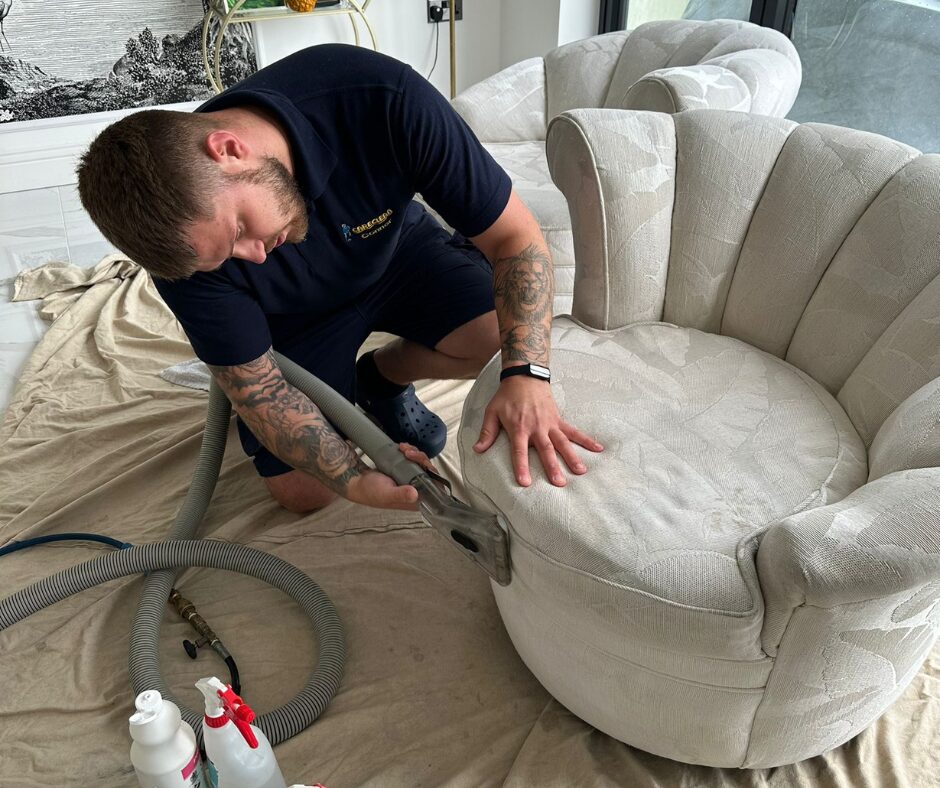
Professional rug cleaning, done properly for the fibre and construction, helps remove that hidden soil and keeps the rug looking clearer and feeling fresher… particularly in busy rooms and bright spaces.
If the rug has sentimental or financial value, cleaning is only one part of looking after it. Our guide on how to protect a rug that really matters to you covers some of the other ways to reduce wear and help preserve it for longer.
FAQs
- Does rotating a rug stop fading?
It doesn’t stop UV exposure, but it helps the rug age more evenly so one side doesn’t change faster than the other. - Will rotating damage my rug?
Not if it’s done carefully. Damage usually comes from dragging, twisting, or forcing furniture across it. Lift where possible. - Should I rotate a rug with fringe?
Yes, but avoid pulling on the fringe and take care not to trap it under heavy furniture where it can twist. - My rug looks darker in one direction… is that fading?
Not always. Many rugs show shading because the pile reflects light differently depending on direction. - How do I know if my rug needs cleaning rather than just rotation?
If it looks dull overall, feels flatter, or doesn’t lift in appearance with normal care, it may be soil and grit held in the fibres. Cleaning addresses that; rotation addresses wear patterns.