You’ve finally decided to have your sofa professionally cleaned. Lovely!
But then comes the question everyone wants answered.
“How long before I can actually sit on it again?”
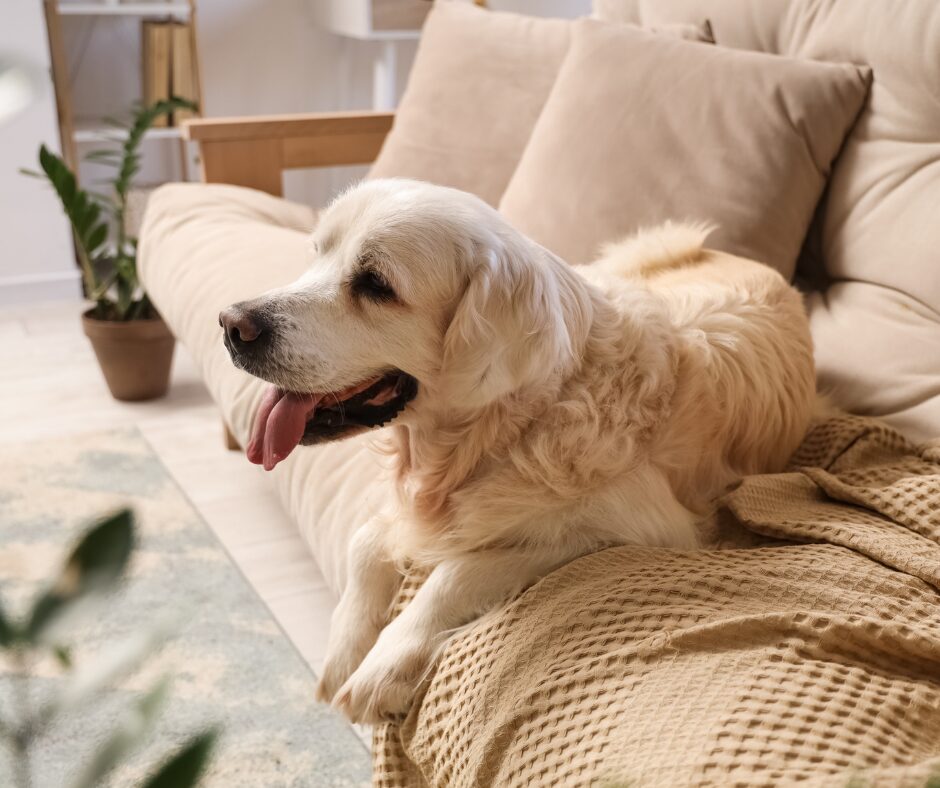
I mean, let’s face it… Your sofa is your favourite seat in your whole house. The last thing you want is to spend the whole evening sitting uncomfortably on a dining room chair, wondering if you can claim your spot back cause you just wanna chill with the dog in comfort!
And if you’ve got children, pets or a partner who likes to stretch out across the whole thing, planning becomes even more important!
So, let’s get straight to it.
Most professionally cleaned fabric sofas can take around 2 to 6 hours to dry, although some need longer, possibly overnight. The exact drying time depends on the fabric, the cleaning method, how much moisture remains and the conditions in your home.
There isn’t one drying time that works for every sofa.
Here is what affects it, how to help your sofa dry safely and when you can finally put your feet up again.
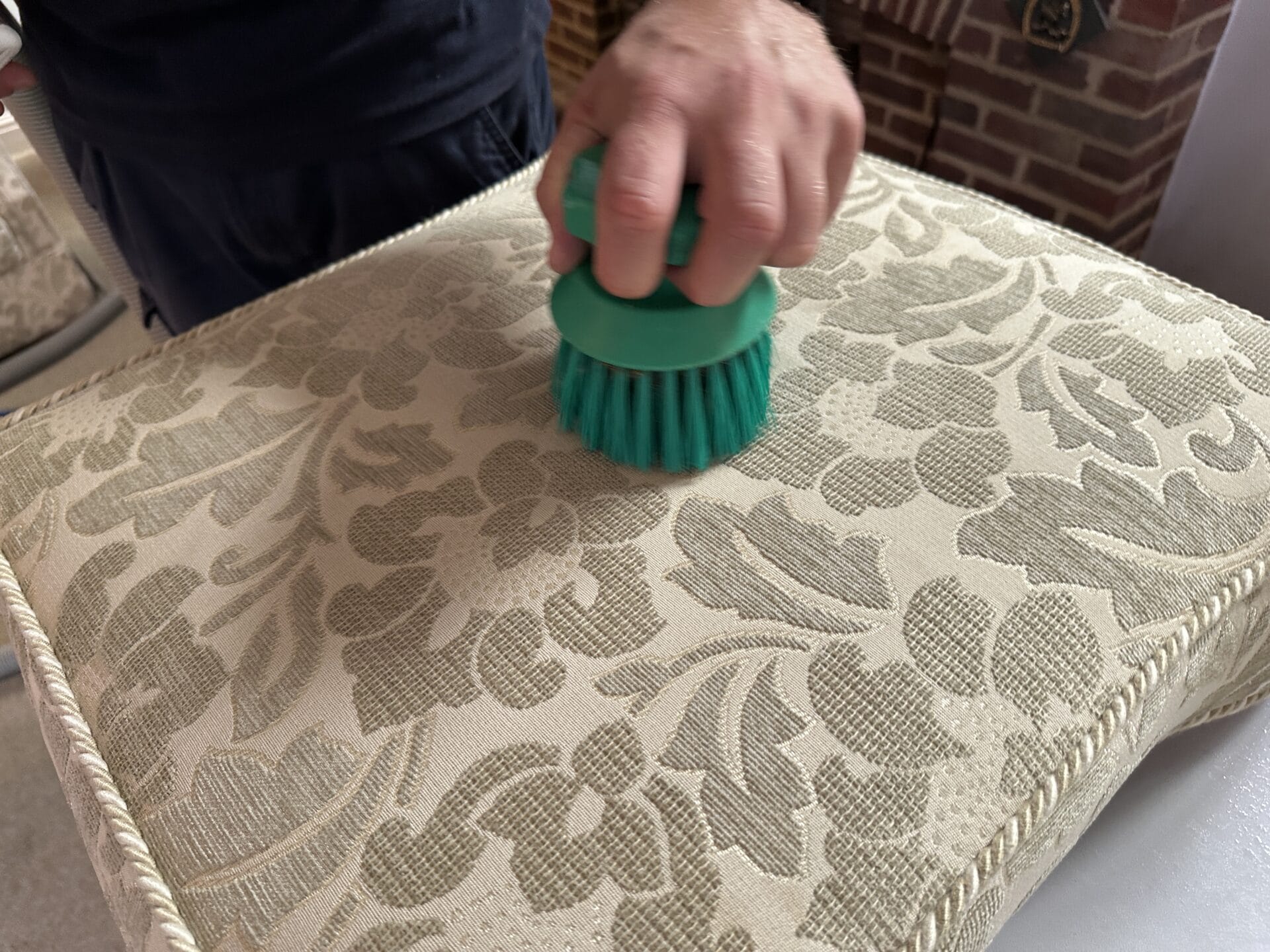
Why do some sofas take longer to dry than others?
You might have a friend whose sofa was dry in a couple of hours, while yours still feels slightly damp later in the afternoon.
It’s easy to wonder whether something has gone wrong.
Usually, there is a perfectly reasonable explanation.
Not all sofas are made from the same fabric or have the same filling.
Some materials release moisture relatively quickly. Others absorb more water or have thicker padding that takes longer to dry.
The amount of cleaning required also makes a difference.
A sofa with general everyday dirt may need a different level of treatment from one with heavy staining or particular problem areas.
And then there’s the room itself.
A warm, well-ventilated living room can provide better drying conditions than a cold room with little air movement.
Even two identical sofas could take different amounts of time to dry if they’re cleaned in different homes.
Does the sofa fabric affect drying time?
Absolutely. And this is one of the most important things to understand.
Some fabrics absorb moisture more readily than others, while the thickness and construction of the upholstery can also affect drying.
Here’s a simple guide.
| Sofa material | What to know about drying |
| Polyester and some synthetic fabrics | May dry relatively quickly when suitable for wet cleaning |
| Cotton and cotton blends | Can absorb more moisture and may take longer |
| Linen and linen blends | Need careful moisture control and may be sensitive to water marks |
| Velvet | Drying and cleaning depend on the type of velvet and its construction |
| Thick woven upholstery | Dense fabric and padding can extend drying time |
| Delicate or specialist fabrics | May need a different cleaning method altogether |
This table is a general guide, not a guaranteed drying schedule.
The filling, backing and cleaning method can be just as important as the outer fabric.
Some delicate materials may not be suitable for water-based cleaning at all.
If you’re worried about a particular material, our article Can a Sofa Be Deep Cleaned Without Damage? explains why checking the fabric before cleaning is so important.
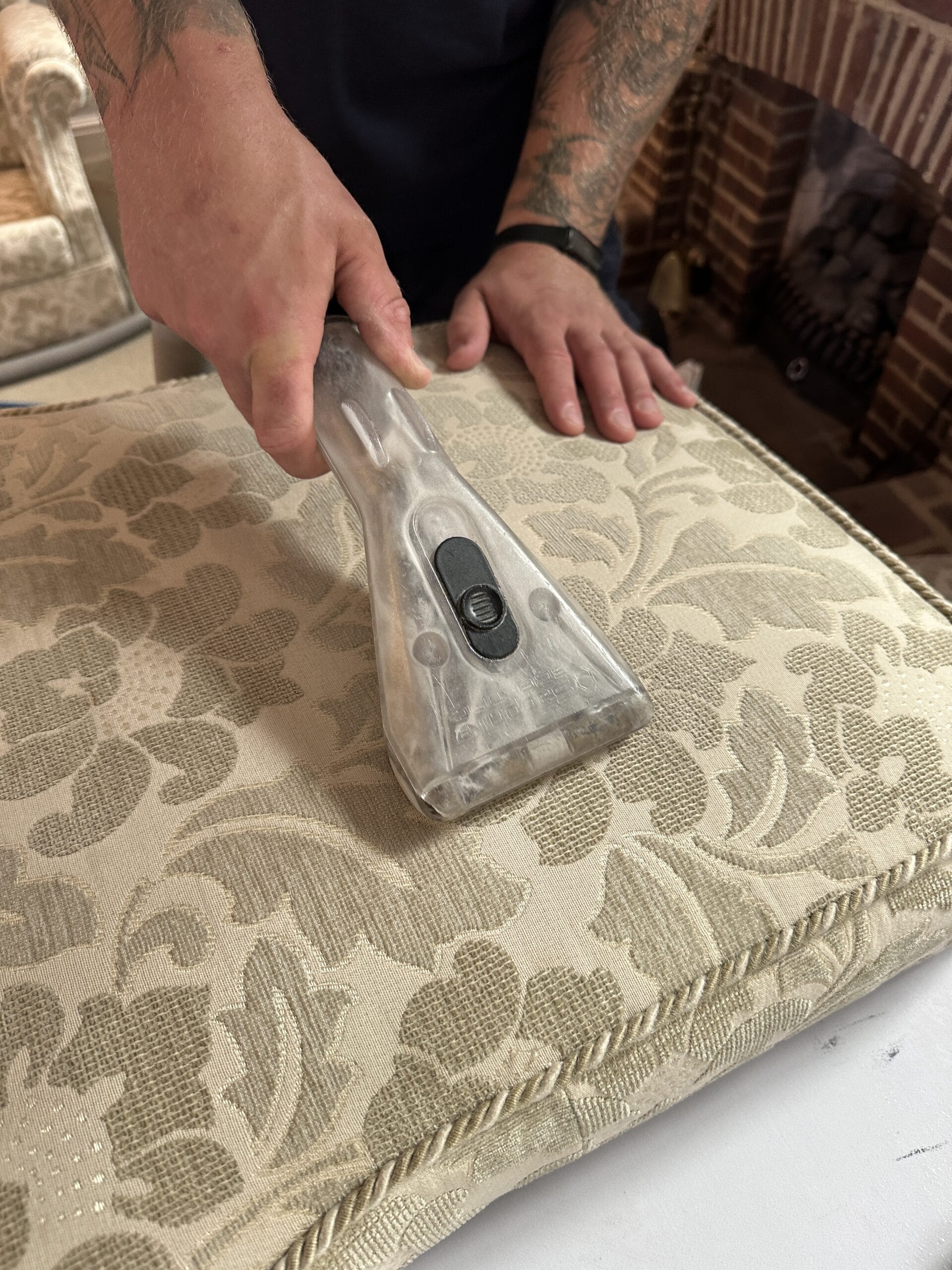
Does the weather affect how quickly a sofa dries?
Oh yes. And here in Essex, we all know the weather likes to keep us guessing.
Bright sunshine in the morning, rain by lunchtime. You know the sort of day!
The conditions inside your home have a big influence on how quickly your sofa dries.
-
Warmth can help
A comfortably warm room encourages moisture to evaporate.
You don’t need to turn your living room into a sauna, though.
Normal, comfortable heating is generally better than trying to force the sofa dry with intense heat.
-
Fresh air makes a difference.
Good air circulation helps moisture escape from the fabric.
Opening a window may help when outdoor conditions are suitable.
If it’s pouring with rain or very humid outside, opening every window might not be the best approach.
A fan or dehumidifier may be more useful, depending on the room conditions.
-
Humidity matters too
Humidity simply means how much moisture is already in the air.
When the air is very humid, it becomes harder for additional moisture to evaporate.
That means your sofa may take longer to dry, even if the room feels quite warm.
The useful thing to remember is that warmth and airflow work together.
You want moisture to leave the upholstery and move away from the sofa.
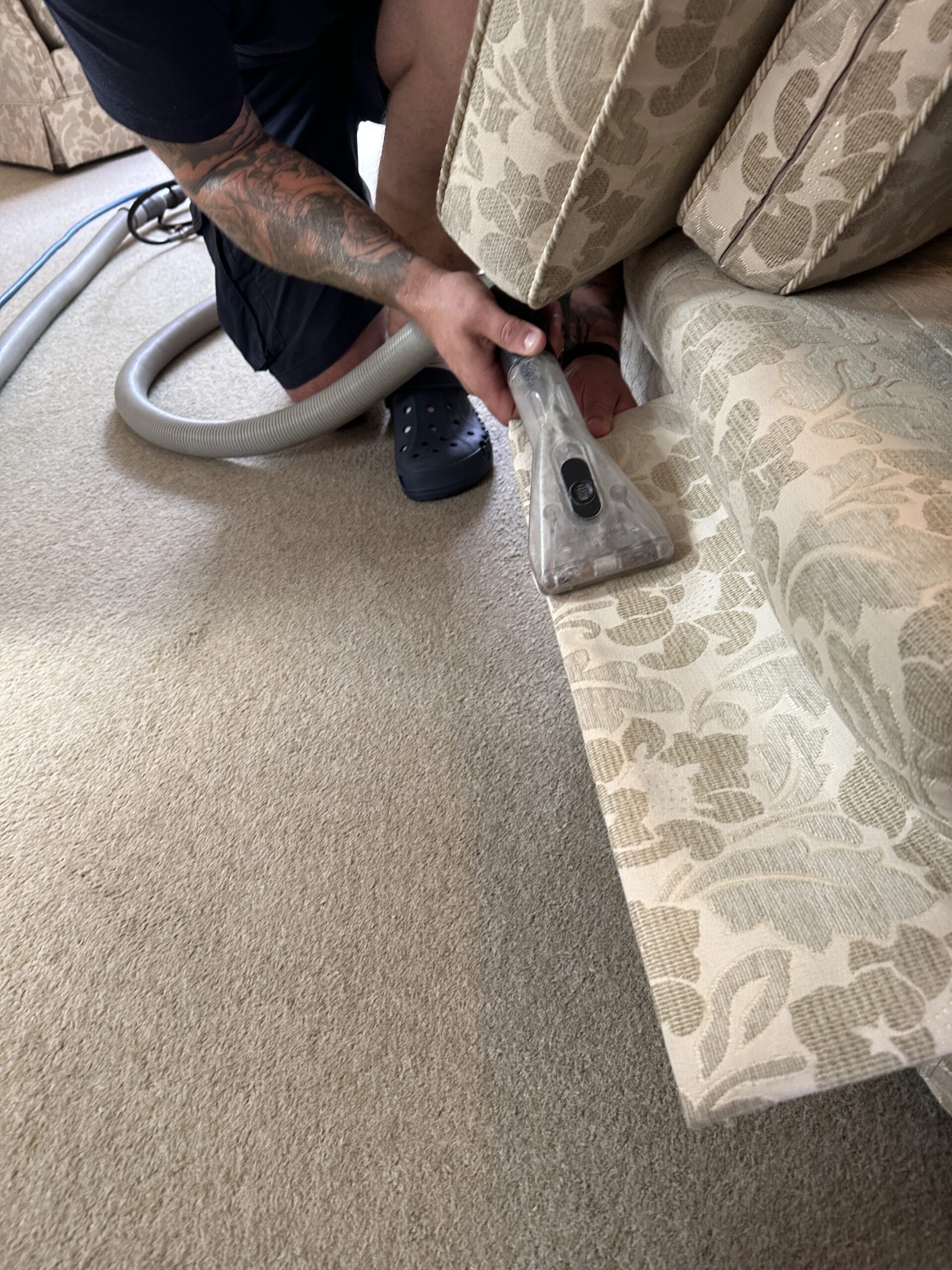
How can I help my sofa dry faster after cleaning?
Good news. There are a few simple things you can do.
And none involve standing over your sofa with a hairdryer.
Please don’t do that!
-
Give the air room to move.
If the weather allows, open a window to encourage ventilation.
A household fan can also help move air around the room.
If you’re using a dehumidifier, follow its instructions and position it safely.
Air movement is one of the most useful ways to support drying.
-
Keep the room comfortably warm.
Normal household heating may help, particularly during cooler months.
Avoid placing portable heaters directly against the sofa or using concentrated heat on the fabric.
Too much heat can damage certain upholstery materials.
-
Leave the sofa uncovered.
It can be tempting to put your lovely throws and cushions straight back where they belong.
After all, the room doesn’t feel quite right without them.
But covering damp upholstery can restrict airflow.
Wait until everything is properly dry before replacing blankets, fitted covers or other items.
-
Follow the cleaner’s advice about cushions.
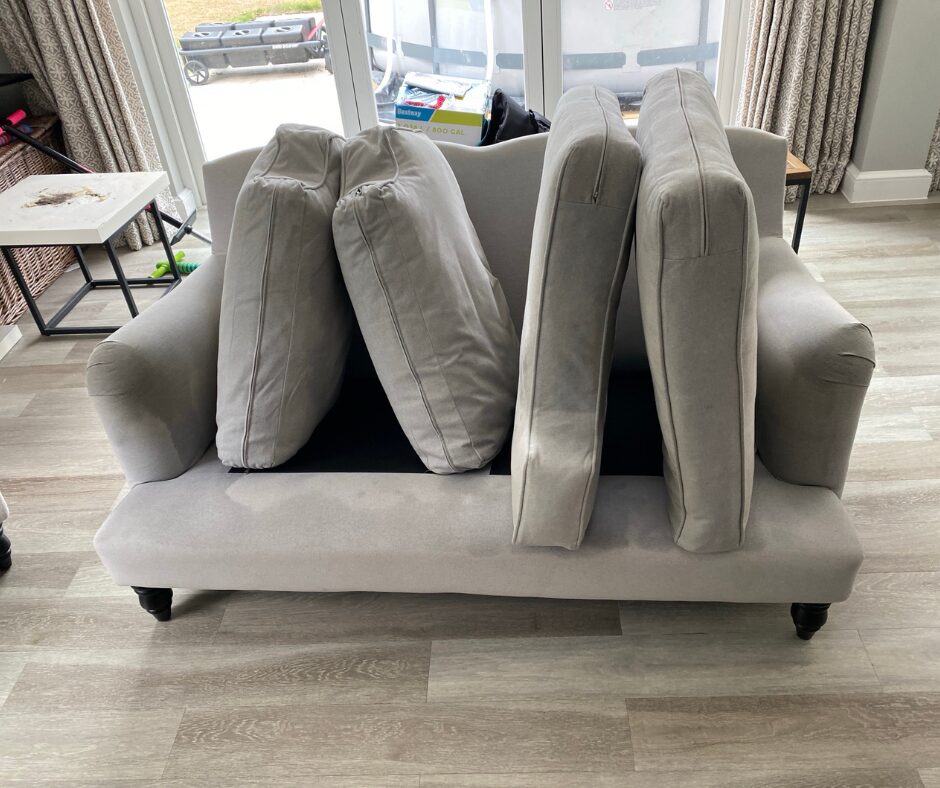
If your sofa has removable cushions, your cleaner may recommend positioning them to allow air to circulate.
Don’t automatically stand every cushion upright or remove covers unless you’ve been advised it’s suitable.
Some cushion fillings and fabrics need particular care.
-
Keep children and pets away while it dries.
I know. Easier said than done.
Especially when the dog believes the sofa is technically their property.
But keeping the furniture clear gives it time to dry undisturbed.
It’s also worth planning another comfortable place for everyone to sit.
The dog may need some convincing!
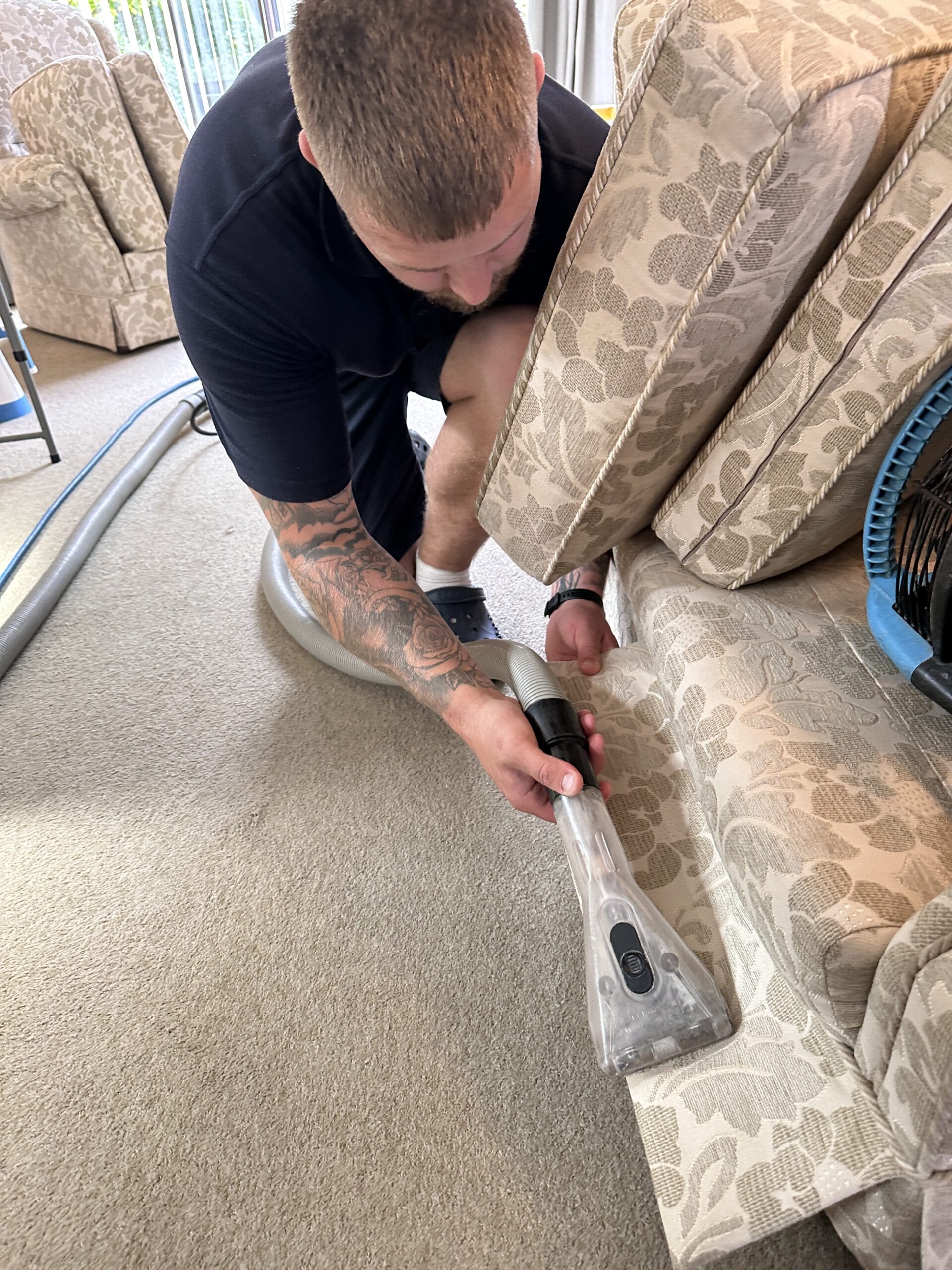
Can I sit on my sofa while it’s still slightly damp?
Here’s the short answer.
It’s best to wait until the upholstery is fully dry.
Sitting on a damp sofa can press moisture further into the cushioning or slow down drying in the areas you’re using.
There’s also a risk of transferring moisture to clothing or disturbing the freshly cleaned fabric.
Even if the surface feels almost dry, seams, cushion edges and thicker areas may still contain moisture.
The National Carpet Cleaners Association also advises keeping children and pets off cleaned upholstery until it has dried completely.
You can read more in the NCCA’s cleaning advice and frequently asked questions.
If your cleaner has given you a specific drying time or aftercare instructions, follow that advice rather than relying on a general estimate.
How do I know when my sofa is dry enough to use?
This is probably the most useful question of all.
A sofa may look dry before it’s completely ready.
Start by checking the areas that usually hold moisture for longer, such as the seams, piping and thicker cushions.
Look for these signs:
- The fabric no longer feels damp when you gently touch it.
- Cushions and seams feel dry, rather than just the most exposed areas.
- There are no remaining visibly damp patches.
- Any drying time or special instructions given by the cleaner have been followed.
Be aware that fabric can feel cool without necessarily being wet.
A dry surface also doesn’t guarantee that hidden padding is dry.
If you’re unsure, give it more time or ask your cleaner.
It’s better to wait a little longer than risk using the furniture too early.
What if my sofa is still damp the next morning?
First, don’t panic.
Some upholstery takes longer to dry, especially where the fabric is thick, the cushions are heavily padded, or the room has been particularly humid.
But if your sofa is still noticeably wet the following morning, it’s worth checking what might be slowing things down.
Is the room poorly ventilated?
Are the cushions pressed tightly together?
Has a blanket been placed over part of the sofa?
Was one particular area treated more heavily because of staining?
Keep the room appropriately ventilated and avoid using the sofa until it is dry.
If the furniture is much wetter than expected, develops an unpleasant musty smell or isn’t drying as your cleaner advised, contact them for guidance.
Don’t try to solve the problem by applying more cleaning products or intense heat.
And if you’re noticing rings or patches appearing as the fabric dries, our article on why water marks on sofas can be difficult to remove explains why some materials react differently to moisture.
Should I plan my sofa cleaning appointment around drying time?
I would certainly give it some thought.
There’s nothing wrong with booking sofa cleaning on an ordinary weekday, but a little planning can make things much easier.
If it’s the only sofa in your home, you may prefer a morning appointment so there’s more time for drying before the evening.
If you have children, you might want to arrange the cleaning while they’re at school.
And if you have pets, think about where they’ll settle while their favourite sleeping spot is unavailable.
You don’t need to rearrange your whole life.
Just plan for the possibility that the sofa may be out of use for the rest of the day.
If you’re expecting guests or need the furniture for a particular occasion, allow extra time rather than relying on it being dry by a precise hour.
That’s one less thing to worry about.
Does professional sofa cleaning leave the furniture soaking wet?
A professionally cleaned sofa shouldn’t automatically be soaking wet.
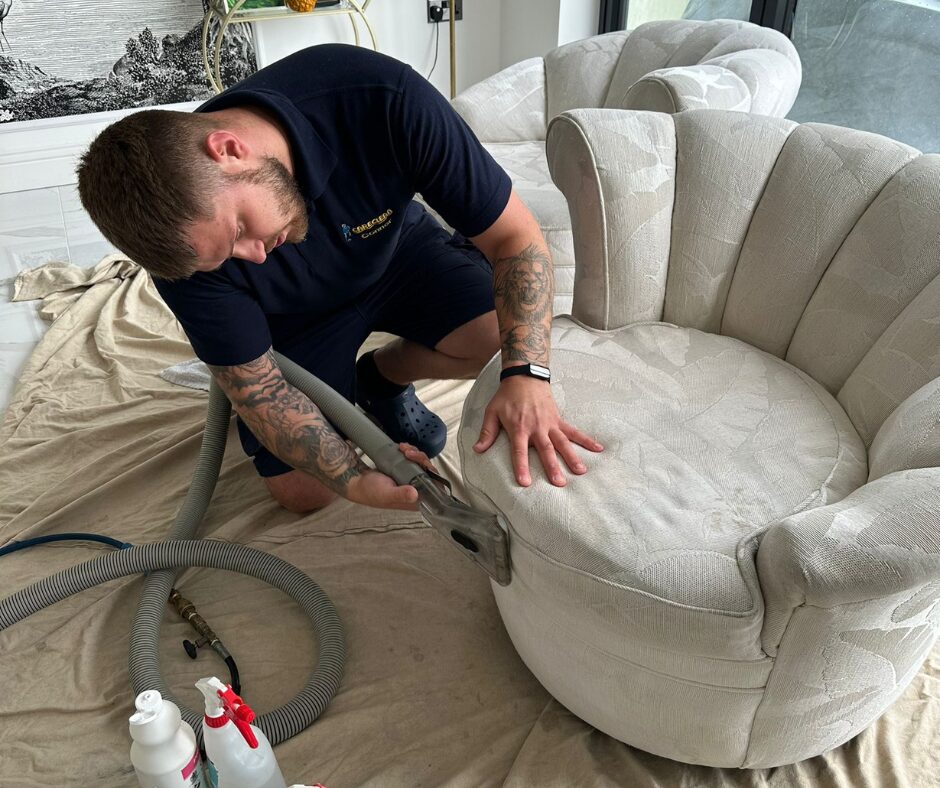
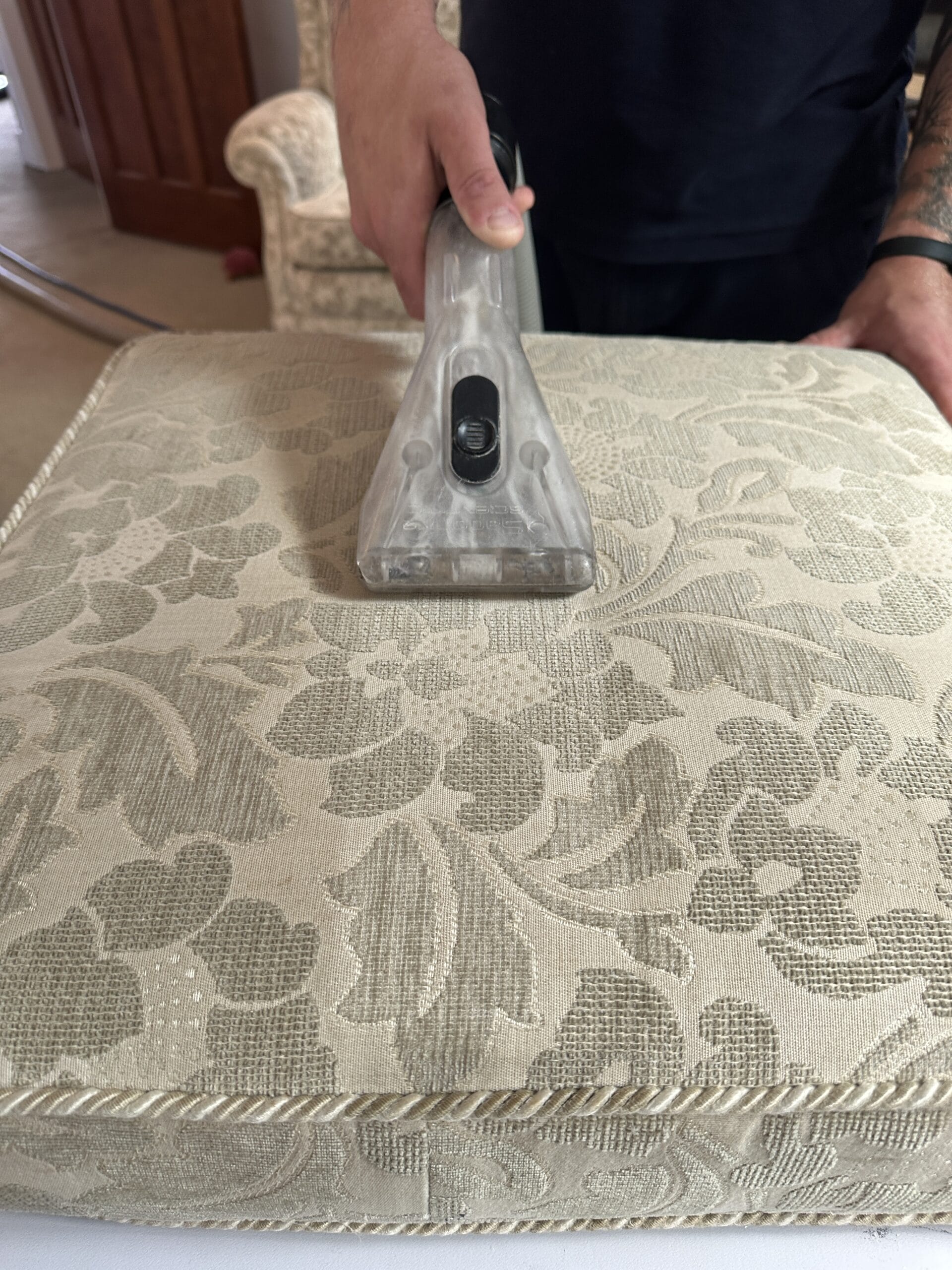
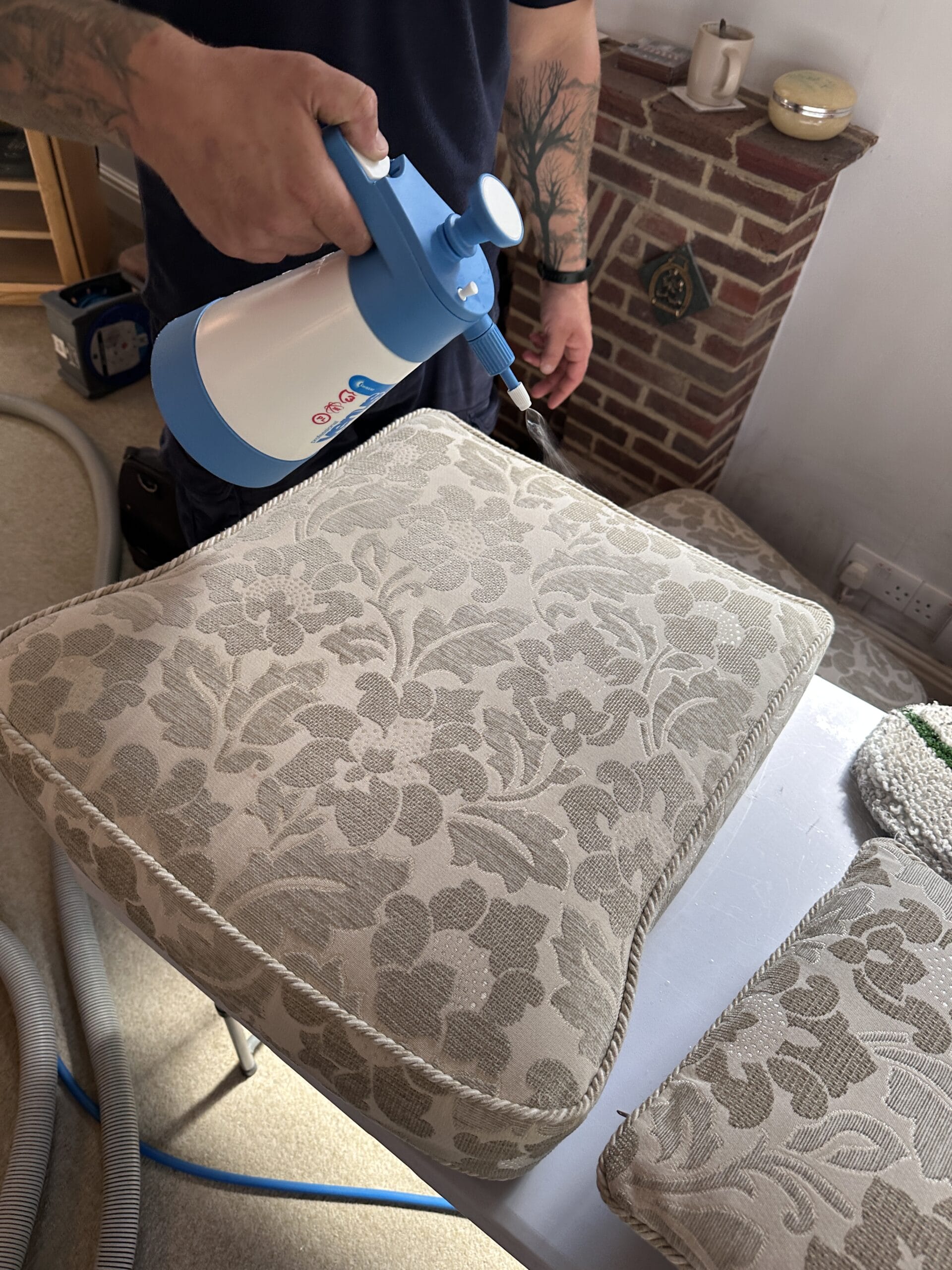
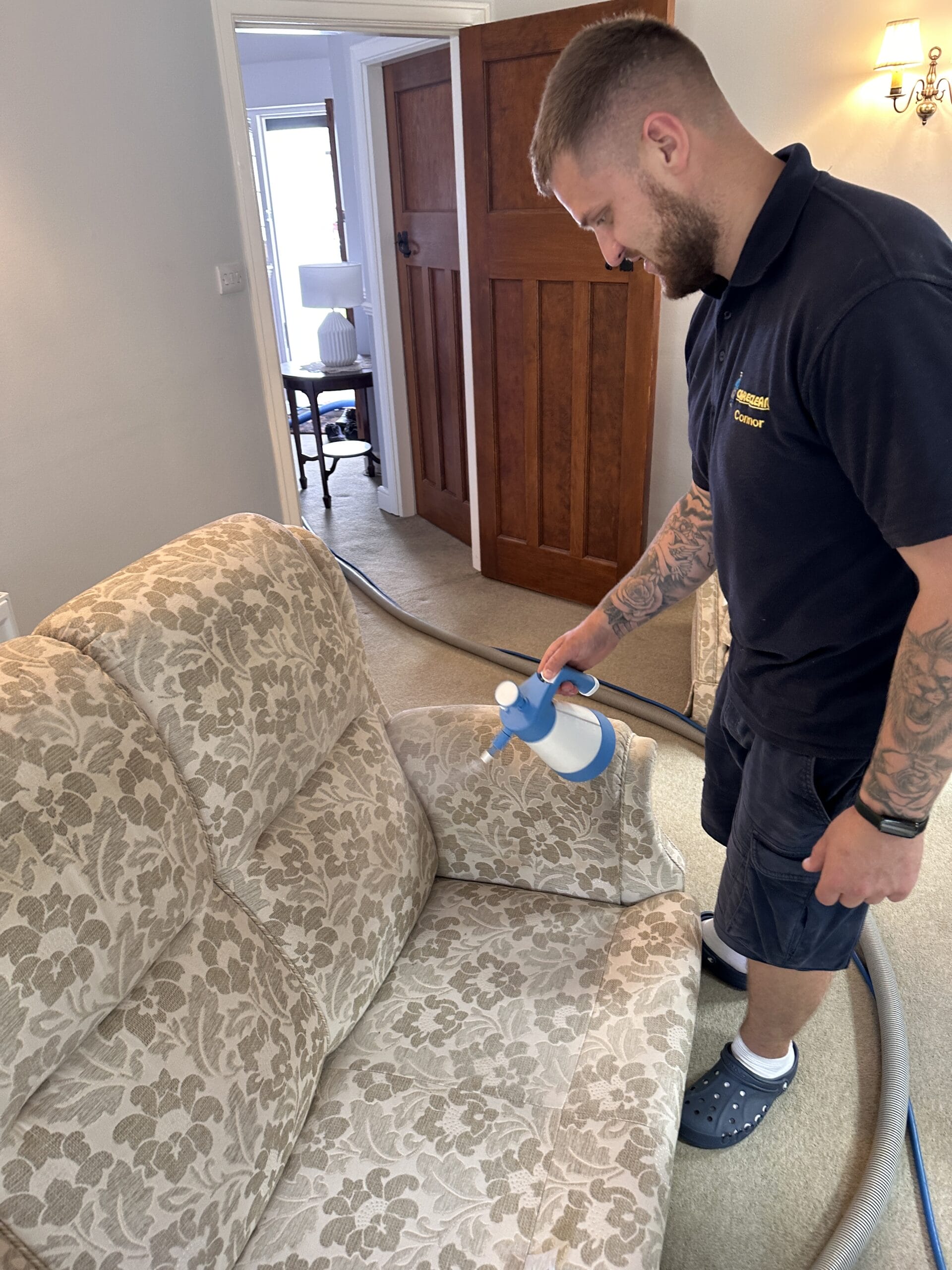
For fabrics suitable for water-based cleaning, professional equipment is designed to apply cleaning solution and extract moisture along with the loosened dirt.
However, some moisture may remain afterwards, which is why drying time is necessary.
The amount depends on the material and the treatment used.
A suitable method should take the upholstery construction and drying conditions into account.
And this brings us to something worth remembering.
A shorter drying time doesn’t automatically mean a better clean.
The aim is to choose a safe, effective process for the particular sofa, while managing moisture carefully.
If you’d like to understand more about the process, you can read about Careclean’s professional upholstery cleaning service in Essex.
What can I do between cleans to look after my sofa?
Once your sofa is dry and ready to use, a little regular care can help keep it looking lovely.
Vacuuming with a suitable upholstery attachment removes loose dirt before it becomes more deeply embedded.
If you use throws, wash them according to their care instructions.
And when spills happen, always check the manufacturer’s guidance before applying anything to the upholstery.
The less experimenting you do with unknown cleaning products, the better.
For more everyday ideas, we’ve written a separate guide on how to maintain upholstery between professional cleans.
It’s a useful read if you want to keep your furniture in good condition without making sofa care another full-time job.
Because we’ve all got enough of those!
Frequently asked questions about sofa drying times.
Can a sofa dry in two hours after professional cleaning?
Some upholstery may dry within a couple of hours, particularly when a suitable low-moisture method has been used, and ventilation is good. Other sofas take much longer. Follow the drying advice given for your furniture.
How long does your fabric sofa take to dry after steam cleaning?
Drying time will vary… all depending on the fabric, method and amount of moisture remaining. Many professionally cleaned sofas dry within several hours, while thicker materials or slower drying conditions can mean an overnight wait.
Will opening your windows help your sofa to dry faster?
Yes, especially when outdoor conditions are suitable. Fresh air will improve ventilation and will help moisture evaporate. During very damp or humid weather, a fan or dehumidifier may be more helpful.
Can you use a hairdryer to dry your sofa?
Try not to direct concentrated heat onto your upholstery. High heat can damage some fabrics. Gentle airflow and suitable room conditions are safer options.
Can pets go on the sofa after cleaning?
Wait until your upholstery is completely dry and the cleaner confirms it is ready to use. This gives the fabric time to dry and helps avoid pets tracking fresh dirt onto it.
Why is one sofa cushion taking longer to dry?
It may contain thicker filling, have received more stain treatment or have less air circulating around it. Check the cleaner’s instructions before moving cushions or changing how they’re positioned.
What happens if I sit on a damp sofa?
You may slow the drying process, transfer moisture to your clothes or disturb the fabric. Waiting until the sofa is fully dry helps protect the result.
Your clean sofa will be worth the little wait.
Having your sofa cleaned shouldn’t mean spending the whole day worrying about when you’re allowed to sit down.
The trick is knowing what to expect.
Allow a sensible drying window, keep the air moving and don’t rush to use the furniture while it’s still damp.
Every sofa is different, so the advice you receive should be based on your particular fabric and cleaning method.
If you’re thinking about having your sofa cleaned but you’re worried about drying times, we’re happy to talk it through.
At Careclean Essex, you can send us a photograph of your sofa, tell us a little about the fabric and ask what you might expect from the cleaning process.
We’ll help you understand the options before you decide.
And once it’s properly dry?
Well, the sofa is yours again.
At least until the dog gets there first!