We’ve all got one, haven’t we?
That little mark on the sofa that’s been there for ages.
Maybe it was a coffee spill six months ago, a chocolate mishap during a film night, or a mysterious stain nobody in the house can explain.
Funny how that happens!
You’ve tried ignoring it. You’ve strategically positioned a cushion over it. You may even have given it a little scrub with something from under the kitchen sink.
And yet, there it is. Still looking at you.
So, can professional cleaning remove old sofa stains?
Yes, professional upholstery cleaning can remove or significantly improve some older sofa stains, even ones that have been there for months. However, complete removal isn’t always possible. It depends on the fabric, what caused the mark, how long it’s been there and what you’ve already tried.
The good news is that an old stain doesn’t automatically mean your sofa is ruined.
Let’s look at what makes some stains stubborn, what can help and when it’s better to leave that mark alone.
Are old sofa stains harder to remove?
Usually, yes. But don’t give up on your sofa just yet.
When something is first spilt, some of the liquid may still be sitting close to the surface of the upholstery.
As time passes, it can dry, settle into the fibres or leave residues behind.
Certain substances may also change the colour of the material.
This is why a coffee stain from yesterday can behave differently from one that’s been there since last Christmas.
The longer a stain has been there, the more difficult it may become to remove. But age alone doesn’t tell us whether it’s permanent.
A professional cleaner also needs to consider what caused it.
A dried food spill is very different from a mark caused by bleach or permanent dye damage.
And sometimes that difference determines whether cleaning will help.
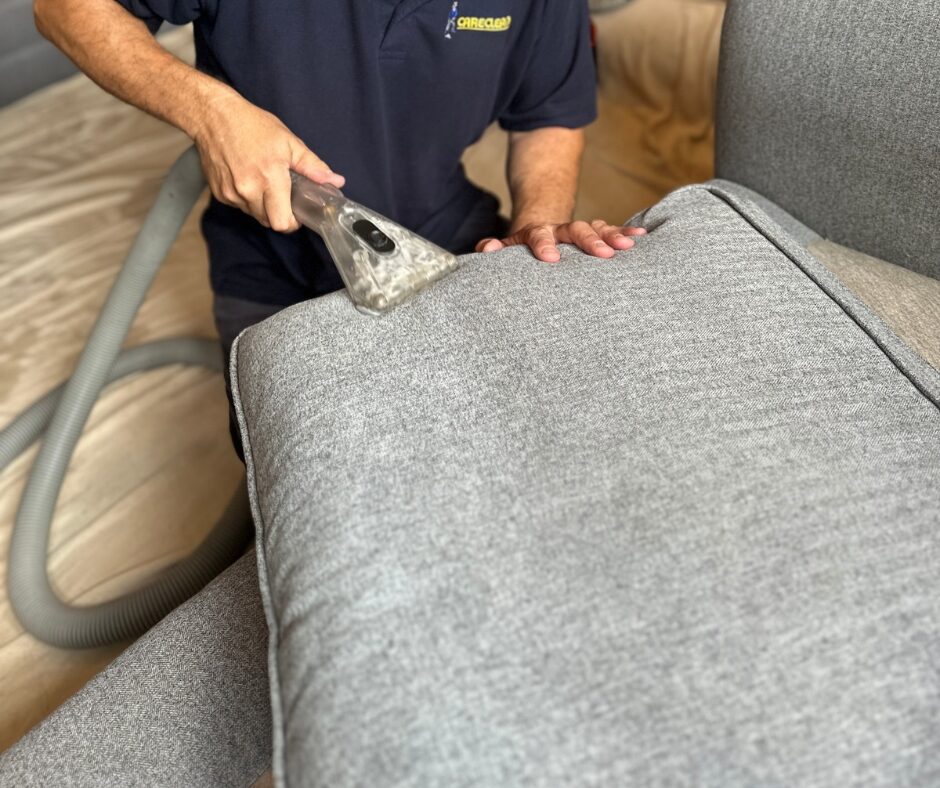
What types of old sofa stains can professional cleaning help with?
Sofas see an awful lot of everyday life.
Tea, coffee, chocolate, wine, food, makeup and the occasional mystery spill.
Some of these respond well to suitable cleaning, while others are more complicated.
Here’s a quick guide to what may be possible.
| Type of old stain | Why it can be difficult | What professional cleaning may achieve |
| Coffee and tea | Colour from the drink can remain in the fibres | May remove or improve the mark |
| Chocolate and milky drinks | Fat, sugar and milk residues can remain | May improve staining and remove some residues |
| Red wine | Strong colour can affect upholstery dyes | May improve, but permanent colour changes can remain |
| Grease and food oils | Oils can cling to fabric fibres | Suitable treatment may help lift them |
| Makeup and foundation | Often contain oils and pigments | Results depend on the product and fabric |
| Ink and dye transfer | Colour may become fixed in the material | Specialist treatment may help, but removal is uncertain |
| Pet urine | Can soak into cushion fillings | May improve surface staining, although deeper contamination can remain |
| Bleach or colour loss | The fabric’s original colour has been altered | Cleaning cannot restore missing dye |
The key thing to remember is that a stain and permanent fabric damage aren’t always the same thing.
And that brings us to one of the biggest misunderstandings about sofa cleaning.
Is it actually a stain, or has the fabric changed colour?
Now, this is where things get interesting.
Sometimes a mark looks like dirt, but the fabric itself has changed.
Imagine spilling something on a dark blue sofa.
You clean the area, but afterwards there’s a pale patch.
It’s tempting to think the stain is still there and that another clean might shift it.
However, that pale area could be colour loss rather than remaining dirt.
And unfortunately, cleaning cannot put colour back into fabric that has been permanently bleached or discoloured.
The same applies to certain marks caused by sunlight, wear or previous cleaning products.
This is why professional cleaners should assess the material rather than immediately treating every visible mark as removable dirt.
The National Carpet Cleaners Association explains the importance of identifying the stain and understanding the fabric before choosing a treatment.
You can read more about this in the NCCA’s professional stain removal guidance.
Sometimes the most helpful advice is simply knowing what you’re dealing with.
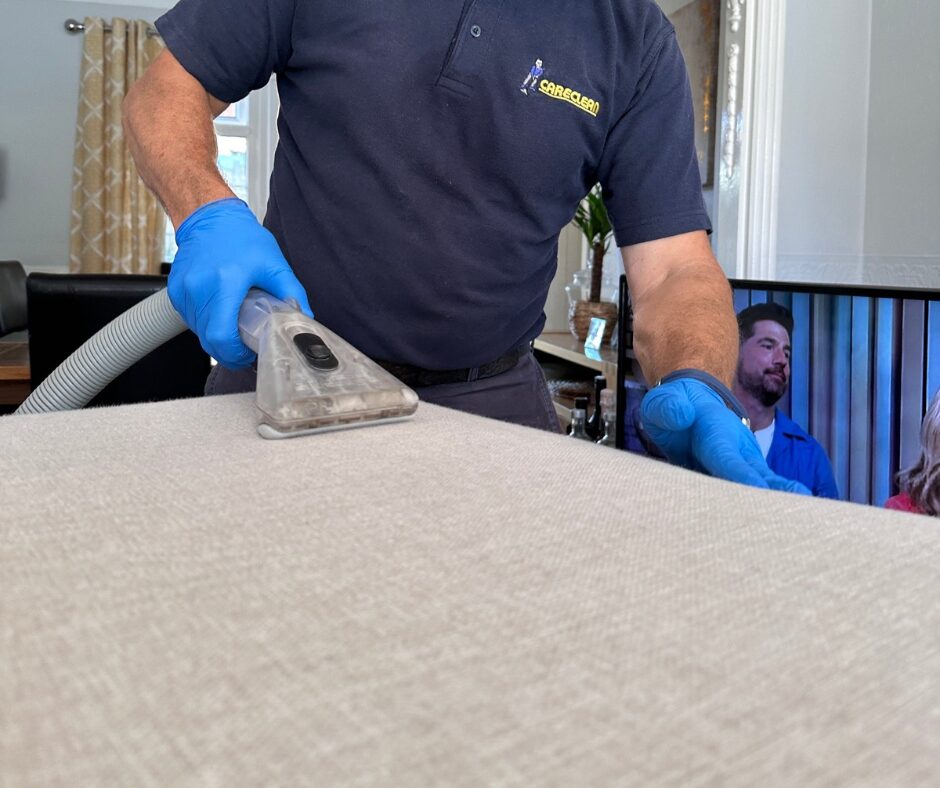
Can an old coffee stain still come out of a sofa?
Ah, coffee.
Lovely in a mug. Less lovely on a cream sofa.
Coffee stains are particularly common, and they’re not all the same.
A black coffee spill leaves different residues from a latte or cappuccino containing milk and sugar.
The fabric also matters.
A stain on one synthetic sofa may respond differently from the same spill on a natural-fibre material.
Older coffee stains can sometimes still be improved professionally, but the original spill and previous cleaning attempts affect the outcome.
We’ve already written a separate guide explaining this in more detail.
If coffee is your particular problem, have a read of Can You Get a Coffee Stain Out of My Sofa?.
It explains why the drink’s ingredients, the fabric, and what you’ve used on the mark all matter.
What about old chocolate and food stains?
Now we’re talking about some proper sofa adventures.
Chocolate, sauces, milky drinks and snacks have a remarkable talent for finding their way onto upholstery.
Usually when you’re wearing your favourite clothes or sitting on your favourite cushion too!
Chocolate milk can be especially awkward because it contains several ingredients, including fat, sugar and milk.
Even after you remove the visible mark, residue may remain in the fabric.
A customer contacted Careclean after their granddaughter spilt chocolate milk on the sofa.
The family had tried using clothes washing detergent, but the stain was still there.
And it’s understandable. You see a stain on fabric, reach for something that cleans fabric and hope for the best.
Unfortunately, sofas don’t come with a rinse cycle!
We’ve shared this real customer situation in our article, Chocolate Milk on the Sofa? What to Do Next.
If you’ve already tried cleaning a food stain and it hasn’t worked, the safest next step may be to stop adding products.
Which leads nicely to something else worth discussing.
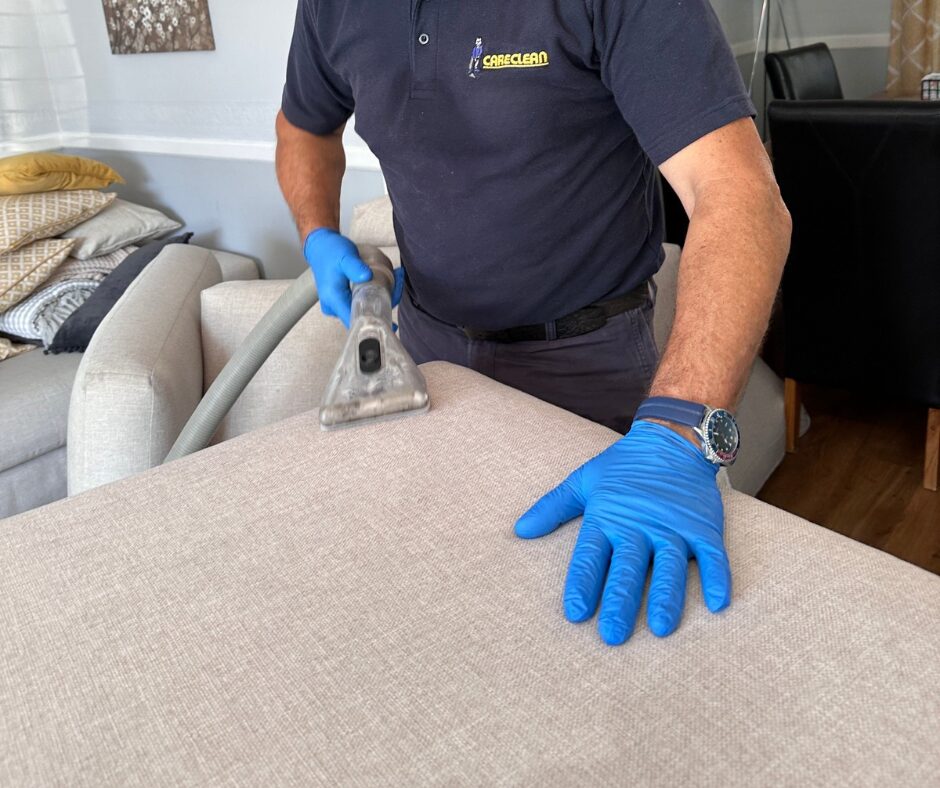
Can cleaning an old stain yourself make it worse?
Unfortunately, yes.
And before anyone starts feeling guilty, please don’t.
When you see a stain on your sofa, it’s perfectly natural to want to clean it.
The problem is that products made for clothes, kitchen worktops or hard floors aren’t necessarily suitable for upholstery.
Some can leave sticky residues.
Others may affect the fabric’s colour or texture.
And repeatedly rubbing or soaking the area can create a bigger problem than the original spill.
If one product hasn’t worked, adding three more is unlikely to make the situation easier to assess.
I know. Sometimes it’s hard to resist that bottle under the sink promising miracles!
But the best thing you can do for your sofa may be to put it back.
We’ve explained more about this in Why Kitchen Cleaners Can Damage Your Sofa.
It’s worth a read before attempting another treatment.
Why do old stains sometimes come back after cleaning?
Here’s a frustrating one.
You clean a mark, it looks better, and then a darker patch appears again as the sofa dries.
What’s going on?
There are a few possibilities.
Sometimes residue remains within the fabric or cushioning and becomes visible again as moisture moves towards the surface.
This is sometimes called wicking, but don’t worry about the technical term.
In everyday language, it means material from deeper inside can move back towards the surface as the fabric dries.
Other times, detergent residue left behind from earlier cleaning attempts can attract fresh dirt.
And sometimes the original stain never fully disappeared. It simply became less noticeable while the area was damp.
If a mark keeps returning, repeatedly wetting it may make matters worse.
It’s worth finding out what’s causing the problem before applying more cleaning products.
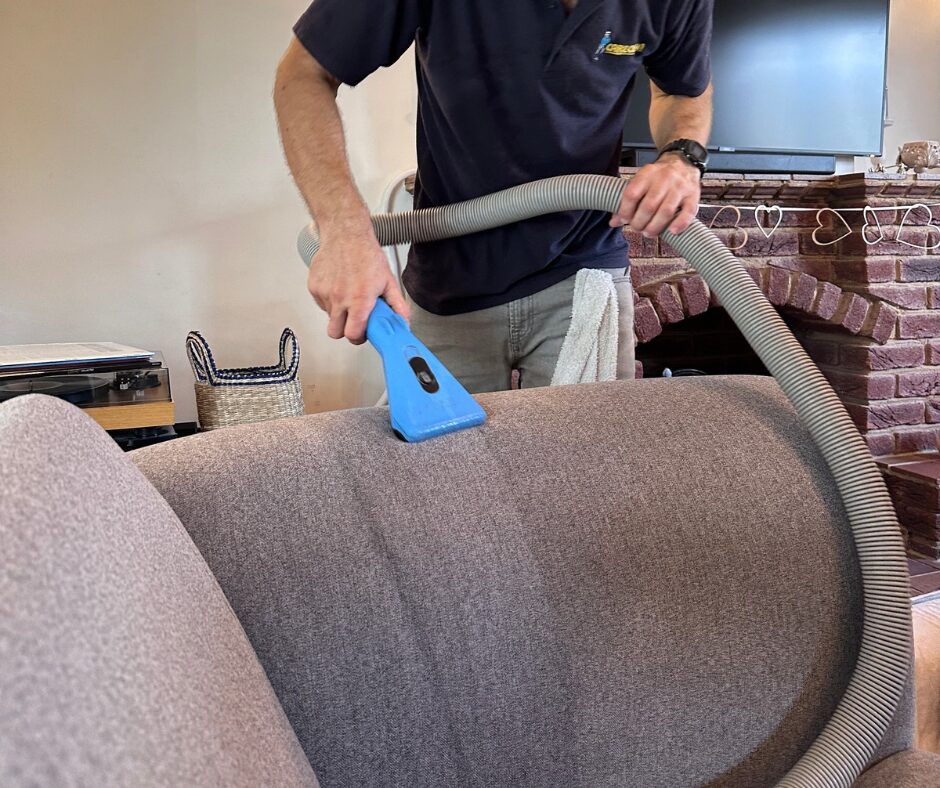
Does the type of sofa fabric make a difference?
Absolutely.
Two sofas can have identical coffee stains and still need completely different cleaning treatments.
That’s because upholstery materials behave differently.
Some synthetic fibres can tolerate certain cleaning methods better than delicate natural-fibre fabrics.
Cotton, linen, velvet and blended materials can have particular risks.
These may include water marks, colour movement, shrinkage or changes to the fabric’s texture.
The safest cleaning method depends on the material, not just the stain.
That’s why a professional cleaner should inspect the upholstery and check its suitability before treatment.
And sometimes the safest decision is not to clean a particular item at all.
What should you do if you’ve discovered an old stain?
Right, time for some practical advice.
If you’ve found a stain that’s been there for weeks or months, there are a few things worth doing before reaching for a bottle of anything.
-
First, try to remember what caused it.
Was it coffee, wine, food or something else?
If you don’t know, that’s fine. Mystery stains happen in the best of homes.
-
Next, think about what you’ve already used.
Even if it was months ago, tell the cleaner about any products you remember applying.
-
Check the sofa’s care label if you can find it.
This may give useful information about the material and cleaning restrictions.
-
Avoid scrubbing or soaking the mark.
An old stain isn’t an emergency. There’s no need to attack it with a brush.
-
Take a photograph.
A clear picture of the whole sofa and a close-up of the affected area can help when asking for advice.
And finally, consider what you’d be happy with.
Would a noticeable improvement make you feel better about your sofa, or is complete removal essential?
Knowing that helps you make a sensible decision.
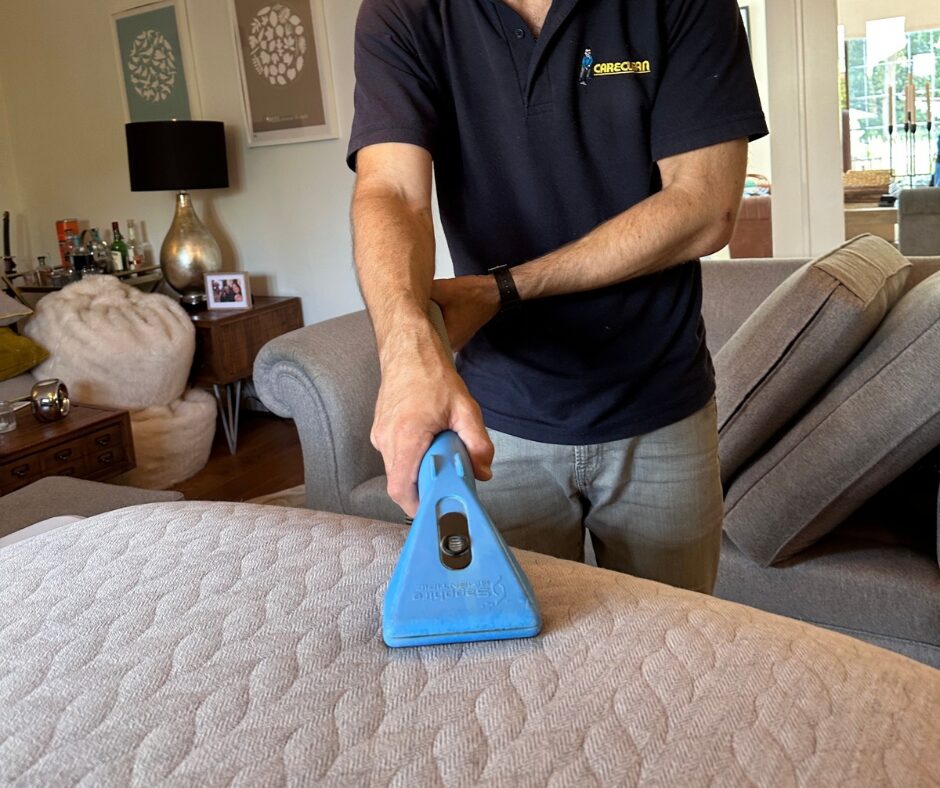
Will professional sofa cleaning remove the stain completely?
I’d love to say yes to every stain.
Imagine that! One clean and every mark disappears.
Sadly, upholstery doesn’t always play along the way we want it to.
Professional cleaning can often improve old stains, but complete removal cannot be guaranteed.
A cleaner needs to understand the fabric, the stain and any previous treatment before giving you a realistic idea of what might happen.
Some marks can disappear.
Others become considerably lighter.
And some are permanent because the fabric has been discoloured or damaged.
Sometimes further treatment can cause more harm than good.
At Careclean Essex, we’d always rather explain those possibilities before cleaning begins.
If you’d like to understand how we assess and clean upholstery, you can read about our professional upholstery cleaning service in Essex.
Is an old stain worth getting professionally cleaned?
This depends on your sofa and what you’re hoping to achieve.
If the furniture is comfortable, in good condition and still suits your home, a professional assessment may be worthwhile.
Even if a stubborn stain cannot be removed completely, general cleaning may improve the appearance of the surrounding upholstery.
However, if the fabric is worn through, permanently faded or seriously damaged, cleaning may offer limited improvement.
The best decision is the one that makes sense for your sofa, your expectations and your budget.
There is no need to feel rushed.
You can ask for advice, explain the problem and decide whether the likely result would be worth the cost.
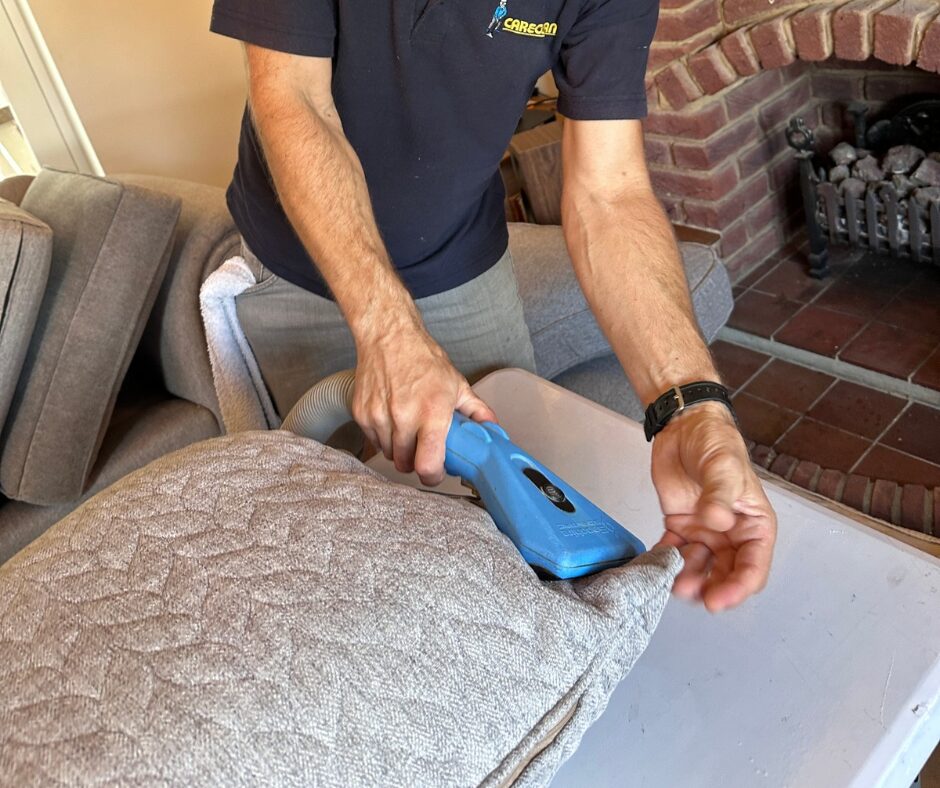
That old stain might not be the end of your sofa.
So, what have we learnt?
An old sofa stain isn’t automatically a permanent one.
Some marks can be removed, others can be improved, and some have simply been there too long or caused changes to the fabric that cleaning cannot reverse.
The most useful thing you can do is understand what you’re dealing with before trying anything else.
And please, if you’ve already tried a few cleaning products, don’t feel embarrassed.
We’ve all had those moments when the cupboard under the sink starts looking like the answer to everything!
If you’ve got an old sofa stain that’s been bothering you, Careclean Essex is happy to take a look.
Send us a photograph of the sofa, the affected area and the care label if you have it. Tell us what caused the mark, if you know, and anything you’ve already used.
We’ll explain what may be possible and help you decide whether professional cleaning is worth considering.
No judgement, no miracle promises. Just helpful advice and a little care for the furniture you love.
And perhaps, finally, you can stop hiding that stain under the cushion!
Frequently asked questions about old sofa stains.
-
Can professional cleaning remove stains that are years old?
Sometimes. The age of a stain is only one factor. The type of substance, upholstery fabric, previous treatments and any permanent colour changes also affect the result.
-
Can an old red wine stain be removed from a sofa?
Some red wine stains can improve with professional treatment, but strong colour can be difficult to remove completely. The fabric and age of the mark will influence the outcome.
-
Can professional cleaning remove old grease stains?
Some grease and oil-based stains can respond to suitable professional treatment. Results depend on the fabric, how deeply the oil has travelled and whether other cleaning products have been used.
-
Why is your sofa stain still visible after you’ve had it cleaned?
The original stain may not have been fully removed, residue may remain, or the fabric may have permanent discolouration. A professional assessment can help identify the likely cause.
-
Should I try another stain remover before calling a cleaner?
If previous treatments haven’t worked, avoid applying more products without knowing they’re suitable for your upholstery. Additional chemicals or moisture can make the problem more complicated.
-
Can you remove a stain without cleaning the whole sofa?
Sometimes targeted treatment is possible. However, the fabric and level of general soiling affect whether spot cleaning is appropriate. Treating one area can occasionally leave a visible difference compared with the surrounding upholstery.
-
Will my sofa look brand new after professional cleaning?
Cleaning may improve its appearance, particularly where dirt has built up. It cannot reverse permanent fading, wear or damage, so results should be discussed before treatment.