Quick and short answer… Kitchen cleaners are made for hard surfaces, not sofa fabric. They can leave sticky residue, fade colour, and cause water marks, so a gentler, fabric-safe approach is usually best.
If you have ever spotted a mark on the sofa and reached for the nearest kitchen spray, you are not alone. It feels like the quickest fix.
The problem is, upholstery does not behave like a hard kitchen surface.
Most of your sofas are made from layered materials, fabric blends, backing, foam, stitching, and dyes that can react badly to the wrong product. Even when a stain looks like it has “gone”, the cleaner can leave residue behind, weaken fibres, or shift the colour in a way that only shows up later.
This guide will help you stop accidental damage and handle everyday marks in a safer way.
Key takeaways
- Kitchen cleaners are built for hard, wipeable surfaces… sofas are not.
- Residue is a common issue…
- It can attract more dirt and leave the fabric feeling stiff.
- Over-wetting is one of the fastest ways to cause rings, odours, or slow drying.
- Always check the sofa’s care label first (the cleaning code matters).
- When in doubt, a gentle, controlled approach is safer than “stronger product, more scrubbing”.
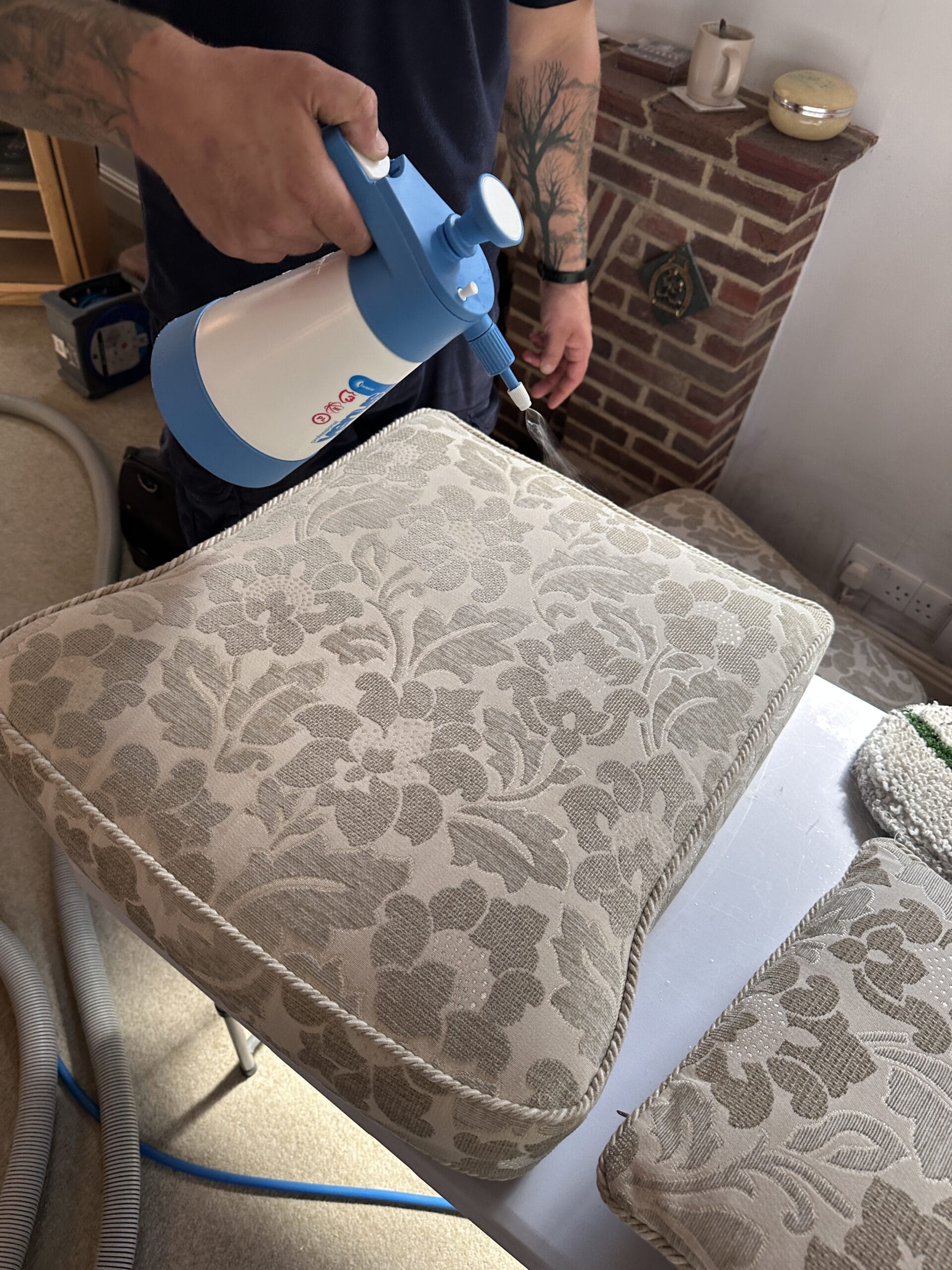
Why kitchen sprays cause problems with upholstery
1) They are designed to cut grease, not protect fabric
Many kitchen products are made to break down oils quickly. That is useful on a hob splashback, but on upholstery it can strip finishes, affect colour, and disturb the feel of the fibres.
2) They often leave a sticky residue
A sofa is not something you really want to rinse like you do a floor. If a product is wiped on and left, traces can remain in the fibres. Residue can make fabric feel crunchy or stiff, and it can also attract soil, so the area looks dirty again faster.
This “sticky residue, quick re-soiling” issue is well recognised in carpet care guidance, and the same principle shows up on fabric furnishings too.
3) “A little more scrubbing” can fuzz or flatten the fabric
Agitation is a big deal on upholstery. Some weaves will bobble, some will go shiny, some will lift the pile. Once the texture changes, you can’t always reverse it.
4) Over-wetting can cause water marks, rings, and lingering smells
If liquid soaks into the cushion or the backing, it can dry unevenly and leave a tide mark. It can also hold onto odours. The safest spot cleaning is controlled and minimal, not soaking.
First step, check the care label (it saves a lot of regret)
Most sofas have a care tag tucked under a seat cushion or underneath the frame. The common codes are:
- W: water-based cleaner is usually suitable
- S: solvent-based cleaner only
- WS: either water-based or solvent-based may be suitable
- X: vacuum only, no water or solvent
These codes are widely used in consumer guidance, and they are worth following because they reflect how the fabric and dyes are meant to be treated.
If you cannot find a label, or it has been removed, treat the sofa as “unknown” and keep everything gentler than you think you need.
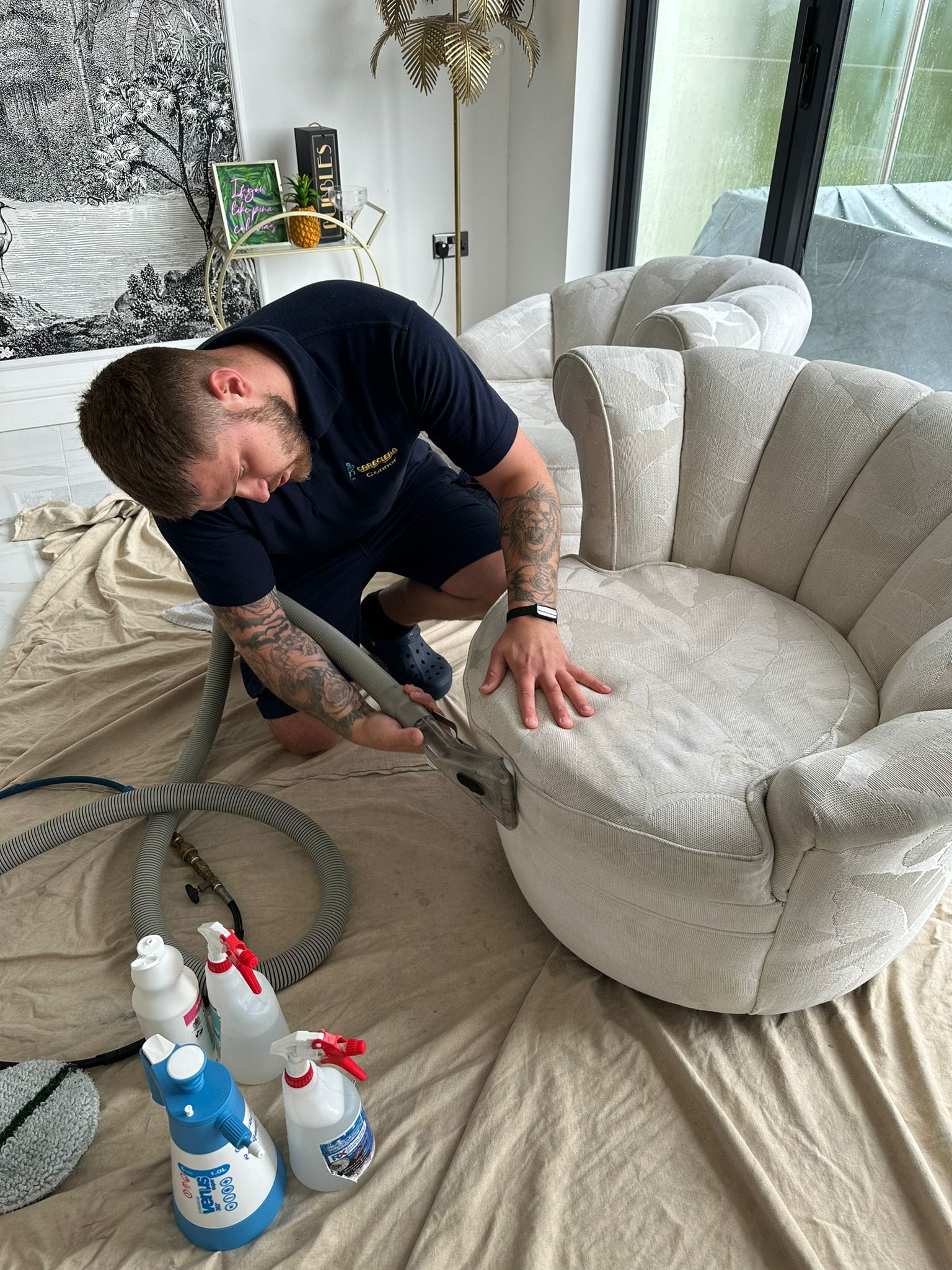
A safer way to deal with an everyday mark (Careclean approach)
If you only take one thing from this post, take this: slow down and do less. Most damage happens when we panic and overdo it.
Step 1: Blot, do not rub
Use a clean, light coloured cloth or kitchen roll. Press and lift. Rubbing can spread the stain and rough up the fibres.
Step 2: Test first, ALWAYS somewhere hidden
Pick a spot at the back or under a cushion. Whatever you use, test it and wait a few minutes. Look for colour transfer and texture change.
Step 3: Use the mildest option that matches the fabric code
For many W or WS fabrics, plain water applied sparingly can be safer than a “strong” spray. If you are using any product at all, use a tiny amount and work in light passes rather than one heavy go.
Step 4: Keep moisture under full control
Dampen your cloth… do not wet the sofa. You are just trying to lift the mark from the surface, not washing the inside of the cushion, okay?!
Step 5: Help it dry evenly
Once the mark lifts, blot with a dry cloth. Good airflow helps. Avoid heat blasting (hairdryers can set some stains and stress fibres).
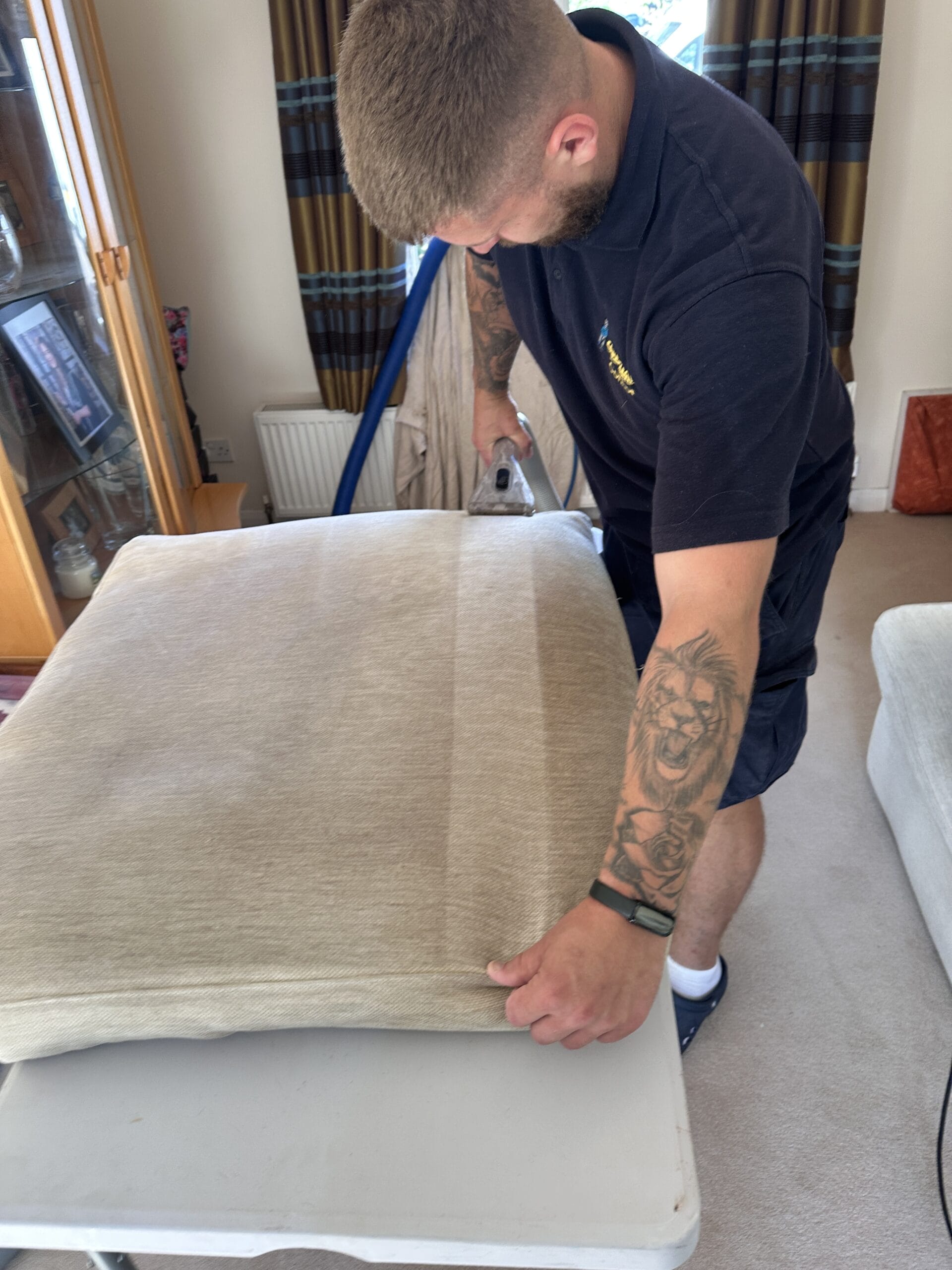
The “kitchen cleaner” situations we get called out for
These are the common ones we see in family homes across Essex:
“It looked fine, then a week later, there’s a pale patch”
This is often a colour shift, dye damage, or a finish being stripped. Bleach-based products can do this quickly, but even non-bleach sprays can cause it on certain fabrics.
“Now it feels stiff”
That is usually residue sitting in the fibres. It can also cause the area to re-soil quickly.
“There’s a ring around it”
Often from over-wetting and uneven drying.
“The smell won’t go”
If moisture has gone into the cushion, it can hold odours. Persistent smells often need more than surface cleaning, and the right approach to removing upholstery odours depends on what is causing the smell and how deeply it has settled into the fabric or filling.
When it’s better to stop and get it properly cleaned
A good rule of thumb is: if the fabric is delicate, the stain is oily, or you cannot identify the fibre type, it is safer to pause.
Consider professional help if:
- The care label says S or X.
- It is a large area (not a small spot)
- The stain has dye in it (wine, curry, makeup)
- There is pet soiling or odour.
- The sofa is a high-value piece you would hate to replace
Regular dry vacuuming is also a simple way to keep upholstery looking fresher for longer, and it is recommended in consumer upholstery care tips.
FAQs
Can I use washing-up liquid on a sofa?
We would avoid it. It is hard to rinse fully, and residue can attract dirt. The same warning appears in WoolSafe consumer care guidance for soft furnishings like carpets and rugs, and the logic carries over to upholstery, too.
Is steam cleaning safe for sofas?
Sometimes, but it depends on the fabric, the construction, and how moisture is controlled. If the sofa is not designed for it, steam can over-wet and leave water marks. If you are unsure, do not guess.
What is the safest “do something right now” option?
Blot, test, and use minimal moisture. If you cannot identify the fabric code, keep it as dry as possible and avoid strong products.
How often should a sofa be professionally cleaned?
It depends on use. Homes with children, pets, and busy living rooms often benefit from periodic deep cleaning, plus regular vacuuming in between. For suggested intervals for light, moderate and heavy use, see how often your upholstery needs cleaning.
What’s your next step?…
If you have used a kitchen spray on your sofa and you are worried you have made it worse, do not panic. In many cases, we can improve it, especially if you stop adding products now.
If you want, send us a quick photo and tell us:
- The fabric type, if you know it (or the care label code)
- What the mark is
- What you have already used
We will tell you honestly what is likely to lift, and what may not.