Yes, in many cases we can remove or significantly improve a coffee stain on a sofa. How successful we can be depends on the fabric, how long the coffee has been there, whether it contained milk or sugar, and what has already been used on the mark.
There is one important thing we would rather be clear about from the start. We cannot safely clean every sofa fabric, and we cannot promise that every coffee stain will disappear completely.
The safest approach is to assess the sofa first, test the fabric and then decide what can realistically be done without risking damage.
The quick answer if you have just spilt coffee
If the coffee is still wet, blot it gently rather than rubbing it.
Use a clean, white absorbent cloth or kitchen roll and press onto the spill. Lift it away, move to a clean section and repeat.
Avoid scrubbing. Avoid soaking the cushion. And resist reaching for a kitchen cleaner or whichever stain remover happens to be under the sink.
The National Carpet Cleaners Association gives similar advice for upholstery spills. Fabric type matters, and excessive moisture, unsuitable household products and rubbing can all make the original problem harder to correct.
Read the NCCA’s upholstery cleaning guidance
The useful things to remember are:
- Blot fresh coffee rather than rubbing it.
- Stop adding products if you are unsure what the sofa fabric is.
- Black coffee and milky coffee can behave differently.
- Older stains can still improve, but they can be harder to remove completely.
- Professional cleaning should start with the fabric, not simply with the stain.
Why can coffee be difficult to get out of a sofa?
Coffee is more complicated than a simple brown mark sitting on top of the fabric.
The liquid can travel into the fibres and, depending on the sofa construction, towards the backing or cushion beneath. Once it dries, the remaining colour can become much more noticeable.
Then there is the coffee itself.
A black coffee leaves mainly the coffee staining to deal with. A latte, cappuccino or coffee with milk and sugar brings other residues into the fabric as well. If these are not removed properly, you can sometimes be left with a dull patch, stiffness or an unwanted smell even if the brown colour has improved.
Age matters too.
A fresh spill normally gives us more options than a stain that has been sitting in the sofa for several months. Previous attempts at cleaning can also change what we find when we arrive.
If you have already used a kitchen spray or general household cleaner, it does not automatically mean the sofa cannot be helped. It does mean we need to know what has been used before applying anything else.
We have a separate guide explaining [why kitchen cleaners can cause problems on upholstery]. Why kitchen cleaners can damage your sofa
Can professional sofa cleaning remove the coffee stain completely?
Sometimes, yes. Sometimes the realistic result is a significant improvement rather than complete removal.
That distinction matters.
We would rather tell you what we genuinely expect before starting than promise that every mark will vanish.
When assessing a coffee stain, we are looking at the stain itself and the condition of the sofa around it. We also need to consider whether removing the stain aggressively would create a bigger problem, such as colour loss, texture change or a water mark.
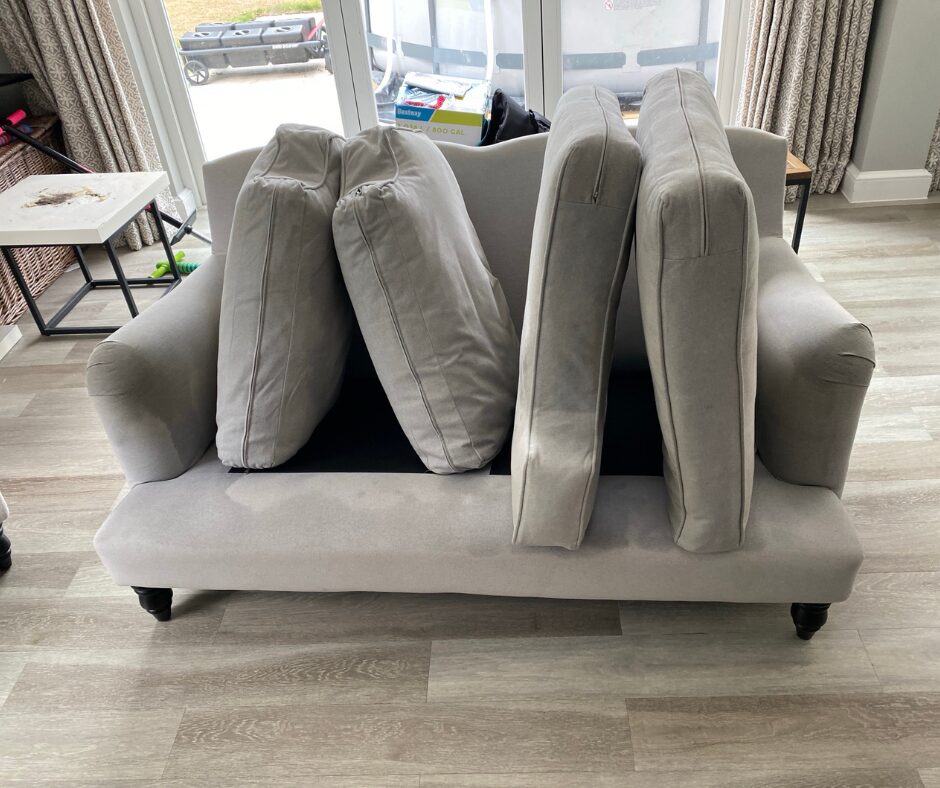
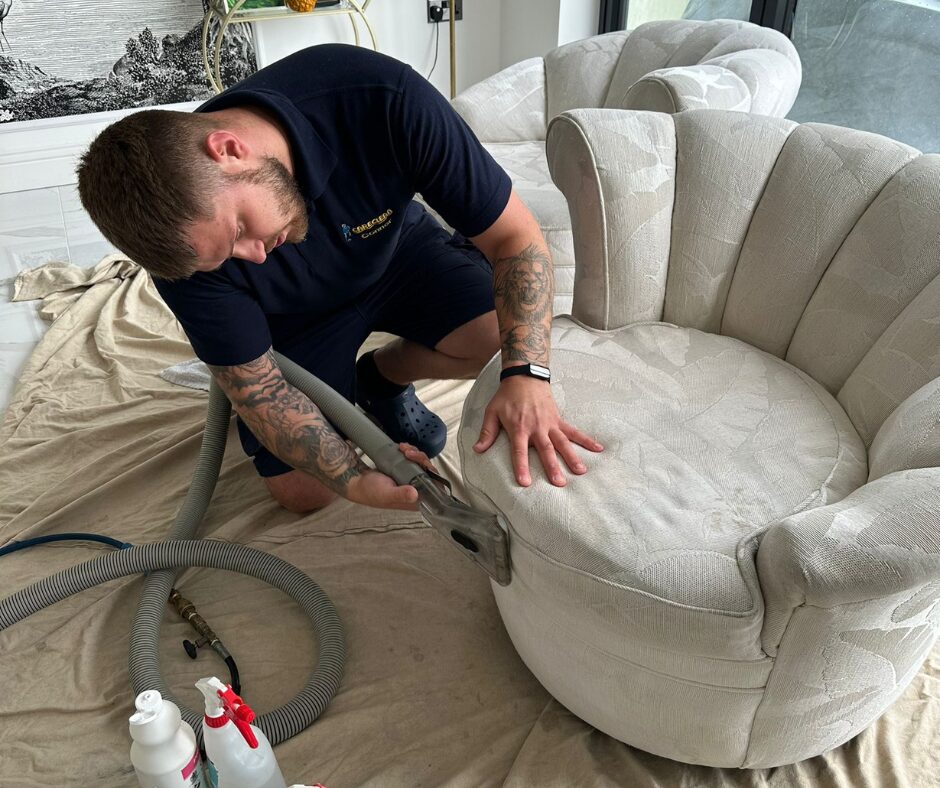
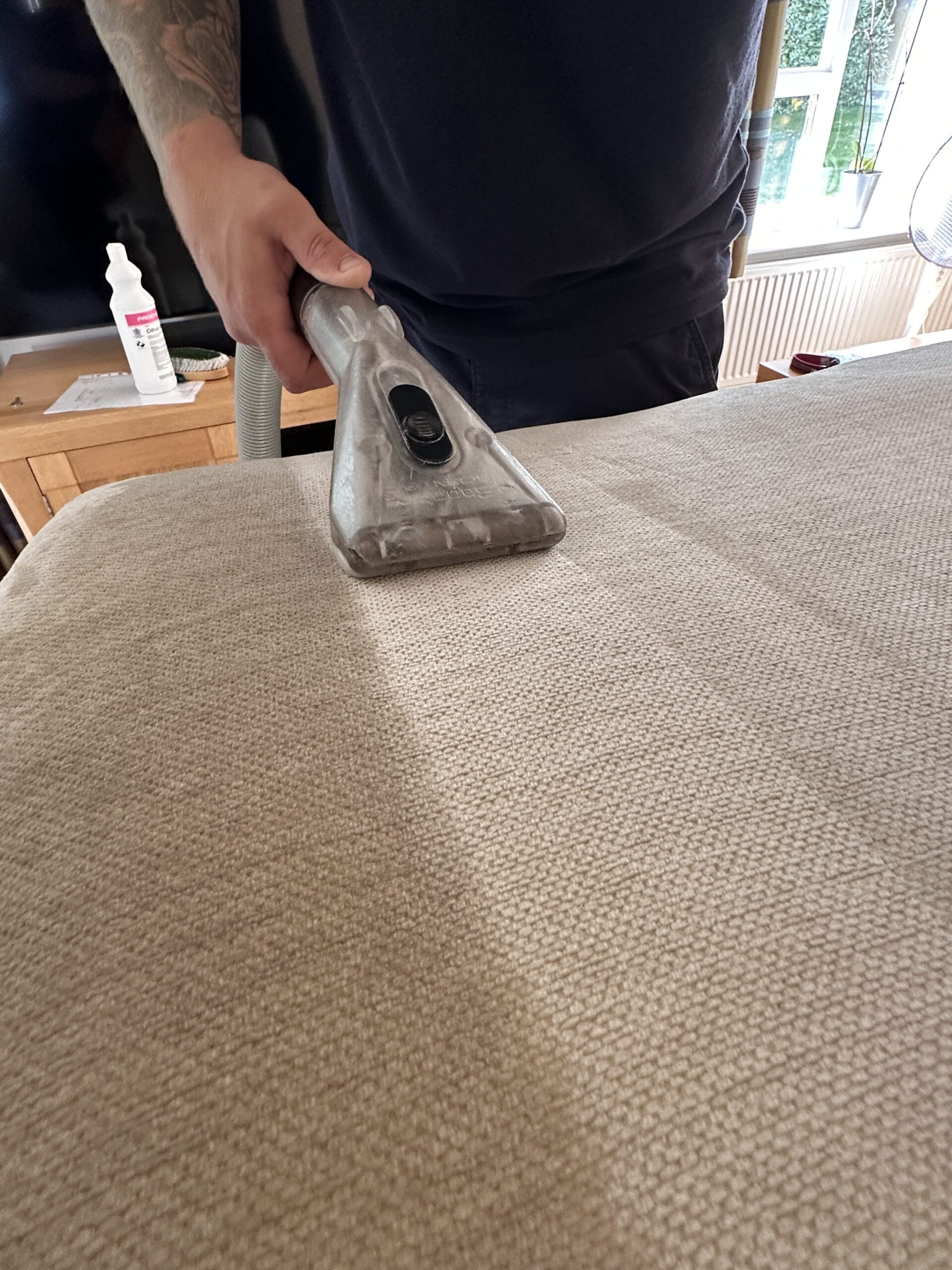
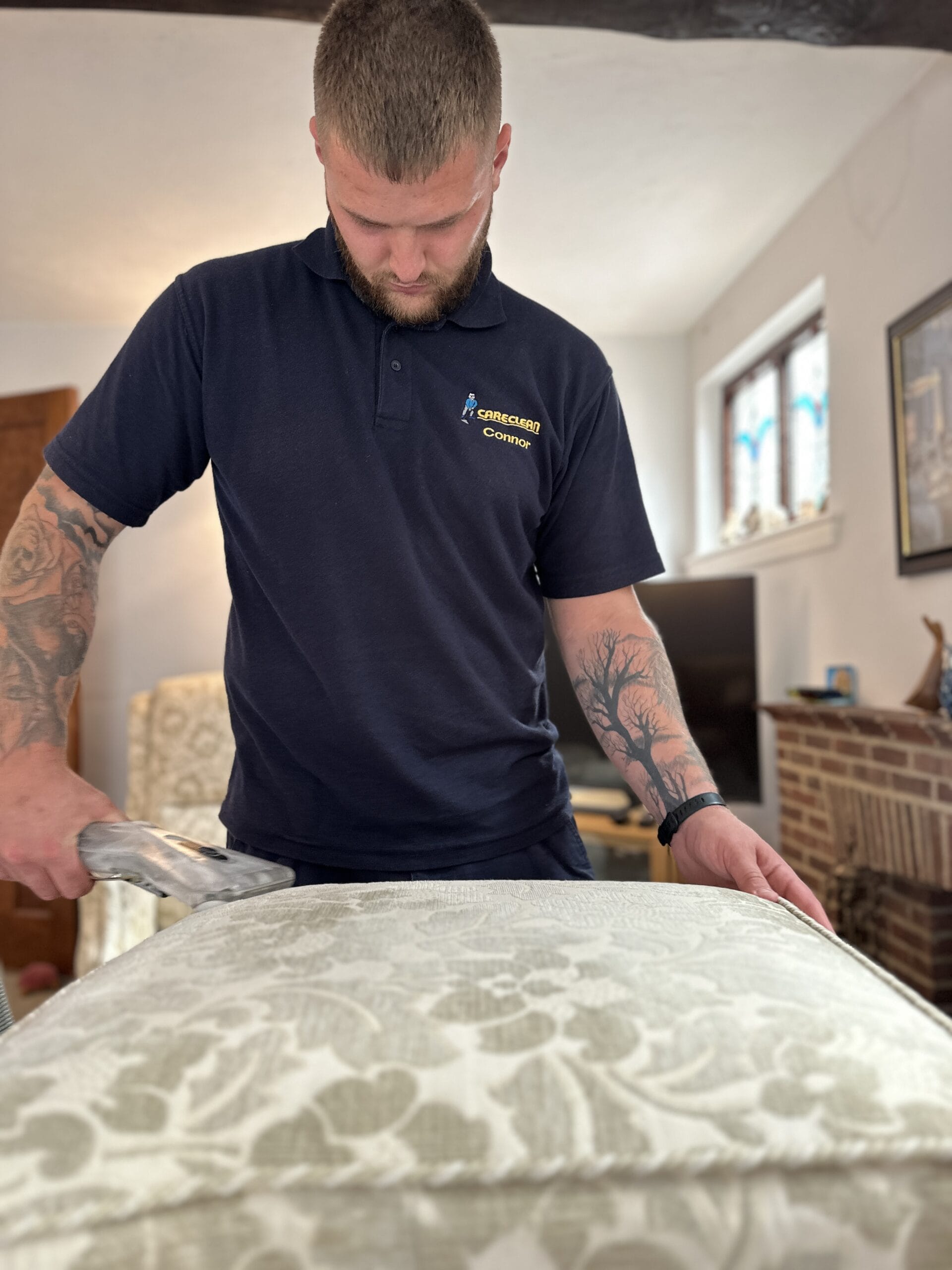
A professional clean gives us more control over treatment and extraction than simply applying another product to the surface. Our upholstery cleaning process is adjusted according to the material rather than treating every sofa in exactly the same way.
See how our upholstery cleaning in Essex works
The fabric matters as much as the coffee stain
Two sofas with almost identical coffee stains may need completely different treatment.
Modern upholstery can contain natural fibres, synthetic fibres and blends. There may also be dyes, backing materials, foam, finishes and decorative fibres to consider.
Some fabrics cope well with controlled moisture. Others can be much less forgiving.
That is why we do not look at a brown mark and immediately start treating it.
Where appropriate, we first assess the fabric and test how it behaves. We are checking for things such as colour movement, moisture sensitivity and the general condition of the upholstery.
This is particularly important with more delicate materials and pile fabrics. Cotton, linen and wool can be vulnerable to moisture or shrinkage, while fabrics such as velvet and chenille may mark or change appearance if handled incorrectly.
We have also written more about this in our guide to [deep cleaning sofas without causing damage]. Can a sofa be deep cleaned without damage?
Are there sofas that Careclean cannot clean?
Yes. There are occasions when the safest answer is that we should not clean the sofa.
That may not be the answer somebody wants when they are looking at a coffee stain, but protecting the furniture matters more than forcing a cleaning process onto a fabric that cannot safely tolerate it.
A sofa may have manufacturer instructions that restrict the type of cleaning that can be used. Upholstery labels can also use cleaning codes. For example, an X code generally means liquid cleaning should not be used.
There may also be situations where we decide the risk is too high because of unstable dyes, damaged or weakened fabric, loose construction, previous chemical treatments or a fabric that reacts badly during testing.
Some older, delicate or unusual upholstery needs a specialist method that may fall outside what we can safely provide.
If our testing suggests cleaning could cause permanent damage, we will tell you.
That is a much better outcome than attempting the clean simply because there is a stain to remove.
What if the stain has already changed the colour?
Cleaning removes contamination. It cannot put colour back into fabric that has already been bleached, faded or chemically damaged.
This is an important limitation with stains that have already been treated at home.
A mark may look like remaining coffee when part of what you are seeing is actually a change to the original fabric colour.
Strong household products, repeated rubbing or unsuitable stain removers can sometimes cause this.
If that has happened, further cleaning may remove remaining residue or improve the surrounding area, but it cannot necessarily reverse the colour change itself.
This is one reason we recommend stopping once a home treatment is clearly not working rather than repeatedly applying different products.
What will we try when the fabric is suitable?
Our aim is to use the safest effective process for that particular sofa.
That starts with understanding what we are working with.
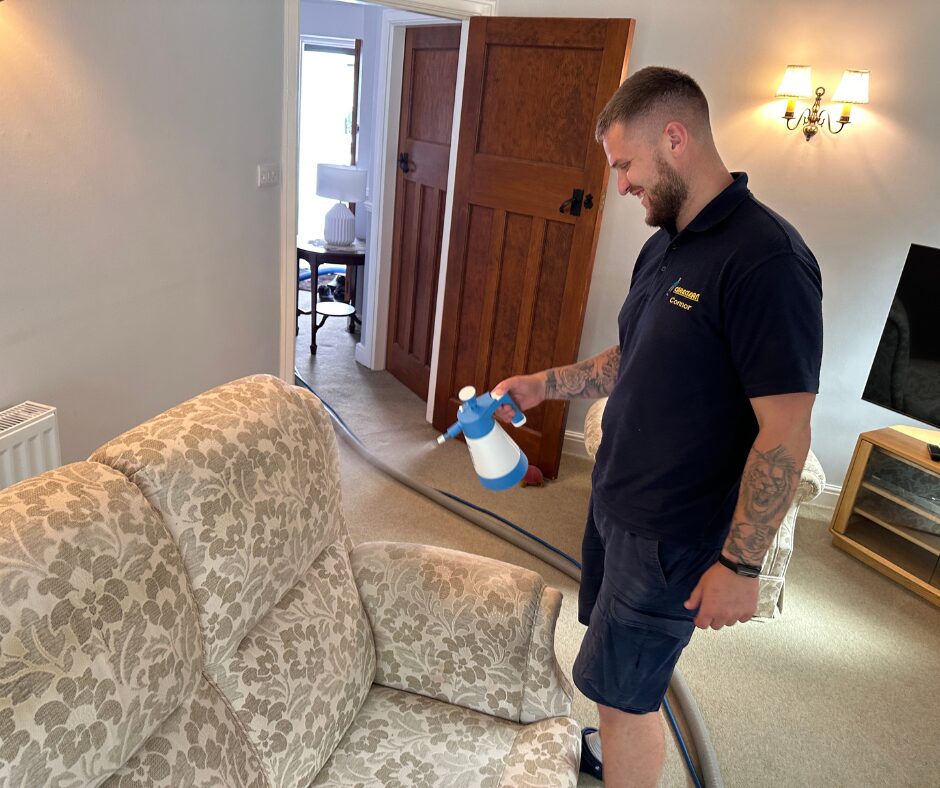
We look at the fabric, the stain, the condition of the sofa and anything that has already been used. Where it is safe to continue, the coffee stain can then be treated before the main cleaning and extraction process.
Controlled extraction matters because simply dissolving part of a stain is not enough. Residue also needs somewhere to go.
Depending on the sofa and fabric, we may be able to work on the stained area as part of a fuller upholstery clean rather than repeatedly spot-treating one small patch.
The final result still depends on how the stain and fabric respond. We will always prefer a safe improvement over chasing the last faint shadow and damaging the sofa in the process.
Why might an old coffee stain come back after cleaning?
Sometimes a mark looks better while it is damp and becomes visible again as the area dries.
This can happen when residues remain deeper within the fabric or filling and move towards the surface during drying, often described as wick-back.
Previous cleaning products can contribute too.
A heavily applied detergent might appear to solve the problem initially, but residue left behind can attract further dirt or affect how the area dries.
That is why moisture control, rinsing and extraction are important parts of professional upholstery cleaning.
If you want to keep the rest of the sofa in good condition between deeper cleans, our guide to [maintaining upholstery between professional cleans] is a useful next read. How to maintain upholstery between professional cleans
Should I try to remove the coffee stain myself first?
For a fresh spill, gently removing as much liquid as possible is sensible. Trying several different cleaning products is where the risk starts to increase.
Blotting with a clean absorbent cloth is very different from soaking the area with detergent.
If you know exactly what your sofa is made from and have clear manufacturer care instructions, follow those instructions.
If you cannot identify the fabric, cannot find the cleaning label or have already tried something without success, stopping is often the safer option.
The NCCA specifically advises checking manufacturer guidance, avoiding over-wetting and taking care with general household cleaners on upholstery.
There is no shame in leaving a coffee mark alone until somebody can assess it. A stain is often easier to deal with than colour loss, shrinkage or a damaged fabric surface caused while trying to remove it.
What should I tell you before we look at the sofa?
The more we know about what happened, the easier it is to assess the stain properly.
Tell us roughly when the coffee was spilt, whether it contained milk or sugar, and anything you have already put onto the fabric.
A photograph is useful too, especially if you can include the surrounding cushion or sofa rather than only a close-up of the brown mark.
If you can find the manufacturer’s label or cleaning code, send a photograph of that as well.
From there, we can give you a much clearer idea of whether the sofa is something we can clean and what expectations are realistic.
You can also see what other local customers have said about their experience with Careclean before deciding whether you would like us to take a look. Read Careclean customer reviews
So, can we get that coffee stain out of your sofa?
There is a good chance we can improve many coffee stains, and some will come out extremely well. What we will not do is promise a perfect result before we know what your sofa is made from and what has happened to it.
Sometimes the right treatment removes the mark.
Sometimes it leaves a faint improvement rather than complete removal.
And occasionally the fabric tells us that cleaning it would create more risk than benefit.
That honesty is part of looking after the sofa properly.
If you have a coffee stain you are worried about, send us a photo of the sofa, the stain and the care label if you can find it. We can have a look and talk you through what may be possible before anything is cleaned.
Frequently asked questions
Can you remove an old coffee stain from a sofa?
Possibly. Older coffee stains are generally more difficult than fresh spills, but age alone does not mean the mark is permanent. The fabric, previous treatments and depth of the staining all matter. We need to assess these before saying what result is realistic.
Does milk in coffee make the stain harder to remove?
It can make the treatment more involved because you are dealing with residues from the milk as well as the coffee itself. This can also contribute to smells if liquid has travelled deeper into the cushion.
Can you clean every type of sofa fabric?
No. Some fabrics or manufacturer cleaning codes restrict the methods that can safely be used. We may also decline cleaning if testing shows a significant risk of colour movement, shrinkage, texture change or other damage.
Will you know before cleaning whether the stain will disappear?
We can usually give you a realistic expectation after assessing and testing the upholstery, but stain removal cannot always be guaranteed. Pre-existing stains and damage may not be fully removable.
I have already used a stain remover. Can you still help?
Potentially, yes. Tell us exactly what you used if you know. Do not keep applying different products, as residues or chemical reactions can make further treatment more difficult.
Should I scrub a fresh coffee stain?
No. Blotting is safer. Scrubbing can spread the spill and disturb the surface of the fabric. Use a clean absorbent cloth and keep the amount of moisture under control.