If you have ever looked at a fresh spill and thought, “If I touch this, I’ll make it worse”, you are not alone. Most carpet stains are removable, but the difference between an easy lift and a stubborn patch is usually what happens in the first few minutes.
This pillar guide covers the stains we see most often in client homes, what causes them, and what usually helps. Where you already have a full stain guide written, I have linked it naturally. As you add more cluster blogs, you can drop the links into the relevant sections below.
Before we get into the stain list, it helps to know one simple truth.
Most carpet stains fall into a handful of types, and each type behaves differently. Mud is mostly particles. Red wine is dye and tannins. Blood is protein. Oil is oil. If you treat them all the same way, you tend to spread the stain, set it, or leave a sticky residue that attracts dirt later. WoolSafe’s consumer advice is very clear on the basics: blot, never rub, work from the edge towards the middle, and avoid over-wetting. They also warn against using washing-up liquid because it can leave a residue that causes rapid re-soiling.
Below are all the stains we see, plus links to individual blogs about each one, to make it easier to find what you need. Feel free to scan down, find your stain, and go straight to everything you need to know about it!
A calm first response (so you do not make it worse)
When a stain is fresh, the best move is usually the least dramatic one.
Start with blotting. Press down with a clean white cloth or kitchen roll, lift, move to a dry bit, repeat. Rubbing is the thing that turns a small mark into a bigger problem, especially on loop pile or softer fibres.
Keep water controlled. A light mist or a slightly damp cloth is safer than pouring. Over-wetting is one of the main reasons stains reappear, because the spill has soaked below the surface and later wicks back up as the carpet dries.
Work from the outside in. This stops the stain from spreading and keeps the edge cleaner.
If your carpet is wool or you are unsure of the fibre, slow down. Some products and DIY mixes are fine on one carpet and harsh on another. Patch testing in an inconspicuous area is not overcautious; it is how you avoid bleaching or texture change.
The stains we see most (and what each one needs)
Mud and ground-in dirt
Mud is common in Essex, especially in hallways and family rooms. The mistake people make is trying to scrub wet mud out straight away. That usually pushes grit deeper and leaves a dull patch.
What tends to help is letting it dry, vacuuming thoroughly, then treating what is left as a light soil mark, not a wet spill.
Check out our full guide on this stain here: How to Get Mud Out of Carpet.
Red wine
Red wine is a dye stain, and it can “grab” quickly on lighter carpets. It is also a stain where panic-cleaning makes things worse. The aim is to lift the liquid first, then deal with the colour slowly and carefully, without soaking the area.
Check out our full guide on this stain here: How to Get Red Wine Out of a Carpet (Without Making It Worse)
Blood
Blood is protein-based, which is why hot water and heat are risky. The best early approach is usually cool or cold water, gentle blotting, and patience. If you use warmth too soon, you can set what you are trying to remove.
Check out our full guide on this stain here: Blood on the Carpet? Here’s What to Do (Without Making It Worse)
Oil and greasy food marks
Oil stains behave differently because water does not mix with oil. People often “rinse and rub”, and all that does is spread the greasy halo. You normally need a method that lifts and breaks down the oily residue, then you rinse lightly so you do not leave a sticky patch behind.
Check out our full guide on this stain here: Oil stain on carpet: what to do first (and when to stop)
Paint (water-based and solvent-based)
Paint is one of those stains where time matters, but so does restraint. With water-based paint, you often have a better chance if you lift the bulk carefully while it is still soft, then treat what remains. With solvent-based paint, random products can damage fibres, backing, or carpet colour.
Check out our full guide on this stain here: How to get ink out of carpet (without spreading it)
Chocolate
Chocolate is a mix of fat, colour and sugar. Even if you lift the solids, you can be left with a slightly greasy shadow that holds onto dirt later. The safest approach is usually: lift what you can without smearing, treat the oily residue gently, then rinse lightly to avoid stickiness.
Check out our full guide on this stain here: Safe Ways To Get Chocolate Out Of Your Carpet.
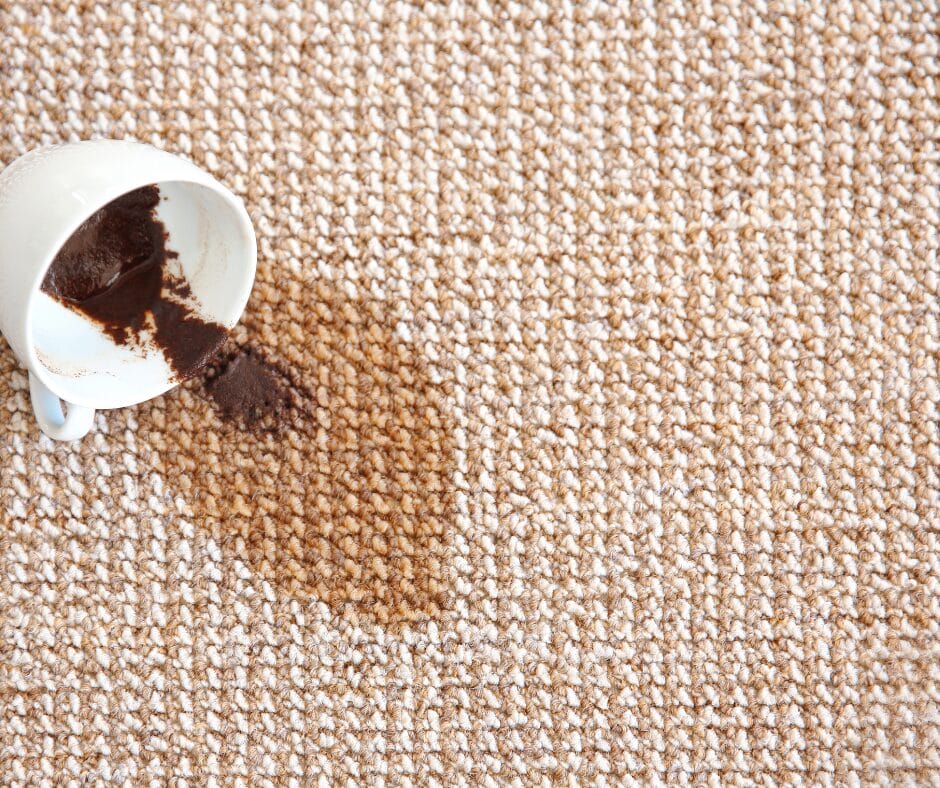
The “everyday drink” stains (they look simple, then come back)
Tea
Tea is one of the most common “everyday” stains we see, and it often leaves a pale brown shadow that only shows once it dries. Tannins are the culprit, and the main risk is over-wetting. A small amount of solution, blotting, and then a clean-water rinse (again, controlled) usually gives the best chance.
Check out our full guide on this stain here: How to get tea out of carpet (without a ring mark)
Coffee
Coffee is similar to tea, but can be darker and more stubborn, especially with milk. The other issue is residue. If a coffee spill is cleaned with something that leaves soap behind, it can turn into a patch that attracts dirt and looks grubby again within a week or two.
Check out our full guide on this stain here: How to remove coffee stains from carpet.
Fizzy drinks (cola, orangeade, energy drinks)
These stains are often a mix of dye, sugar and acid. You can get the colour up and still be left with sugar residue that makes the carpet feel tacky. Later, it looks like a fresh mark, but it is actually re-soiling.
Check out our full guide on this stain here: How to get fizzy drink out of carpet, and stop it going sticky.
Juice and squash
Juice stains are often underestimated because they look lighter. The issue is colour, and sometimes the “invisible” sugar that is left behind. A gentle lift, then a controlled rinse, is usually the difference between a clean patch and a slightly dull one.
Future cluster idea: How to get juice out of carpet.
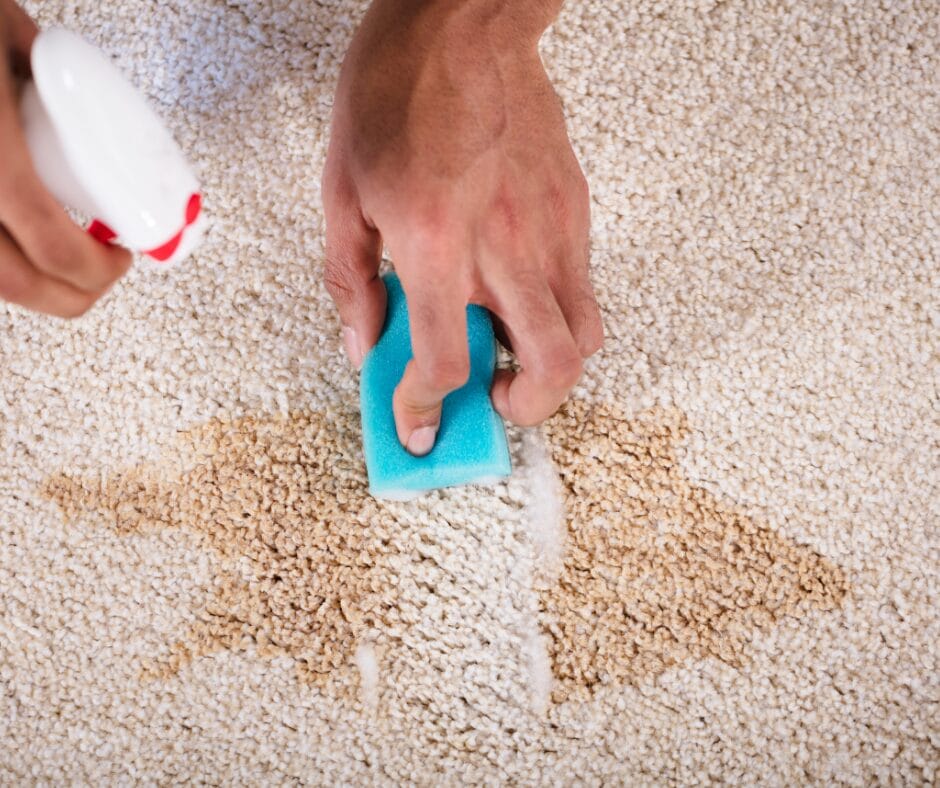
Pet stains (it is not just the mark, it is what is underneath)
Pet urine
Urine is one of the most emotionally frustrating stains because it is not only a visual mark. The salts can soak into underlay, and the odour can return on warm days even if the carpet looks fine. This is also one of the stains most likely to wick back after a DIY clean, especially if the area was over-wet.
If you are planning a cluster page, it is worth separating this topic into two parts: removing the visible stain, and removing the smell (because they are not always the same job).
Check out our full guide on this stain here: How do you remove pet urine smell from your carpet.
Vomit
Vomit is a mixed stain, usually protein plus acid plus colour. The first job is removing solids carefully, then treating what is left without heat, and without scrubbing it into the fibres. If you only clean the surface, you can get a faint sour smell later, even when the carpet looks fine.
Check out our full guide on this stain here: How to clean vomit from carpet safely.
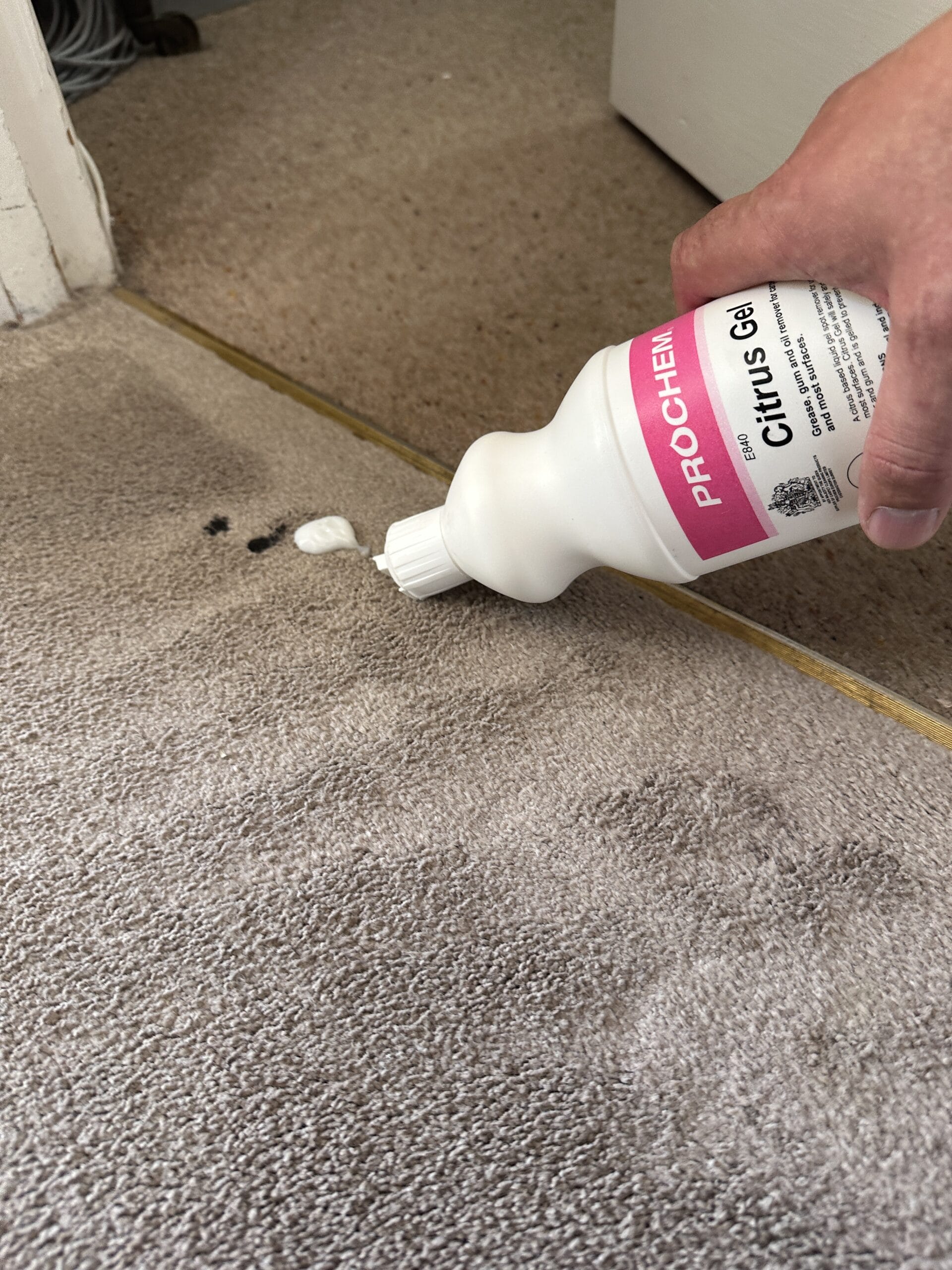
Dye and pigment stains (they spread fast if you panic-clean)
Ink and felt tip
Ink is a classic “do not rub” stain. It can travel along fibres and spread quickly. Gentle blotting and careful treatment is key, and if it is a big mark or a strong permanent marker, it is often one of the moments where professional stain treatment saves the carpet from becoming a larger patch.
Check out our full guide on this stain here: How to get ink out of carpet.
Curry and turmeric
Turmeric is famously strong, and curry stains are a combination stain (oil plus dye). If you treat it like a normal food spill, you can spread the oily base and smear the colour. The best approach is usually staged: lift the solids, treat the oil element carefully, then address the yellow pigment.
Check out our full guide on this stain here: How to get curry and turmeric stains out of carpet.
Make-up and fake tan
Foundation, concealer and fake tan are often oil-based, sometimes with dyes. Water alone can smear it. A gentle lift approach is usually safer, and on pale carpets, patch testing matters because some products can lighten the pile.
Check out our full guide on this stain here: How to remove make-up and fake tan from carpet.
Nail varnish
Nail varnish is pigment heavy and sets quickly. The wrong solvent can damage fibres or pull colour from the carpet, especially if it is synthetic with a strong dye. This is one of the stains where it is worth being careful rather than fast.
Check out our full guide on this stain here: How to get nail varnish out of carpet without bleaching.
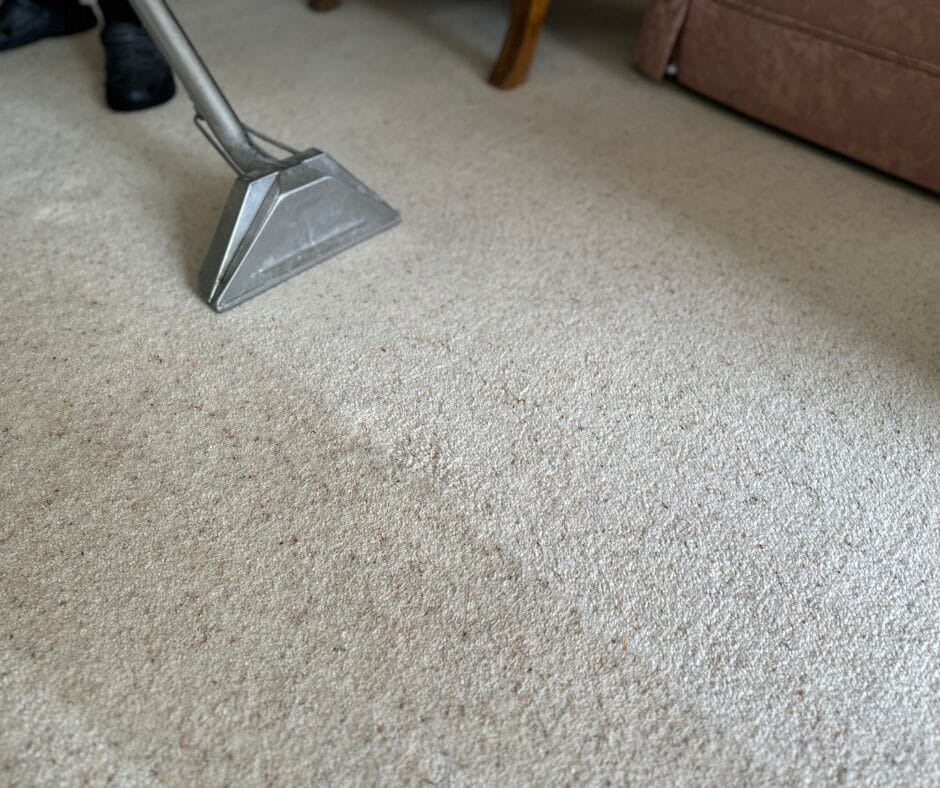
Sticky, waxy, and “stuck-on” problems
Chewing gum
Gum is more of a removal job than a stain job. The aim is to harden it, lift it away from the fibres, then treat any residue lightly. Pulling it out can damage the pile.
Check out our full guide on this stain here: How to remove chewing gum from carpet.
Candle wax
Wax sets hard and can trap colour if the candle is dyed. The safest approach is to let it set, lift what you can, then deal with the residue. Rushing usually spreads the wax into the fibres.
Check out our full guide on this stain here: How to get candle wax out of carpet.
Slime, glue and craft mess
Craft stains are increasingly common, and they vary a lot depending on what the product contains. Slime often has dye plus sticky polymers. Glues can go crusty or rubbery. This is usually a “soften and lift in stages” job, not scrubbing.
Check out our full guide on this stain here: How to remove slime and glue from carpet.
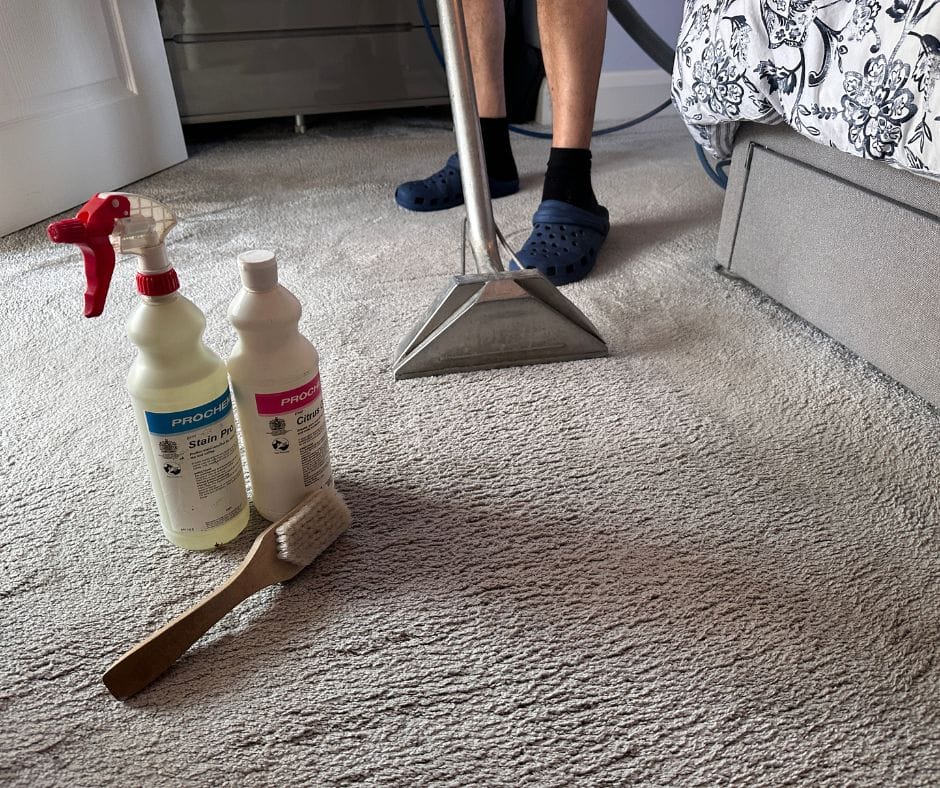
Odd-but-common marks we see in real homes
Rust marks
Rust can appear under plant pots, near patio doors, or from furniture feet that have got wet. It is not a normal spill, it is a chemical stain, so it needs a specific approach. If you have a rust mark, avoid random household products that can make the colour fix deeper.
Check out our full guide on this stain here: How to remove rust stains from carpet.
Soot and fireplace marks
Soot spreads easily and turns into a smear if you add liquid too soon. Dry removal first, gentle vacuuming, then careful spot treatment is usually safer.
Future cluster idea: How to remove soot from carpet without smearing
Why a stain disappears, then reappears a day later
This is one of the biggest frustrations we hear. A client cleans a spill, it looks fine, then the mark comes back.
The most common cause is wicking. Liquid has soaked below the visible fibres, sometimes into the backing or underlay. As the carpet dries, leftover material moves upward and shows again, often within 24 to 72 hours.
Another common cause is residue, especially from washing-up liquid or overly soapy solutions. The carpet looks clean initially, but the sticky patch attracts dirt quickly and the mark returns as general soiling. WoolSafe specifically warns against washing up liquid for this reason.
If you are building a cluster page around this, it can be a strong trust-led topic because it explains what people experience in real life.
Check out our full guide on this stain here: Why carpet stains keep coming back (wicking vs residue)
When it is worth calling a professional
There is nothing wrong with trying to sort a fresh spill yourself. We do it in our own homes too. The point where we suggest getting help is usually when there is a clear risk of making the mark bigger, or when what is underneath matters.
It is often worth booking a professional clean if:
You have pet urine, recurring odours, or a stain that keeps returning (wicking).
The spill is oil-heavy or dye-heavy (wine, curry, ink).
The carpet is wool, delicate, or you are unsure of the fibre type.
You have already tried a few products, and it now looks bleached, sticky, or patchy.
Guides like WoolSafe also emphasise controlled moisture and careful product choice, especially with wool and wool-rich carpets.
Key takeaways
- Blot, never rub, and work from the edge towards the centre.
- Do not over-wet the carpet, especially on drinks and pet stains; wicking is how stains come back.
- Avoid washing up liquid; it can leave residue and cause rapid re-soiling.
- Treat the stain type, not just the colour you can see (oil, protein, dye, particles).
- If you are unsure, slow down and patch test, especially on wool.
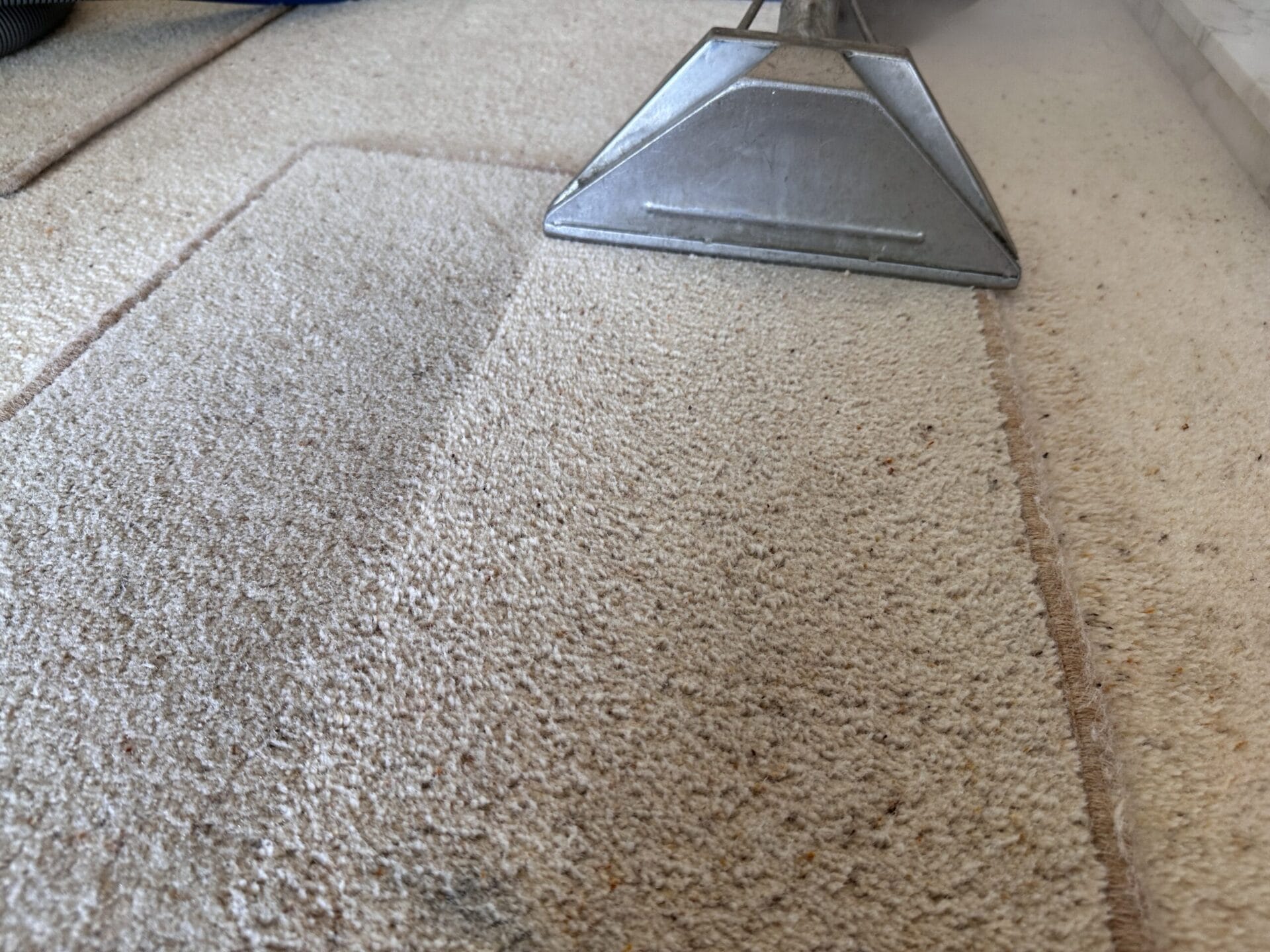
FAQs
What is the first thing I should do when something spills on carpet?
Blot straight away with a clean white cloth or kitchen roll, and avoid rubbing. Work from the outside in so you do not spread the stain.
Why do carpet stains come back after I have cleaned them?
Often it is wicking, where the spill soaked below the surface and rises back up during drying. Residue from soapy cleaners can also attract dirt and make the area look stained again.
Is it safe to use washing up liquid on a carpet stain?
It is risky. WoolSafe advises against washing-up liquid because it can leave a sticky residue that causes rapid re-soiling.
Is hot water better for carpet stains?
Not always. For protein stains like blood and vomit, heat can make stains harder to remove. Controlled moisture and a gentle approach are usually safer first.
When should I stop DIY and book a professional clean?
If the stain is dye-heavy (wine, curry, ink), oil-heavy, linked to pet odour, keeps returning, or your carpet is wool or delicate, a professional stain treatment is often the safer route.