A tea spill feels harmless until it hits a pale carpet. The colour spreads quickly, then you clean it up, it looks better, and later you spot that faint brown shadow or a ring around the edge.
Tea is classed as a tannin stain, which means it behaves like a natural dye. If you rub, over-wet the area, or add heat, you can end up setting it deeper and creating that classic “cleaned but still visible” patch.
This guide walks you through the safest way to lift tea from carpet and not have the ring mark that often follows.
Key takeaways
- Blot gently, do not rub, and work from the edges in.
- Use cool water and controlled moisture… tea rings often come from over-wetting.
- Rinse lightly after any spot treatment… residue attracts dirt and can also bring marks back.
- Dry properly (towel press, airflow), it reduces wicking and tide marks.
- If it is wool, old, or getting worse, pause and get advice before you damage the fibres.
Why do tea stains grab so fast?
Tea contains tannins, the same family of natural dyes used in things like wood staining. That is why tea can cling to carpet fibres quickly, especially on lighter carpets and wool blends.
Heat can make things worse. Hot water, steam, or even blasting it with a hairdryer can make the stain harder to shift because it encourages tannins to “set”.
First things first (the part that saves most carpets)
Blot, do not rub. Press a clean white cloth or a piece of kitchen roll onto the spill, lift, move to a dry section, repeat. Work from the outside edge towards the middle of the stain so you do not spread it.
If the tea is still warm, do not panic-clean. A calm, gentle blot is better than frantic scrubbing! I can’t stress this enough… Blots, don’t rub!!
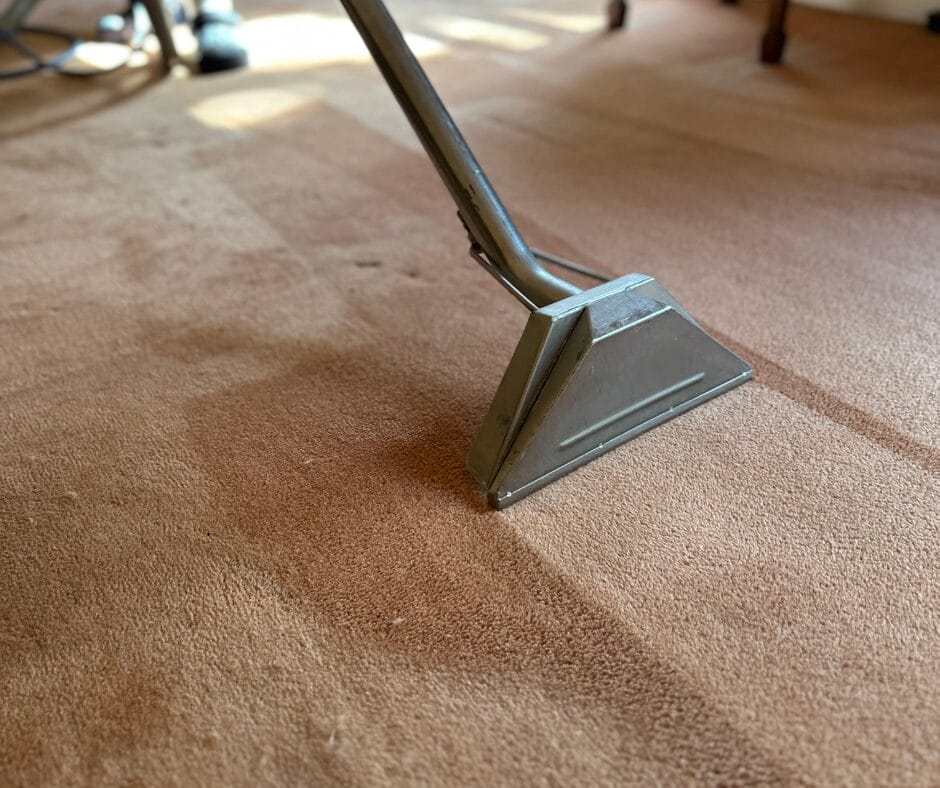
Keep moisture controlled. This is where ring marks start. If you soak the patch, the tea and dirt can travel outwards and downwards, then wick back up as it dries, leaving a tide mark.
How to remove fresh tea stains (step by step)
Step 1: Lift as much liquid as possible
Keep blotting until you are no longer pulling much colour up.
Step 2: Dab with cool water, then blot again
Lightly dampen your cloth with cool water and dab the stain, then blot dry. You are aiming to dilute and lift, not soak.
Step 3: Rinse the area lightly, then blot dry
WoolSafe’s guidance is to thoroughly rinse out water-based spotters with clean water, but without over-wetting. That rinse step matters because leftover product can leave a residue that later attracts dirt.
Step 4: Dry it properly
Place a dry towel over the area and press to pull out remaining moisture. Let it air dry naturally, and if you can, improve airflow (open a window, use a fan nearby). Faster drying helps reduce wicking and ring marks.
How to remove dried tea stains (when you find them later)
A dried tea stain is still sometimes treatable, but the process will need patience.
Start by rehydrating the stain gently with cool water, then blot. If you see colour lifting, continue in small stages. If nothing changes after a couple of careful passes, stop before you start roughing up the fibres or over-wetting the backing.
Old stains are also where ring marks show up most, because people tend to use more water to “force” the stain out. Keeping moisture controlled is still the safer move.
How to avoid the ring mark (this is the bit most guides skip)
A ring mark usually comes from one of three things.
1) Over-wetting
Too much liquid spreads the stain and pulls hidden soil to the edges as it dries.
2) Residue left behind
Washing-up liquid is a common culprit. It can leave a sticky residue that causes rapid re-soiling, which can look like “the stain came back”. WoolSafe specifically warns against it.
3) Wicking from underneath
If tea has soaked down into the backing or underlay, it can rise back up during drying and leave that halo.
If you are prone to rings, the best habit is simple: small amounts of moisture, proper rinsing, and thorough drying.
Common “quick fixes” that can backfire
You will see a lot of DIY advice online. Some of it works in some homes, but the risk is fibre damage, discolouration, or residue.
- Washing-up liquid: often leaves residue and attracts dirt.
- Strong peroxide or bleach-style products can lighten carpet dye and create a worse patch than the stain.
- Vinegar and baking soda: can be risky depending on carpet type, and baking soda can leave residue if not fully removed.
If your carpet is wool or a wool blend, it is sensible to stick to WoolSafe-approved products and always patch-test.
When it is better to get help
It is worth calling a professional carpet cleaner if:
The carpet is wool, delicate, new, or you are unsure of the fibre, because the wrong product can cause permanent colour change.
The stain is older than a day or two, or it keeps reappearing, which can mean it has soaked deeper.
The patch feels stiff or crunchy, which often points to residue left behind from a previous cleaning attempt.
FAQs
What removes tea stains from carpet best?
For a fresh spill, blot first, then gently dab with cool water, and thoroughly blot-dry is often the safest start. If you use a spot product, rinse lightly afterwards so you don’t leave residue behind.
Why did a ring appear after I cleaned the tea stain?
Usually, it is over-wetting, wicking from underneath, or residue left behind that attracts dirt. Keeping moisture controlled and drying properly helps prevent it.
Can you remove old tea stains from carpet?
Often, yes, but older stains can sit deeper in the pile or backing, which is why they are harder. Gentle rehydration and blotting can work, but if it is not shifting after a couple of careful attempts, it is usually best to stop and avoid damage.
Is it safe to use washing-up liquid on tea stains?
Not really. WoolSafe warns against washing up liquid because it can leave a sticky residue and cause rapid re-soiling.
Should I use hot water on a tea stain?
Hot water and heat can make tannin stains harder to remove and can increase the risk of setting the stain. Cool water is a safer first step.