It usually starts as a faint shadow.
A slightly darker patch right where someone rests their head on the sofa. You notice it when the light hits it a certain way… then one day you can’t not see it.
You might have hoovered it, wiped it, or even tried cleaning the covers. But the mark stays put and seems to deepen over time. Therefore it helps to understand what it actually is (and what tends to make it worse) before you decide what to do next.
This blog is about the most common culprit: head grease/body oil build-up on the headrest, and why it can be stubborn… especially on light fabrics and “cosy” textured upholstery. Much of the core cause is the slow build-up of natural skin oils, perspiration, hair products and dust bonding together over time.
Quick overview
- Why do headrest marks show up even in very clean homes?
- What the stain really is (and why it darkens)
- Why do headrests and armrests get it worse than seat cushions?
- When professional cleaning usually works… and when it may only improve it
- How to avoid making the mark permanent (the most common mistake)
What actually causes headrest marks on a sofa?
In most homes, headrest marks are a build-up stain rather than a single “spill”.
Over weeks and months, the headrest collects:
- Natural skin oils and perspiration
- Hair products (sprays, gels, leave-in conditioners, dry shampoo residue)
- Dust in the air that clings to anything slightly oily
That mix gradually forms what’s often called a body oil stain… and it becomes more visible as it embeds into the fabric fibres.
Why does it go darker instead of “just wiping off”?
Because oils don’t sit politely on the surface. They slowly travel into the fibres, and they also trap fine soil. So the patch is often a combination of oil and bonded dirt, not one or the other.
Why is it usually worse on the headrest than the seat?
This surprises people. The seat gets used constantly… so why is the headrest the bit that discolours?
Most of the time, it’s simply exposure and contact:
- Seat cushions are often covered with throws, rotated, or have removable covers washed more often.
- Headrests are left bare and take repeated skin/hair contact in the same spot.
- People rest still for longer (TV nights, naps), which means a steady transfer in one area.
In some homes, it’s also more noticeable because oil-based scalp or skin products are used regularly, and upholstered furniture (especially older, softer fabrics) can be more absorbent.
And just to be clear: this isn’t about poor hygiene. It’s a normal human life meeting fabric, slowly and repeatedly.
What fabrics show head grease marks the most?
Headrest marks tend to show up fastest on:
- Light colours (cream, pale grey, oatmeal)
- Natural or absorbent blends (cotton, linen mixes)
- Textured weaves that hold onto residue
Some fabrics do cope better than others, and some velvets can look like “marks” even when it’s actually pile direction… but true oil build-up usually feels slightly different (a bit tacky, heavier, or “flattened”).
If you’re unsure, the biggest clue is this: does it keep coming back in the exact same place, even after general cleaning? That’s often a buildup.
Can headrest marks be cleaned?
In many cases, yes… especially if the fabric hasn’t been damaged and the stain hasn’t been left to “set” for years.
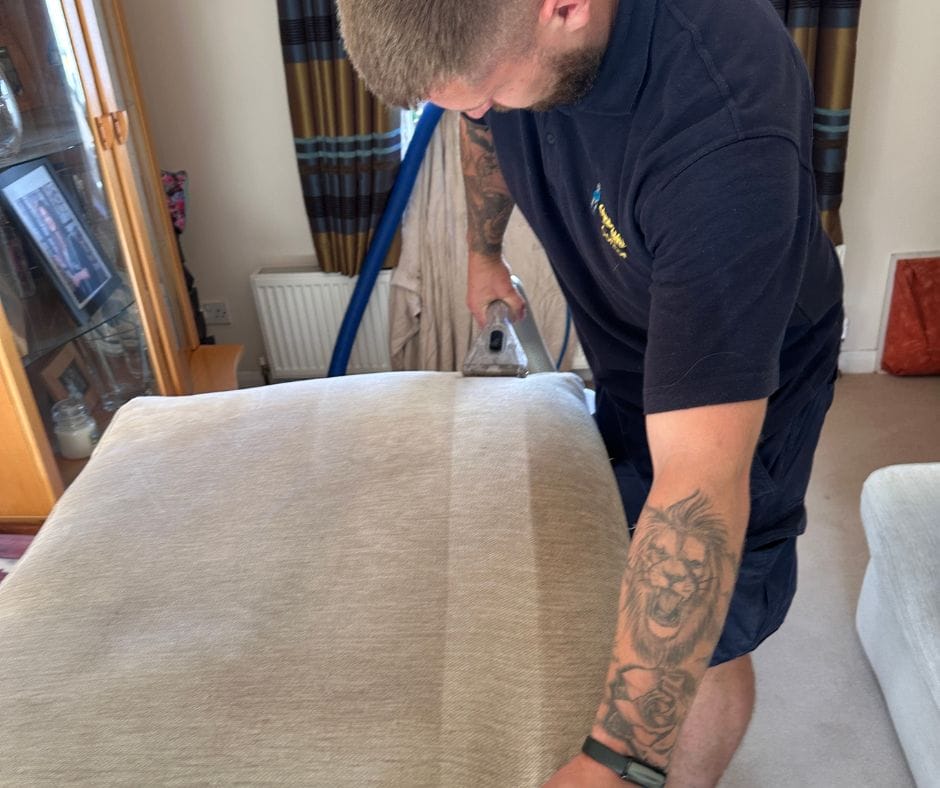
Where it’s successful, the goal is to lift oils out of the fibres without soaking what’s underneath (the foam, backing, or interliner). Professional upholstery cleaning is typically built around controlled moisture, safe agitation, and thorough extraction/rinsing… not flooding the area.
The one thing that affects results more than anything
Time.
The longer oils sit in fabric, the more likely they are to:
- oxidise (yellowing or stiffness)
- bond with fine soil
- become harder to fully remove
That doesn’t mean “leave it, and it’s ruined”. It just means early treatment usually gives the nicest finish.
When it might not come out completely (and why we’re honest about that)
Sometimes a headrest mark has been there a long time, or it’s been worked on repeatedly with the wrong approach.
The two most common reasons a mark won’t fully disappear are:
- Oxidation / permanent discolouration
The fibres themselves have changed colour over time. - Damage from past attempts
Scrubbing, over-wetting, or using the wrong product can push oils deeper, distort the fabric texture, or create water marks.
In those cases, the aim may be improvement rather than perfection… and a good cleaner should tell you that upfront, not after the work is done.
What not to do (because this is how people accidentally lock it in)
If you take only one thing from this blog, make it this:
Don’t scrub the headrest like a hard surface.
It feels logical. But heavy rubbing often drives oils deeper and roughs up the fibres.
Therefore, even if you do something at home, it should be gentle and minimal.
Also avoid:
- Over-wetting the headrest (soaking can disturb foam/backing and create tide marks)
- Household degreasers or “kitchen cleaners” (too harsh for many upholstery dyes and finishes)
- Random stain removers without checking the upholstery care code / fabric type
- Heat blasting to “dry it quicker” (can set certain residues or damage delicate fabrics)
If the mark is getting worse each time you try, that’s usually a sign the method isn’t working for the material… not that the sofa is “hopeless”.
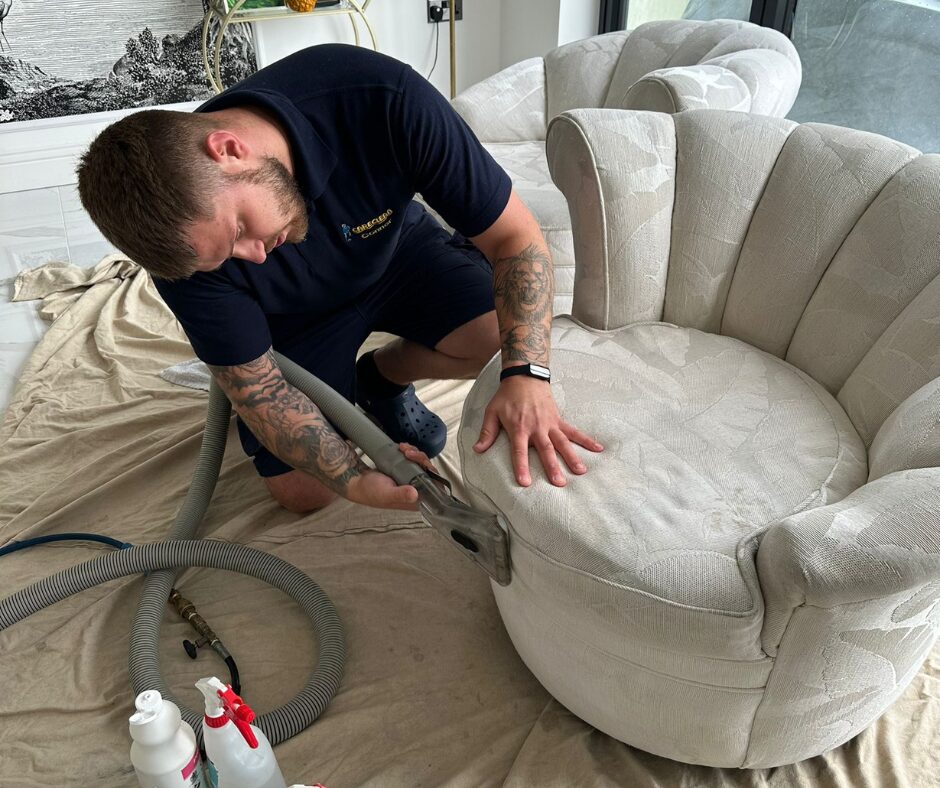
What a professional upholstery cleaning looks like…
People often imagine upholstery cleaning is either “a quick surface clean” or “drench it and hope”.
A proper clean is more than that:
- Inspection and fabric ID
So we know what the material can safely tolerate… that’s where the knowledge and training help - Small test in a hidden area
To check colourfastness and likely improvement. - Pre-treatment aimed at oils
Because oil build-up needs a different approach than a drink spill. - Gentle agitation
Enough to lift the residue, not rough up the fabric. - Controlled rinse / extraction
This is where a lot of results come from: removing the loosened oils and residues, not leaving them behind. - Drying support and finishing
So the sofa isn’t left wet, and the fabric looks even.
That combination is why professional results are usually stronger than “cover wash + wipe”, especially on headrests.
Will it need doing all the time?
Not usually.
Once the build-up is removed, many of our clients find their upholstery only needs us every 12–18 months (or sooner if there are spills, pets, or a favourite seat that gets heavy daily use).
The right interval depends on how much the sofa is used. Our guide explains how often to clean your upholstery for furniture with light, moderate or heavy use.
And if you want to slow it down between cleans, the simplest approach is barrier + light maintenance, not aggressive spot-cleaning:
- a breathable throw on the headrest during everyday use…
- rotating cushions when you can!!
- gentle vacuuming with a soft brush attachment
- dealing with any fresh marks early (without all the over-wetting)
If you’re comparing cleaning options, here’s what to check
If you’re speaking to lots of different companies, here are a few tips to help you:
- Preparation & protection: Do they check fabric type and test first, or is it “same method for every sofa”? Do they offer low-moisture cleaning for your more delicate fabrics?… or any other technique for more delicate fabrics?
- Drying & disruption: Will the sofa be left damp, or do they use controlled moisture and extraction to keep drying sensible? Again… what options do they offer for your needs?
- Aftercare & accountability: Do they explain what the realistic outcomes can be, and what to do next if the mark improves but doesn’t vanish?
A calm, clear answer to those tells you a lot.
FAQs
Is a headrest mark the same as a sweat stain?
They overlap. Sweat can contribute, but most headrest marks are a mix of natural oils, perspiration, hair products and dust build-up rather than sweat alone.
Can I just wash the cushion covers?
If the cover is removable and washable, it may help… but headrest marks often sit in the fibres and sometimes the inner layers too. Washing covers doesn’t always shift embedded oils, and some fabrics can shrink or change texture if washed incorrectly. When in doubt, get the care label checked first.
Why does it look worse after I tried cleaning it?
Often it’s one of three things: the area has been over-wet (causing a tide mark), residue has been left behind (attracting dirt), or the fibres have been disturbed by scrubbing. A professional rinse/extraction approach usually corrects that, but it depends on the fabric.
Do these marks mean my sofa is “dirty”?
Not in the way people worry about. It’s usually a slow, natural transfer that happens in lived-in homes… especially in that one favourite spot.
How do I find a reputable upholstery cleaner?
A good starting point is the NCCA’s directory of accredited companies (useful if you want to check standards and find someone local).
If you’re wondering whether it’s worth doing
Most people put up with headrest marks longer than they realise… not because they don’t care, but because life’s busy and it feels like a “small thing”.
But when that patch finally lifts, the whole sofa looks calmer and cleaner again.
Therefore, if it’s been bothering you in the background, it’s worth getting a proper opinion on what’s realistic for your fabric.
If you’d like, we can take a look, tell you what we think will improve (and what might not), and talk you through the gentlest way forward… no pressure.