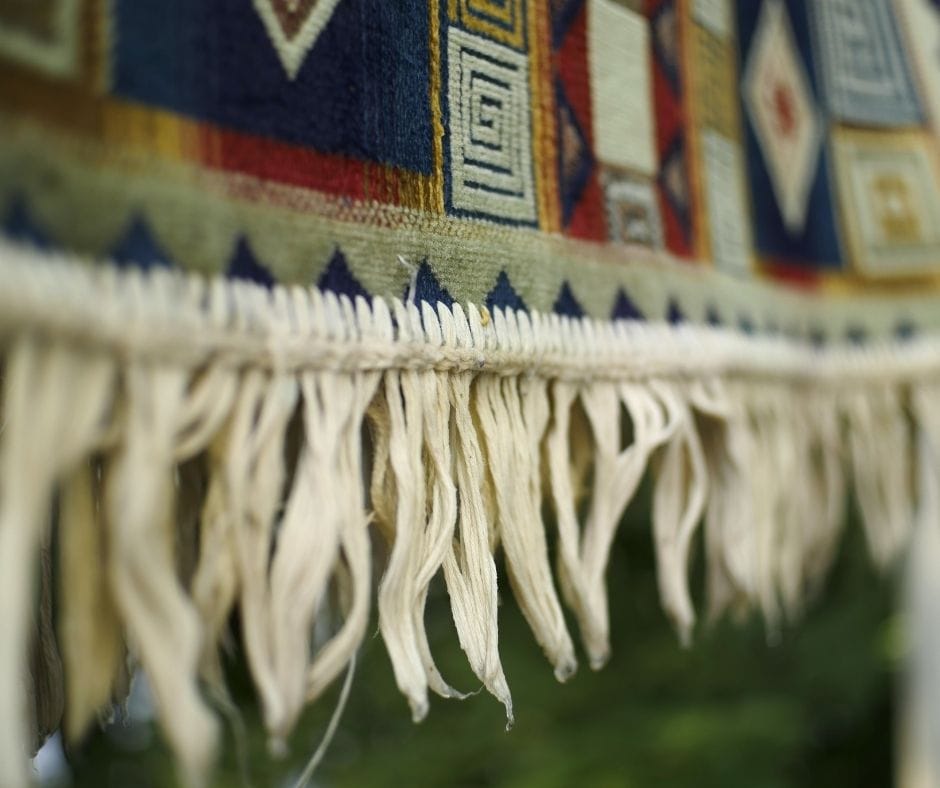
If your rug fringe has turned grey, gone a bit yellow, or just looks tired compared to the rest of the rug, you’re not imagining it. Fringe tends to discolour faster than the rug body because it’s exposed, absorbent, and sits right where daily life brushes past. Even when you hoover all the time, the fringe can still hold onto fine grit and oils that don’t shift with quick surface cleaning.
The important thing is that “grey fringe” isn’t always the same problem. Sometimes it’s removable soil build-up. Sometimes it’s wicking, where older contamination rises back as moisture dries. Sometimes it’s not soil at all… it’s dye movement from the rug border into lighter fibres. Getting the cause right is what decides whether cleaning will brighten it dramatically, improve it a little, or whether repair and finishing is the kinder route.
Key takeaways
- Fringe discolours faster because it’s exposed and traps fine grit and oils.
- Grey can be built-up soil, wicking during drying, or dye transfer from the rug border.
- Scrubbing and over-wetting can fray fibres and make marks return.
- Proper washing, rinsing and controlled drying usually gives the best improvement.
- If the fringe is worn thin or weak, cleaning improves appearance but won’t rebuild fibre.
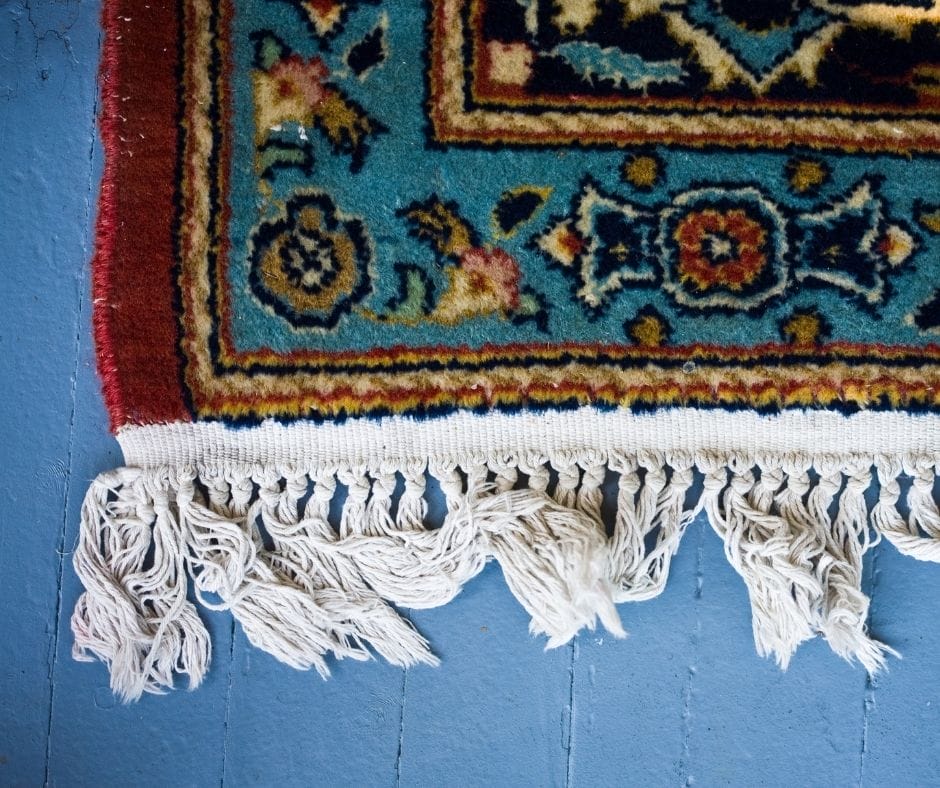
Why fringes show dirt first
Fringe sits in the “edge zone” where life happens. People step there, furniture legs sit near there, and it’s where hands often grab when a rug gets pulled straight or moved. Over time, that means your fringe collects lots of grit, any airborne dust, a little skin oil, and general handling. Because fringe fibres are lighter and more open, they show change a lot quicker than the pile does.
Moisture patterns often show up at the edges first. If a rug has been spot-cleaned at home or has dried unevenly after a spill, the fringe is often the first place you’ll see the after-effects. That’s why we always recommend the right method based on the rug itself, not a one-size approach.
The three most common reasons your fringe looks grey
1) Built-up soil and grit (most common). This is usually the most satisfying to correct. It often looks like an even dullness across the fringe, with a slightly rougher feel. People are often surprised by how much brighter it can look once the rug is properly washed and rinsed, rather than just “cleaned at the ends”.
2) Wicking (the “it looked better, then it came back”). A rug gets damp from a spill or DIY cleaning, and as it dries, moisture pulls any old contamination to the surface. The fringe and edges can show it strongly because that area absorbs and releases moisture differently from the pile. It often looks patchy or tide-marked rather than evenly grey, and it tends to reappear after the rug has been damp.
3) Dye transfer or migration (colour moving into lighter fibres). If the rug has a strong border colour and the fringe is lighter, colour can migrate into it, particularly after dampness, slow drying, storage, or an unsuitable cleaning approach. This doesn’t always look like “dirt”. It can look like a tea tint, or a pinky/tan cast that’s strongest near the border.
Quick “what am I seeing?” table
| What it looks like | What it often is | What usually helps most | What to avoid |
| Even dull grey across most of the fringe | Built-up soil and oils | Proper wash + thorough rinse | Heavy scrubbing (frays fibres) |
| Patchy marks or tide lines, returns after drying | Wicking (contamination rising as it dries) | Controlled wash/extraction + controlled drying | Re-wetting the same area repeatedly |
| Tea/pink/tan tint strongest near a bold border | Dye movement from the rug | Colour-aware treatment, realistic expectations | “Whitening” products or strong alkalines |
What to stay away from if you want to improve
Most fringe damage starts with over-cleaning. People scrub because they want it to look like new again, or they soak the fringe because it feels like a small, safe area to work on. Heavy scrubbing frays and fuzzes fibres, and soaking only the fringe can encourage wicking lines and edge distortion. Strong cleaning solutions can leave residue that just attracts dirt again, or create uneven results if the fringe reacts differently across its width.
If you want a safe benchmark for basic rug care, use an authoritative source. WoolSafe’s consumer guidance is a sensible reference point for gentle technique and avoiding over-wetting.
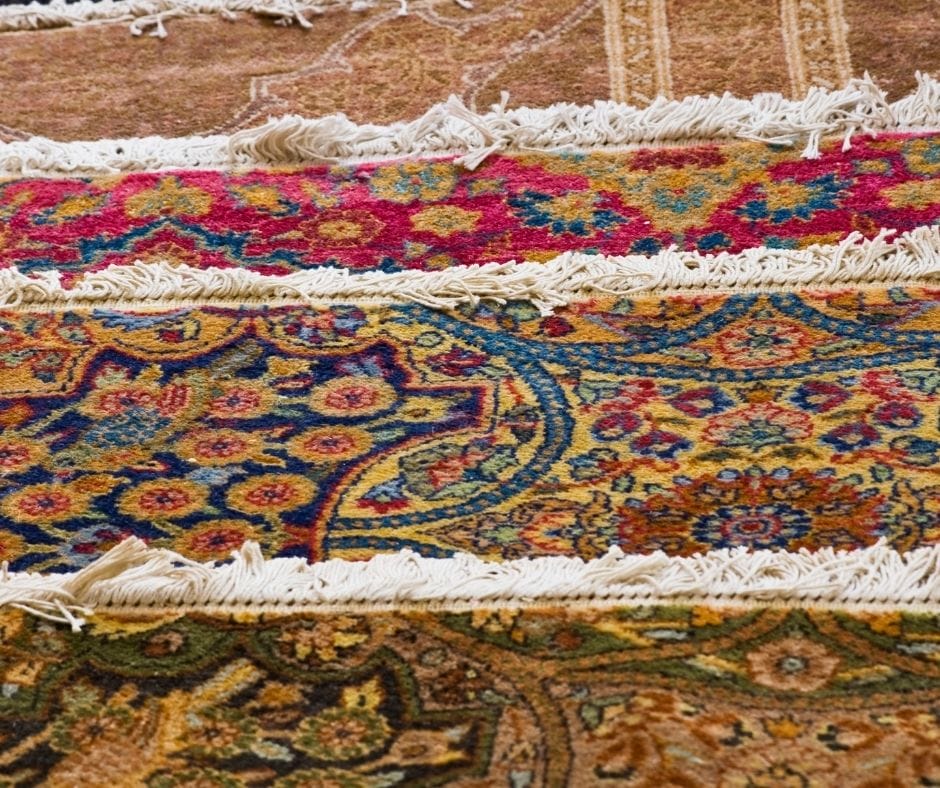
Why professional off-site cleaning usually makes the biggest difference
Fringe is part of the rug’s structure, so drying matters just as much as the washing part does. A wash without thorough rinsing can leave some residues behind. Drying too slowly or unevenly can draw contamination back to the surface, recreating the “dirty ends” look.
Controlled conditions improve consistency. With rugs that need it, off-site cleaning helps because the rug can be washed and rinsed properly, then dried in controlled conditions so moisture doesn’t linger at the edges. If you’ve got a rug that genuinely matters to you, this guide is a helpful companion read before you decide what to do next. (Internal link goes here: how to protect a rug that really matters to you.)
Some honesty about results helps you decide. If fibres are worn down, cleaning can improve appearance, but it can’t rebuild what’s missing. If colour has migrated into the fringe, it may brighten and even out without returning to the original shade.
When cleaning helps a lot, and when results are limited
Cleaning tends to help a lot when the fringe is mainly dulled by soil. If it’s intact and the rug has simply lived in a busy spot, a proper wash and rinse often brings it back to a cleaner, brighter look.
Results are more limited when the issue is wear or long-standing dye tinting. If the fringe is physically worn thin, repeatedly over-wet and scrubbed so it’s become fuzzy, or has long-standing dye migration, cleaning can still lift general soiling and improve the overall look — it just won’t recreate fibre that’s no longer there.
A simple checklist if you’re comparing rug cleaners (fringe edition)
Ask about dyes, drying, and what happens if it’s wear rather than dirt. Clear, calm answers tell you a lot about the standard of care you can expect. If you’d like to see what local clients say about outcomes and how things are handled, you can browse this page.
FAQs
Can you make my rug fringe white again?
Sometimes, more so when the problem is soil build-up. If fibres are worn or tinted by any dye movement, it may improve them slightly without returning to their original look.
Why is the fringe dirtier than the rug itself?
It’s on the very edges so it catches fine grit and oils, and it reacts quickly to moisture and handling.
Why does the fringe look worse after a DIY clean?
It’s very often residue, uneven drying, or wicking. That’s why repeated re-wetting tends to anger them rather than solve the issue you are having.
Is it safe to spot-clean the fringe only?
It can be risky. Localised wetting is a common trigger for wicking and edge distortion. If you want the broader “what to expect” answers around timescales and aftercare, this page helps.
Does cleaning fix fraying?
Cleaning can improve overall appearance, but it doesn’t rebuild fibre. If the fringe is thinning or breaking, repair is the proper fix.
If you want a straight answer on your rug
If you’re staring at the fringe thinking, “Is this dirt, dye, or wear?”, you don’t need to guess. A couple of clear photos of the fringe and the border area usually tell us what’s going on and what sort of improvement is realistic.
If you’d like us to take a look, use the contact page, and we’ll point you in the right direction.